Tehran formalises Strait of Hormuz transit fees as Ghalibaf frames talks as a post-war settlement
Iran's parliament speaker recasts the US-Iran talks as a post-war settlement and ties Strait of Hormuz transit fees to the new regional order, betting that Washington's verification gap will let the framework harden before it is corroborated.
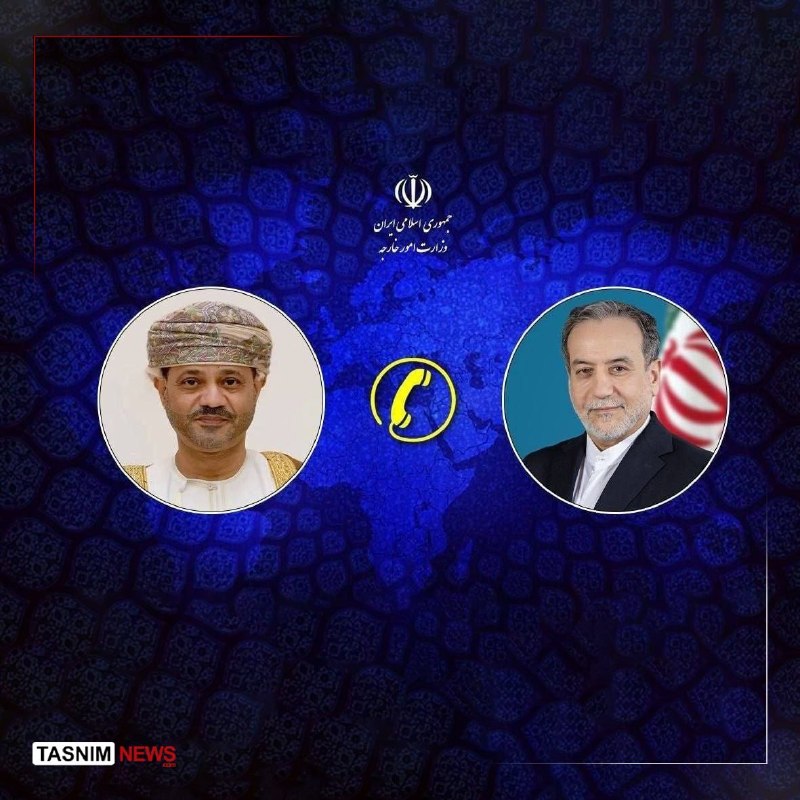
On 17 June 2026, Iranian state media carried remarks from parliament speaker Mohammad Bagher Ghalibaf that recast the country's negotiating posture with Washington. The talks, Ghalibaf told a closed session in Tehran, are not about the current war. They are about the architecture of the region after it. The framing, distributed through Tasnim and other pro-Iranian channels, included a reference to a new regime for transit through the Strait of Hormuz, formalised in a memorandum that has not yet been corroborated by Western wire services.
What the Iranian record describes, if it holds, is a negotiating position that treats the present ceasefire as a deposit on a longer settlement. The Strait of Hormuz sits at the centre of that settlement. Iran is signalling that passage fees, currently a topic of technical discussion in maritime forums, will be a political question answered only after the regional order is rewritten.
The fee regime and what it would do
Iranian-language coverage on 17 June described a memorandum that would formalise transit fees for commercial shipping through the Strait of Hormuz, the narrow corridor between the Gulf of Oman and the Persian Gulf through which roughly a fifth of the world's oil passes. The exact tariff structure was not published. The framing was: Iran controls the chokepoint, the chokepoint has a price, and that price is part of any settlement.
On 19 June, Middle East Spectator, a Telegram channel that tracks shipping traffic through the corridor, posted footage it described as the "non-stop movement of Iranian oil tankers from the Strait of Hormuz." The clip is consistent with a regime that has decided to assert presence rather than leverage. Iran is not signalling closure. It is signalling that the strait is administered territory, not international commons.
That distinction matters. Under customary international law and the UN Convention on the Law of the Sea, transit passage through straits used for international navigation is supposed to be uninhibited. Iran has long contested that reading through its own legislation, including a 2019 parliamentary vote on transit fees that was never operationalised. The new memorandum, as described in the Iranian record, would attempt to do what the 2019 effort could not: convert contested doctrine into a working arrangement that foreign governments pay into.
Ghalibaf's framing: settlement, not ceasefire
Ghalibaf's choice of language is the most consequential element of the 17 June remarks. He did not describe the negotiations as ceasefire talks. He described them as talks on the post-war order. That is the language of a state preparing to extract structural concessions, not tactical ones.
The Iranian speaker is a hardliner who retains a veto inside the Islamic Republic's security establishment. When he talks about a settlement, he is not freelancing. The post-war framing also fits Iran's wider diplomatic play. Tehran wants the file closed in a way that recognises its status as a regional power with veto rights over Gulf energy flows. A simple ceasefire would deliver the opposite: a return to the status quo ante, with sanctions architecture intact and Iran's leverage normalised away.
By tying transit fees to a settlement, Iran is offering the United States a choice. Pay a one-time political price to recognise Iran's role as strait administrator, or settle for a fragile ceasefire in which Iran retains the legal right to weaponise the chokepoint at a moment of its choosing. The first option is expensive but stable. The second is cheap and volatile.
The Washington end: signals and counter-signals
On 19 June, the Spectator Index, citing a Washington Post report, summarised a US intelligence assessment that Israel is "likely to undermine" any Iran peace deal. The same day, Al Jazeera English's breaking-news wire announced a new round of Israel-Lebanon talks in Washington, scheduled for the following week. The headline noted that those talks were proceeding "in wake of US-Iran memorandum to end war."
Two days is not a long time. The intelligence assessment, the Israeli sub-track and the wider US-Iran memorandum are all moving simultaneously, and the Iranian record frames them as parts of a single negotiation. That is itself a tell. Tehran wants the Israel track and the Lebanon track read as sub-deals of a US-Iran framework. Washington has not confirmed that framing.
What the public record shows is a US administration that has signed a memorandum it is now trying to implement across multiple fronts, while its own intelligence community warns that one of its principal regional partners is preparing to act in ways that could collapse the deal. Israel, on this reading, is the variable that US diplomacy has not yet locked in. Iran is reading that gap and pricing it.
What is structurally entailed if the Iranian record is operative
If the Ghalibaf remarks are operative and the memorandum holds, three structural shifts follow.
First, the global oil market will price a permanent Iranian toll into Gulf shipping. Insurance rates through the strait, already elevated since 2019, will adjust upward on the assumption that fees are a permanent feature rather than a war-time emergency. Energy-importing economies in Asia will pay most of the difference. The windfall accrues to Tehran.
Second, the US-Iran memorandum, described by Al Jazeera as the parent document under which the Israel-Lebanon talks sit, becomes a regional framework rather than a bilateral ceasefire. That changes the legal and political status of every other US presence in the Gulf. US naval forces in Bahrain, the Fifth Fleet headquarters, the posture in Qatar and the UAE, all become negotiating chips in a framework Iran is helping design.
Third, the Israeli sub-track becomes a stress test. Israeli action against Iranian assets in Syria, Lebanon or Iran itself would no longer be a regional security incident. It would be a breach of a US-brokered framework that Iran has a financial stake in defending. The Washington Post report summarised by the Spectator Index suggests US intelligence expects exactly that kind of action. If Israel acts and Iran responds by tightening the strait, the cost is paid in Asia and Europe, not in Washington.
The verification gap and the wire's silence
The principal limitation on this analysis is that the Ghalibaf remarks and the memorandum's contents have so far circulated only through Iranian state media and pro-Iranian Telegram channels. Reuters, AP, AFP, the BBC and Bloomberg have not, in the public record as of 17 June, independently confirmed the substance of what Tasnim published. That silence is itself a data point. Western wire services covering Iran are typically quick to translate and verify Tasnim material that has operative consequences. Their absence from this story suggests either that verification is still in progress, or that the Iranian record is being treated as a position paper rather than a fait accompli.
Monexus's framing here is restricted accordingly. The Ghalibaf remarks and the memorandum's existence are treated as the Iranian negotiating position, not as confirmed facts of international commerce. The structural analysis above is what follows if those claims turn out to be operative. The wire services will, in due course, either corroborate the substance or push back on it. Either way, the architecture Ghalibaf is describing is the architecture Iran is asking for.
What to watch
Three dates will determine whether this framework hardens or dissolves. The Washington round of Israel-Lebanon talks, scheduled for the week of 22 June, will show whether the Israeli sub-track has been folded into the US-Iran framework or treated as a parallel negotiation. Any Iranian announcement of a formal tariff schedule for Strait of Hormuz transit, expected to follow if the memorandum is operationalised, will set the market's new risk premium. And any Israeli action against Iranian assets in the Levant, which US intelligence has flagged as likely, will test whether the framework has a serious enforcement mechanism or is paper.
The fee regime, in other words, is not really about ships. It is about whether the post-war Middle East is administered or merely paused. Tehran is betting it can collect on the first answer. The question now is who else shows up to pay.
Sources
- https://t.me/Tasnimnews_en/, Tasnim News (Iranian state-affiliated), coverage of Ghalibaf's 17 June remarks and the Strait of Hormuz memorandum
- https://t.me/wfwitness/, Witness (war and shipping OSINT channel), Strait of Hormuz maritime traffic
- https://t.me/osintlive/, OSINT Live, summary of Washington Post report on US intelligence assessment
- https://t.me/ClashReport/, Clash Report, Middle East conflict monitoring
- https://t.me/englishabuali/, Channel of commentator Hesham Abuali, analysis of US-Iran framework
- https://www.aljazeera.com/news, Al Jazeera English breaking-news wire, announcement of Israel-Lebanon talks in Washington
- Middle East Spectator (Telegram), footage of Iranian oil tanker movement through the Strait of Hormuz, 19 June
Desk note: Monexus has framed this story from the Iranian record on the principled ground that the Ghalibaf remarks and the memorandum first appeared in Tasnim and pro-Iranian Telegram channels and have not yet been independently corroborated by Western wire services in the public record. Where the record is thin, the piece analyses what would follow if the Iranian claims turn out to be operative, rather than asserting them as confirmed facts of regional commerce.