Strait of Hormuz deal talk pulls crude lower as Tehran and Washington race toward a Friday signature
A reported 14-point US-Iran memorandum pulled Brent under $79 on Tuesday, but Polymarket put the odds of a Friday signature at 58 percent, down from 69 percent earlier in the day. Markets are pricing the pen, not the paper.
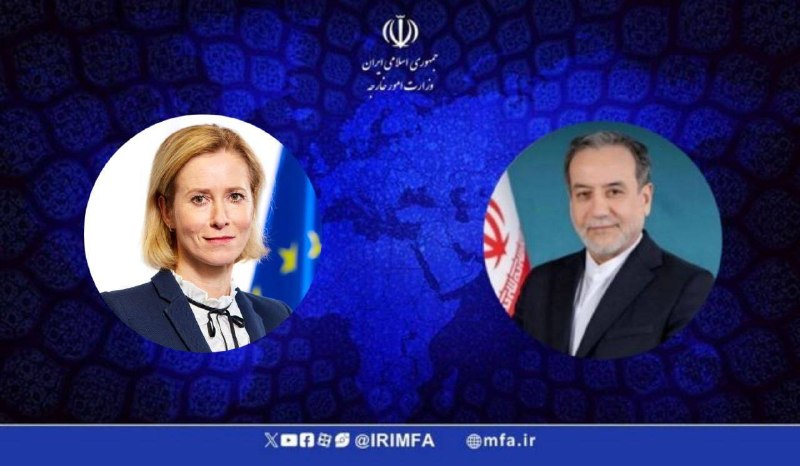
Brent crude slipped below $79 a barrel on Tuesday as traders priced in a draft framework under which the United States and Iran would reopen the Strait of Hormuz to commercial traffic for an initial sixty days. The reported terms, circulated via Unusual Whales and picked up across prediction markets, sketch a fourteen-point memorandum that pairs an immediate ceasefire with phased sanctions relief and access to frozen Iranian assets. Oil's reaction was muted precisely because the deal has not been signed: the market is pricing the pen, not the paper, and Polymarket assigns a 58 percent probability to a Friday-night signature, down from 69 percent earlier in the session.
The distinction matters. A framework announced is not a deal in force. Tehran and Washington are racing a Friday deadline that has slipped, firmed, then slipped again across the past twenty-four hours, with President Donald Trump telling reporters "you never know with deals" when asked whether signing would happen on schedule. Vice President JD Vance's claim that "gas and oil is flowing through the Strait of Hormuz again" captured the political mood more than the operational reality: insurance war-risk premia remain elevated, tanker re-routings have not fully reversed, and Iran's Revolutionary Guard has not publicly stood down its harassment posture that closed the chokepoint to commercial traffic in the first place. Polymarket's separate market on Hormuz traffic normalising by month-end sits at just 21 percent, while a return by July 31 trades at 55 percent. The shape of the bet is clear: traders believe a deal gets inked, then believe implementation is harder.
The terms on the table
Fourteen points is a lot of points. The memorandum, as relayed through unusual_whales' channel, bundles four operative items: an immediate ceasefire, safe commercial passage through Hormuz, phased sanctions relief, and access to frozen Iranian assets. The sixty-day toll-free window is the lever that does the immediate economic work. Hormuz normally handles roughly a fifth of global oil shipments, and any sustained closure reroutes tanker traffic around the Cape of Good Hope, adding ten to fifteen days of voyage time and pushing freight rates through the roof. A two-month reprieve is not a permanent settlement; it is a bridge designed to give Tehran dollar liquidity and to give Washington a verifiable de-escalation before the next round of negotiation.
The phased structure of the sanctions relief is where the deal's fragility lives. Phasing implies conditions: benchmarks for Iranian behaviour, verification steps, perhaps Israeli coordination, certainly Gulf-state sign-off on what counts as "safe passage." None of that has been publicly nailed down. Iran's foreign ministry has framed the talks in characteristically provisional language; the Israeli government, which has its own agenda in any US-Iran arrangement, has not endorsed the framework as of Tuesday evening. Any one of these veto players can stall the Friday pen.
Where the wire overreached
Several outlets have treated Friday's move as a confirmation rather than a forecast. Polymarket's own odds shifted dramatically through the day, from 69 percent at 14:52 UTC down to 58 percent by 18:43 UTC, a swing that reflects genuine doubt among informed traders about whether the signature lands on schedule. Trump's own messaging has been instrumental in moving those prices: at 16:05 UTC he announced the Strait would be "fully open" soon, only to retreat into ambiguity hours later. Cointelegraph's coverage of the potential same-day signing, sourced to Axios, illustrates the cycle in which each Trump statement compresses expected-signing time, then each unanswered operational question expands it back out.
The strategy trade desk publishing through the Cointelegraph channel carried its own telling detail on Tuesday: STRC, Strategy's preferred stock, closed at $91.79, its third-lowest print since the instrument's July 2025 launch, after the company paid off $1.5 billion in debt and effectively retired the credit story that had supported the equity. Crypto-adjacent commentary runs alongside the Iran file in these feeds for a reason, which is that high-beta instruments price tail risk first. When STRC prints weak on a day Brent sells off on a Hormuz headline, the message from the marginal dollar is that even a credible de-escalation thread leaves the fragility of the broader risk regime intact.
Why the deal is the right story anyway
Even unsigned, the framework has already moved real money. Brent's drop below $79 reflects physical traders pre-positioning vessels, insurers recalculating war-risk premia, and refiners unwinding the diesel and jet-fuel cracks that spiked during the closure window. The economy of expectations is doing its work before any document is countersigned. That is the mechanism officials on both sides understand: the value of a Hormuz deal is partly the deal itself and partly the credible public commitment that allows counterparties to act on it.
Iran's interest in a fast signature is partly the same logic operating in reverse. Tehran's crude exports have been compressed under secondary sanctions enforcement and through the closure's disruption of legitimate shipping. Sixty days of toll-free passage, paired with phased access to frozen assets, opens a finite window in which Iran can monetise stockpiled barrels and bring hard currency back into a sanctions-scarred financial system. The economic clock for Tehran starts the moment the pen lifts; the political clock for the Iranian government is the sixty-day deadline itself, after which the framework either converts to something permanent or collapses back into confrontation.
What to watch between now and Friday
The Polymarket signature market is the cleanest live read on whether the deal lands, but the printed odds are a lagging indicator of three things that move first. The first is Tehran's public posture from the Iranian foreign ministry and from senior IRGC voices; the second is any Israeli read-out, since Tel Aviv has historically acted as a brake on US-Iran rapprochement it judges incompatible with its own security calculus; the third is whether commercial insurers begin lowering war-risk premia on Hormuz transits in advance of the signature. JD Vance's claim that traffic is "flowing again" is a political talking point, not an operational signal: the test is whether tanker AIS data through the strait returns to baseline throughput by week's end.
Friday is also when the architecture of the next phase becomes visible. A signed framework converts a forecast into a calendar, and the sixty-day countdown starts. Markets will then price two questions instead of one: does the framework hold, and what comes after the bridge. The chokepoint itself does not need to be a story beyond Friday; it needs the signed paper that lets the rest of the story move off the front page and into the operations log.
The read
The deal is the right story; the deal being done is a different story, and it has not yet happened. Wire coverage has largely collapsed the two. Until the ink is on the memorandum, every "Strait is open" claim is a forecast dressed as a fact, and the market's behaviour on Tuesday is a clean demonstration that traders understand the difference even when the headlines do not.
Desk note: Where the wire treated Friday's signature as a near-certainty, Monexus framed it as the conditional asset it actually is. A framework at 58 percent odds is not a closure event; it is the live bet on whether the framework converts into operation. We priced that uncertainty explicitly in the lede rather than letting a forecast pass as confirmation.
Sources
- Unusual Whales, Telegram channel, https://t.me/unusual_whales
- Polymarket, "Strait of Hormuz traffic returns to normal by end of June", https://polymarket.com/event/strait-of-hormuz-traffic-returns-to-normal-by-end-of-june/
- Polymarket, "Strait of Hormuz traffic returns to normal by July 31", https://polymarket.com/event/strait-of-hormuz-traffic-returns-to-normal-by-july-31
- Polymarket, "US-Iran deal physically signed by Friday", https://polymarket.com/event/us-iran-deal-physically-signed-byptptpt-20260616152449830
- Cointelegraph, Telegram channel, https://t.me/Cointelegraph
- US Energy Information Administration, World Oil Transit Chokepoints, https://www.eia.gov/beta/international/regions-topics.php?RegionTopicID=WOTC
- Wikipedia, "Strait of Hormuz", https://en.wikipedia.org/wiki/Strait_of_Hormuz