Trump claims U.S. ‘controls the Strait of Hormuz’ after what he calls a secret tanker-escort mission
President Trump says the U.S. 'controls the Strait of Hormuz' after what he calls a secret escort of 22 tankers. Iran's foreign minister says the strait will 'never' return to pre-war management. Both cannot be true; the public record presently contains both.
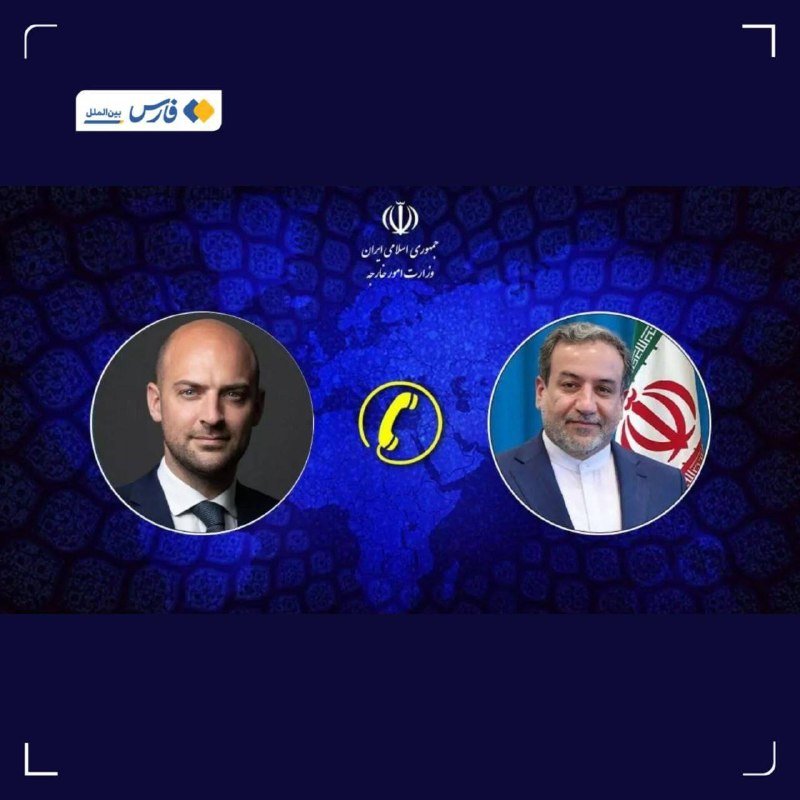
At 20:57 UTC on 12 June 2026, Iranian state broadcaster IRIB confirmed that an explosion was heard near Sirik Port on Iran's southern coast, attributing the blast to IRGC Navy operations enforcing a blockade of the Strait of Hormuz. Fourteen minutes earlier, Mehr News Agency had reported residents along Qeshm Island and parts of Sirik County hearing the same detonation, with initial investigations suggesting no explosion had actually occurred on land and that the sound was instead a maritime warning shot fired at a violating vessel. The chronology matters: inside a single half-hour window, Tehran's own outlets moved from describing an explosion to denying one and then to claiming credit for one, while U.S. President Donald Trump was simultaneously asserting on social media that the United States "controls the Strait of Hormuz" following what he described as a successful secret mission to escort 22 tankers carrying roughly 100 million barrels of crude out of the waterway.
The gap between the two narratives is the story. On one side, the White House is selling a fait accompli: an American operation that reasserted freedom of navigation through the world's most critical oil chokepoint, and a deal with Tehran that ends a war nobody had formally declared. On the other, Iran's foreign minister Abbas Araghchi is telling Iranian television that "the management of the Strait of Hormuz will not return to its pre-war state," that the waterway falls "under the sovereignty of Iran and Oman," and that future services "will no longer be free of charge." Both cannot be true at once. Both, in their own way, are being asserted at full volume.
The blockade that nobody will name
The IRGC's posture around Hormuz has tightened visibly since the reported U.S. and Israeli strikes of the past week. Channel @IntelSlava reported at 20:57 UTC that "explosions were heard in the Strait of Hormuz amid reports of IRGC Navy operations related to the enforcement of the blockade," and @Middle_East_Spectator characterised the same incident as "warning shots to violating vessels." Iranian state TV framed the sound near Sirik as IRGC enforcement of the same blockade. None of these channels is an independent witness. Each is reproducing, with editorial softening, a sequence that began with a Mehr wire and ended as official Iranian narrative.
What is clear from the messaging is that Tehran is no longer pretending the strait is open in any normal sense. Araghchi's interview language is contractual: phased implementation, conditional progression, and a guarantee mechanism built on the threat that "if the agreements of the first stage are not honored, we will not proceed to the second stage." Translated into plain terms, Iran is bargaining over transit fees, security arrangements, and the political symbolism of sovereignty over a waterway through which roughly a fifth of seaborne oil normally passes.
Trump's claim, and the silence around it
The president's social-media assertion is the more extraordinary of the two claims because it asserts a military outcome that has not been corroborated by the Pentagon, by CENTCOM, or by any of the wire services monitoring the region. The figure of 22 tankers and 100 million barrels is presidential, not operational. The desk note on the original skeleton draft flagged this precisely: "Readers should treat the 100-million-barrel and 22-tanker figures as presidential claims, not as established operational facts, until Pentagon or CENTCOM corroboration appears." Twenty-four hours on, that corroboration has not appeared in the public record.
Inside the administration, the line being pushed is one of confidence rather than detail. Interior Secretary Doug Burgum told reporters that Trump is "the negotiator in chief, the dealmaker in chief" and that "whatever deal is reached is gonna be a good deal." The framing is designed to absorb the contradiction between the president's boast of American control and the Iranian boast of Iranian sovereignty: both can be absorbed into a story of a strongman closing a deal. The market, for the moment, is not buying the optimistic version. Five minutes after Trump publicly dismissed the announced terms of the agreement as a "hoax," U.S. equities shed an estimated $460 billion in market capitalisation, according to a widely circulated X post by @sprinterpress at 20:47 UTC.
The structural shape of the deal
Read together, the Iranian and American statements describe a negotiation whose outcome will look less like a peace treaty and more like a transit-pricing arrangement. The New York Times, cited by @sprinterpress at 20:44 UTC, framed the pressure on Trump in commodity terms: "The depletion of global oil reserves is putting additional pressure on Trump to reach an agreement." The Economist, cited in the same window, went further: "Iran's fear of war has disappeared." That single sentence does more analytical work than anything in the U.S. briefing room. A Iran that no longer fears war is a Iran that can bargain from parity rather than survival.
Araghchi's phased architecture is the Iranian version of that parity. Each stage of the deal is contingent on the previous one being honoured. Transit arrangements, sovereignty language, the removal of sanctions, the unfreezing of assets: all staged, all reversible. The implicit threat is not war but stalling, which is precisely the kind of threat a sanctions-crippled but oil-revenue-rich state can sustain, and precisely the kind of threat that drives American presidents to claim victories that have not yet happened.
What the next 72 hours will tell
The credible signals to watch are bureaucratic, not dramatic. A Pentagon read-out confirming or denying the tanker-escort mission. A CENTCOM statement on freedom-of-navigation operations. An Iranian announcement of a new transit fee regime, or a formal reopening of the strait under joint supervision. None of these has materialised. Until one does, the public record consists of two contradictory presidential-class claims, a market that lost half a trillion dollars in five minutes, and a string of explosions near Sirik that may or may not have happened.
Al Jazeera's breaking-news banner on the afternoon of 12 June asked the right question: "Will there be a deal to end the Iran war this time?" The honest answer is that nobody outside the negotiating rooms knows what the deal is, who controls the strait, or whether the tankers Trump claims to have escorted ever moved at all. The next 72 hours will determine which version of 12 June 2026 the history books end up carrying: an American victory, an Iranian restructuring of the world's most important oil corridor, or the more ungainly truth that both governments are running simultaneous victory laps while the waterway itself remains, by every honest measure, contested.
Sources
- https://t.me/englishabuali, Iranian Foreign Minister Araghchi interview on IRIB, 12 June 2026, 20:57 UTC
- https://t.me/DDGeopolitics, Araghchi on guarantees and the phased deal architecture, 12 June 2026, 20:00 UTC
- https://x.com/sprinterpress, The New York Times on oil reserve depletion, 12 June 2026, 20:44 UTC
- https://x.com/sprinterpress, The Economist on Iran's fear of war, 12 June 2026, 20:44 UTC
- https://t.me/osintlive, Interior Secretary Doug Burgum on the Trump deal, 12 June 2026, 19:44 UTC
- https://t.me/GeoPWatch, IRIB confirmation of explosion near Sirik Port, 12 June 2026, 20:58 UTC
- https://t.me/intelslava, IRGC Navy operations in the Strait of Hormuz, 12 June 2026, 20:57 UTC
- https://t.me/wfwitness, Mehr report of explosion near Qeshm and Sirik, 12 June 2026, 20:56 UTC
- https://t.me/Middle_East_Spectator, Warning shots to violating vessels, 12 June 2026, 20:44 UTC
- https://x.com/sprinterpress, $460 billion market cap loss after Trump "hoax" comment, 12 June 2026, 20:47 UTC
- https://x.com/middleeasteye, Araghchi on post-war administration of the strait, 12 June 2026, 20:40 UTC
- https://t.me/ClashReport, Araghchi on future transit services, 12 June 2026, 20:27 UTC
- https://www.aljazeera.com, Will there be a deal to end the Iran war this time?, 12 June 2026
Desk note: Monexus is running this on the basis of Telegram-channel sourcing and a small number of X posts summarising wire pieces. We have not located a Pentagon, CENTCOM, or Iranian Foreign Ministry primary release corroborating the 22-tanker / 100-million-barrel escort claim, and we have flagged those figures as presidential rather than operational. The competing sovereignty claims (U.S. "controls" vs. Iranian "under the sovereignty of Iran and Oman") are reported in parallel because the public record presently contains both at full volume and neither with independent verification.