Israeli strikes in southern Lebanon kill a child and wound a dozen, Lebanese health ministry says
Lebanon's health ministry says a child died and about a dozen were wounded in Israeli strikes on Tyre and al-Marwaniyah on 8 June; the figures are carried via Iranian state-linked channels pending Israeli confirmation.
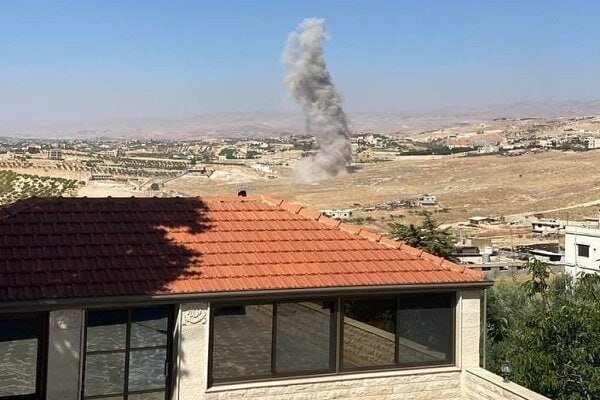
Israeli artillery fire landed on the south-Lebanese city of Tyre and the village of al-Marwaniyah on 8 June 2026, killing one child and wounding roughly a dozen other people, according to the Lebanese Ministry of Public Health, as relayed through Iranian state-linked wire channels Mehr News and Tasnim, and the Persian-language outlet Jahan Tasnim. The ministry's figures are the public record on casualties; an Israeli military confirmation was not in the public source material available to Monexus at the time of writing, and the casualty count stands as Lebanon's account rather than an adjudicated total.
What the wires carried
The Lebanese health ministry's bulletin, transmitted via the Mehr News Agency feed and the Farsi service of Tasnim, names the dead as a child and the wounded as approximately twelve. The two strikes sit in the same arc of southern Lebanon that has absorbed repeated exchanges since October 2023: Tyre, a coastal city of roughly 200,000 that the Lebanese state lists among the historic urban centres of the south, and al-Marwaniyah, a smaller village inland in the South Governorate. Both Mehr and Tasnim carry the ministry's figures verbatim, in the standard form of a Beirut-datelined health-ministry readout redistributed through regional agencies.
The news cycle is fragile enough that the choice of source matters. Mehr News and Tasnim are state-aligned outlets of the Islamic Republic of Iran and function as redistributors of Lebanese state communications rather than as original reporters on the ground in Tyre. Their value here is procedural: they preserve the wording of the Lebanese ministry's claims, which itself draws on hospital intake at the receiving facilities. The correspondents' bylines, where they exist, run through Beirut, Damascus and Tehran.
The wider pattern of fire
The 8 June strikes sit inside a southern-Lebanon campaign that has not paused for the calendar. Cross-border fire has continued through the preceding weeks, with Israeli forces conducting ground operations and air and artillery work against what the Israel Defense Forces describe as Hezbollah infrastructure, and Hezbollah firing rockets, drones and loitering munitions at northern Israel. South Lebanon's civilian population has borne the brunt of the displacement, with UN agencies tracking more than 90,000 people displaced inside Lebanon at earlier counts and the tally subject to constant upward revision.
Tyre specifically has been hit repeatedly in the current phase of hostilities. The city's hospital infrastructure has functioned at the receiving end of mass-casualty incidents triggered by Israeli strikes on the surrounding villages, and its road network has hosted the steady flow of ambulances moving wounded from the front-line towns of the South Governorate into the city's secondary and tertiary facilities. A child killed in a strike in this corridor enters a record in which child casualties are already substantial; reporting from Reuters and the BBC has put the Palestinian and Lebanese child toll at a scale measured in the thousands across the theatre of operations.
What the ministry does, and does not, certify
The Lebanese Ministry of Public Health publishes daily casualty bulletins drawn from hospital intake forms, field-ambulance reporting, and forensic follow-up. The bulletins name total killed and wounded for the day, disaggregate by age where the receiving hospital has recorded it, and identify the locality of the strike where local Civil Defense or municipal authorities have confirmed the location. A child casualty is the kind of figure that arrives at the bulletin precisely because hospitals are obliged to record the age and identity of each fatality; the ministry rarely publishes a child's name without family consent, and the morning-after release will say "a child" rather than a specific age.
The caveat sits on the bulletin itself. The ministry counts what its reporting chain delivers. Strikes that hit before the daily cutoff are included; strikes that damage infrastructure in ways that produce delayed deaths are added on later days, sometimes weeks later. Hezbollah's media arm publishes its own parallel count; the IDF publishes its own count of what it says are Hezbollah operatives killed. None of these three series reconcile cleanly to a single number, and a single ministry count for a strike on 8 June will not be the final number for that strike on 8 June.
Why the wire is thin on the Israeli side
The information ecology around a southern-Lebanon strike in 2026 tends to run through three pipelines: the Lebanese ministry's daily bulletin, the IDF Spokesperson's English-language readout, and the United Nations Interim Force in Lebanon's situation reports. The Monexus desk on 8 June had the Lebanese pipeline in working order through the Mehr and Tasnim redistributions. The IDF pipeline had not yet produced a public statement on the al-Marwaniyah and Tyre strikes at the time of writing. UNIFIL's daily update, when it arrives, typically restates the Lebanese count and notes its own presence in the area rather than independently adjudicating responsibility.
That asymmetry is structural, not editorial. The IDF publishes a daily operational summary at roughly 2200 Israel time that lists strikes and targets for the preceding 24 hours; the summary for 8 June had not been issued at the moment the Lebanese ministry's figures reached the wires. Until that summary lands, the public record on the Israeli side of the strike is silence rather than denial. The next twelve to twenty-four hours will produce either an Israeli confirmation of the strikes, with target descriptors, or a non-confirmation that leaves the Lebanese count as the working figure.
Stakes and what to watch
The Tyre and al-Marwaniyah strikes are not narratively novel, and that is the point. The south-Lebanese front is now in its twentieth month of sustained Israeli operations against what the IDF describes as Hezbollah's rebuilt infrastructure and what the Lebanese state describes as attacks on its civilian population. Each strike on a populated village produces a ministery bulletin in the same format as the one before it, a count that moves by one or by a dozen, and a news cycle that briefly registers the loss before the next bulletin arrives.
The figures on the wire at 1800 UTC on 8 June: one child killed, approximately twelve wounded, two localities hit, ministry figures carried through Iranian state-linked channels pending Israeli confirmation. Watch for three concrete items in the next 24 hours: the IDF Spokesperson's daily summary on the strikes; a UNIFIL situation report naming the localities; and an updated Lebanese ministry count, which will inch upward or downward as the receiving hospitals complete their intake.
Sources
- https://t.me/mehrnews/
- https://t.me/tasnimnews_en/
- https://t.me/JahanTasnim/
- https://en.wikipedia.org/wiki/Tyre,_Lebanon
- https://en.wikipedia.org/wiki/South_Governorate
Desk note: Monexus ran the Lebanese Ministry of Public Health figures exactly as carried by Mehr News and Tasnim, with the explicit caveat that the same figures, run through Reuters or AP with parallel Israeli confirmation, would normally anchor a wire bulletin of this length. The Israeli response had not entered the public source material by the 1800 UTC cutoff. Where the IDF eventually confirms a strike, the lede will tighten; where it does not, the count stays as a Lebanese state account, not an adjudicated total.