Trump Signals Openings and Ultimatums on Iran as Tel Aviv Billboard Demands Diplomatic Shift
The White House is publicly preparing strikes and privately asking for more time for diplomacy, in the same news cycle and to the same audience. Tehran is not buying it.
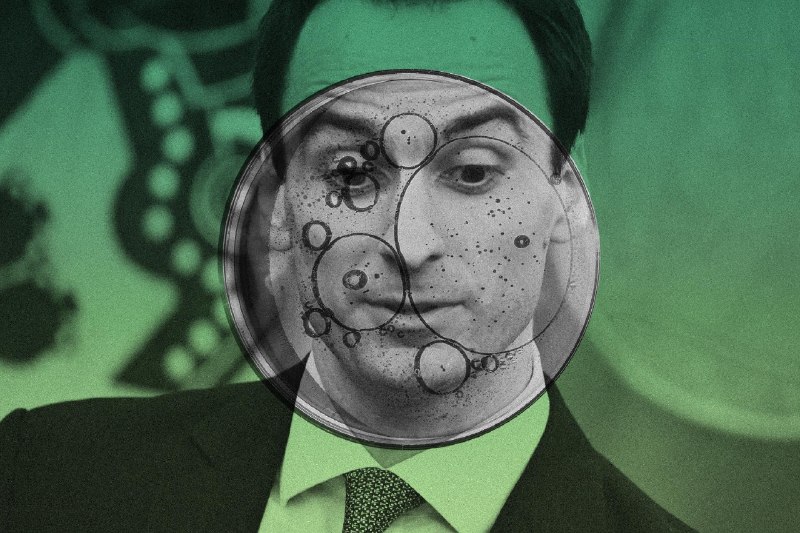
By Friday evening in Washington, the gap between the Trump administration's two Iran tracks had widened into a single news cycle: CBS News reported that the White House was preparing a fresh round of military strikes against Iran, even as diplomatic channels remained nominally open and the Wall Street Journal, citing American officials, said the president had told his aides he wanted to give diplomacy more time. President Donald Trump returned to the White House shortly before 11:30 p.m. UTC, where the press office announced an immediate lid: no on-camera comments for the rest of the night. The silence did not resolve anything. It just froze the contradiction in place, while several U.S. military and intelligence officials cancelled their Memorial Day weekend plans in anticipation of possible operations.
The substantive question is not whether the United States is preparing strikes. Multiple outlets, citing sources with direct knowledge of the planning, confirmed that contingency work was underway and that no final decision had been taken as of Friday afternoon. The question is what kind of negotiating posture produces that preparation while simultaneously claiming an opening for talks, and why Tehran is unlikely to treat the offer as serious given what is being said in the same breath.
Carrot and stick, side by side
The carrot, on this telling, is modest. The Wall Street Journal, in a report picked up by Iranian state outlets Tasnim and Jahan Tasnim, said Trump emphasised in a meeting with his aides that more time should be afforded to the diplomatic track. That is a tempo instruction, not an offer with content. It does not specify which sanctions might be paused, which frozen assets might be released, which nuclear limits might be exchanged for which relief, or what the off-ramp looks like for the Iranian side. It is a request to keep talking, framed as if the demand itself were a concession.
The stick is operational. CBS News reported that the administration was preparing for a fresh round of military strikes against Iran, with planning active enough that senior military and intelligence personnel scrapped holiday leave. Axios, summarised by the OSINTdefender account, reported that Trump's national security team had met and that, absent a last-minute deal, the president was seriously considering resuming strikes. The acting director of national intelligence appointment announced late Friday, with Trump's Tulsi Gabbard deputy Lukas taking the role in an acting capacity, signalled continuity in the security apparatus rather than any diplomatic reordering.
What Tehran is signalling back
Iran's foreign minister, Abbas Araghchi, used a Friday night call with United Nations Secretary General António Guterres to make the Iranian counter-frame explicit: American arrogance, he said, was the main obstacle in the dialogue process. The phrasing matters. It is not a refusal of talks. It is a diagnostic. Araghchi is identifying the structural problem with the U.S. position as a precondition for any negotiation he would be willing to join. The complaint, transmitted via a UN channel rather than through Oman's traditional intermediary, is also a tactical choice: it puts the United Nations on the public record as the venue where Iranian grievances are being aired, not Muscat or Doha.
That choice narrows the diplomatic space. If Tehran's working assumption is that the gap between what Washington offers privately and what it threatens publicly is a deliberate pressure instrument rather than a negotiating position, then the offer of more time reads as a request for Iran to absorb the threat posture while the substantive content of any deal is left vague. The arithmetic of acceptance gets worse, not better, when the threat is active and the relief is hypothetical.
The billboard in Tel Aviv
The original Monexus framing noted that the story was running in parallel with a public display in Tel Aviv, where a billboard campaign was pressing for a diplomatic shift. The domestic-Israeli dimension is not decorative. Any U.S. decision to dial back strikes, or to push for a deal that leaves any part of Iran's nuclear infrastructure intact, runs into an Israeli political environment that has spent months publicly conditioning its own public on the necessity of striking Iran's facilities. The billboard is one data point in that conditioning campaign, but it is a visible one.
For the White House, this creates a second credibility problem on top of the Iran file. A diplomatic opening that produces visible relief in Tehran without producing visible disarmament in Iran is a hard sell to an Israeli audience that has been promised the opposite outcome. A strike campaign that escalates without a clear theory of how strikes produce a negotiating position Tehran will accept is a hard sell to a domestic audience that has been told the diplomatic track is the priority. The administration is, in effect, running two marketing campaigns for two incompatible end states.
What the wire actually says
It is worth separating what the reporting on the record establishes from what the Iranian state outlets are doing with it. CBS News' strike-preparation story is sourced to U.S. officials with direct knowledge of the planning. The Wall Street Journal's tempo story is sourced to American officials describing Trump's private instructions to his team. The Axios national security meeting account is reported via a summary on social media and should be treated as one degree more removed. None of these sources describe a deal on the table, a sanctions waiver in motion, or a specific reciprocal commitment from Tehran. They describe mood, tempo, and contingency planning, all of which can be reversed by a single phone call or a single intercept.
Iranian state outlets Tasnim and Jahan Tasnim, reporting on the Wall Street Journal piece, framed Trump's reported preference for more diplomatic time as a sign that U.S. pressure is failing. That is also a mood reading, not a fact claim. But it is the mood reading that will reach Iranian decision-makers, and it will be reinforced by Araghchi's own framing of the call with Guterres.
The structural problem
Coercive diplomacy works when the other side believes that the carrot is reachable through compliance and the stick will land on non-compliance. It fails when the other side believes that the carrot is fictional, that compliance will be redefined upward once partial steps are taken, and that the stick will be used regardless because the political logic on the imposing side rewards the use of force over the optics of negotiation. The May 20 reporting, taken as a whole, gives Tehran reasons to hold all three beliefs at once.
The weekend will test whether the contingency planning is the administration's actual plan or its bargaining position. If strikes come, the diplomatic track that the Wall Street Journal described is dead in its current form, and Iran's complaint of U.S. arrogance will be retrospectively vindicated. If strikes are held while the diplomatic track produces nothing on the record, the threat posture degrades without producing any Iranian movement, and the next round of pressure will start from a weaker baseline. There is no version of the present configuration in which doing nothing produces a settlement, and the cost of each available move is paid in the credibility of the other.
What to watch next week
Three dates will clarify which track the administration has actually chosen. First, whether the acting director of national intelligence is confirmed in a posture that supports a strike campaign or in one that buys time for a negotiating window. Second, whether Oman's intermediary channel produces any read-out that names a substantive Iranian offer. Third, whether the Tel Aviv billboard campaign is joined by voices inside the Israeli government calling for restraint, which would indicate that the diplomatic track has at least one external constituency willing to underwrite it. Absent movement on at least one of those three, the Memorial Day weekend cancellations were a leading indicator, not a false alarm.
How Monexus framed this vs the wire: the wire covered the strike-preparation reporting as a breaking story and the Wall Street Journal diplomacy piece as a separate tempo story. This piece reads them as one event, and treats the contradiction between them as the analytically interesting fact.