The Nvidia Enigma: Decoding Jensen Huang's Unscripted Beijing Walk
As President Trump concluded trade talks with Xi Jinping in Beijing on 16 May 2026, Nvidia CEO Jensen Huang walked the streets alone, eating ramen at a local shop. The image contrasts sharply with official US policy on semiconductor exports to China.
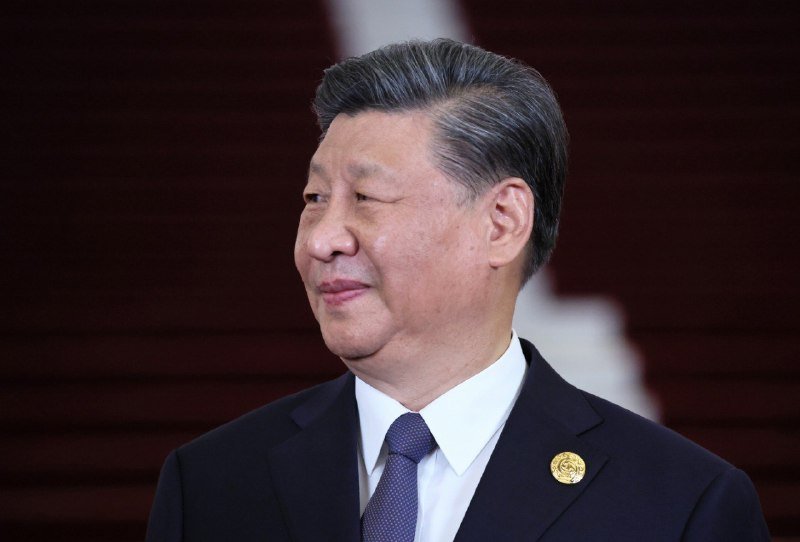
The image circulated rapidly across geopolitical monitoring channels: Jensen Huang, chief executive of Nvidia, photographed walking the streets of Beijing on 16 May 2026 while the rest of the official US delegation attended structured meetings with Chinese leadership. Huang was captured interacting with locals and dining at a small ramen establishment — a scene that stood in stark visual contrast to the formal summitry unfolding minutes away.
The photograph arrived as President Donald Trump concluded his second meeting with Chinese President Xi Jinping within a twelve-month period. The encounter produced concrete commercial outcomes: China agreed to purchase 200 Boeing aircraft, representing what Boeing and the White House described as the company's most significant breakthrough in the Chinese market in years. The Taiwan arms question — which the administration had signalled would feature prominently — remained diplomatically unresolved, with Trump insisting afterward that no substantive concessions had been made to Beijing.
Yet amid these headline deliverables, the sight of one of America's most strategically sensitive technology executives wandering Beijing's streets unchaperoned raised a question that official communiqués did not address: what exactly is Nvidia's posture toward the Chinese market at a moment when US export controls have effectively barred its most advanced chips from Chinese customers?
The Export Control Architecture
Washington's restrictions on semiconductor exports to China have been building since the Biden administration and have continued under Trump. Nvidia's H100, H200, and Blackwell GPU architectures fall squarely within the controls' scope; the company has already recorded substantial revenue losses from Chinese market exit. In fiscal year 2025, Nvidia disclosed that China-bound shipments had declined sharply following the implementation of expanded licensing requirements.
Beijing's position on these restrictions has been consistent: they constitute economic coercion by a dominant power seeking to stunt China's technological development. Chinese state media and technology firms have framed the controls as both illegal under international trade norms and counterproductive to stated US goals of stable economic engagement. The alternative — domestic Chinese chip development — has accelerated, with Huawei's Ascend architecture and other homegrown alternatives receiving intensive state investment.
What Huang's informal visit communicates, at minimum, is that Nvidia's corporate gaze remains fixed on China as a market and as a strategic locus — regardless of what Washington's export registers say. Whether this reflects divergence between US government and US corporate priorities, or whether Huang was genuinely acting in a personal capacity unconnected to any diplomatic dimension of the Trump visit, cannot be determined from available evidence.
What We Verified / What We Could Not
Verified:
- Jensen Huang was photographed in Beijing on 16 May 2026, during the official Trump delegation visit. Multiple independent OSINT monitoring channels published the photograph, showing Huang walking in an urban area and reportedly dining at a local establishment.
- Trump and Xi held a formal meeting on that date, producing a Boeing aircraft purchase commitment of 200 units.
- Taiwan arms sales were on the stated agenda; Trump maintained afterward that no US ground had been ceded on the issue.
- US export controls on advanced Nvidia chips to China remain in force.
Could Not Verify:
- Whether Huang's visit was coordinated with or known to the White House or State Department prior to its occurrence.
- Whether Huang held any private meetings with Chinese officials, government advisors, or major Chinese technology customers during the visit.
- What internal discussions, if any, Nvidia has had regarding China market strategy under ongoing export restrictions.
- Whether the ramen establishment had any connection to Chinese technology industry personnel or was a purely commercial transaction.
The sources do not establish a direct link between Huang's movement through Beijing and any specific diplomatic or commercial outcome. The significance of the visit, if any, must be inferred from structural context rather than documented fact.
Structural Context: Corporate Actors in Geopolitical Terrain
The incident illuminates a recurring friction in US-China relations under conditions of strategic competition. American technology companies — Nvidia, Qualcomm, Apple, and others — have built global supply chains and customer bases that do not respect the boundaries drawn by export control regimes. When political leaders travel to Beijing, these companies have complex interests that do not automatically align with official US posture.
This is not a new dynamic. American multinationals have historically served as both instruments and obstacles of US foreign policy, depending on the administration and the sector. But the semiconductor industry's centrality to great-power competition has elevated that friction to a first-order diplomatic concern. Every chip that cannot be sold to China changes the calculus for both sides: for Washington, it tightens strategic constraints on a rival; for Beijing, it accelerates domestic替代 — the word Chinese commentators use for technological substitution.
Huang's public presence in Beijing, even in an informal register, signals that Nvidia is not preparing to exit the China conversation permanently. The company has too much infrastructure, customer relationship, and long-term market knowledge to simply write off the world's second-largest economy. The question is not whether US technology firms will engage China, but under what auspices that engagement will occur — and whether Washington has the architecture to manage it coherently.
Stakes
If American technology executives are developing independent China strategies that run parallel to official US policy, the implications for export control enforcement are significant. The controls are designed to restrict hardware flows; they do not directly govern the information relationships, customer loyalties, and strategic intelligence that executives accumulate through market presence. A CEO who maintains personal rapport with Chinese technology leaders — even without completing a sale — retains a form of access that official restrictions do not fully neutralize.
For Beijing, Huang's visible presence in Beijing during a US presidential visit carries its own diplomatic signal. It suggests that American corporate interest in China cannot be fully subordinated to strategic competition, regardless of the restrictions in force. China has historically used commercial relationships as a stabilizing mechanism in its US relationship; the Boeing purchase and the Huang visit, taken together, reinforce that tradition.
For Nvidia, the risk is regulatory. Any perception that its executives are circumventing the spirit of export controls — even in ways that are not technically illegal — invites scrutiny from Congress and from the Commerce Department's Bureau of Industry and Security, which administers the export regime. The company has navigated this terrain carefully to date. Whether a photographed walk through Beijing alters that calculation remains to be seen.
This publication covered the Trump-Xi meeting and Nvidia CEO visit through the lens of commercial diplomacy and strategic competition. Wire coverage of the trip focused primarily on the Boeing deal and Taiwan framing; this article foregrounds the semiconductor export control architecture as the structural frame through which the Huang visit acquires its deeper significance.
Wire provenance
This editorial synthesis draws on the following public wire/social posts:
- https://t.me/osintlive/18432
- https://t.me/osintlive/18431
- https://t.me/abualiexpress/24991
- https://t.me/BellumActaNews/14723