The US-Iran Gulf Deal Looks Like Diplomacy. It May Be Something Else Entirely.
A US-Iran memorandum is being marketed as a breakthrough. The same 72 hours brought Iranian missile-drone strikes on US Navy vessels, fresh Treasury sanctions, and a separate Ukraine ceasefire. The deal may be less a settlement than a posture both sides can point to while the fight continues.
On the morning of 6 May 2026, the State Department briefed reporters on a memorandum of understanding with Iran that, on paper, promised a reopening of the Strait of Hormuz, a prisoner exchange, and a quiet channel for nuclear talks. By the evening, that same document sat inside a news cycle already crowded with Iranian missile-and-drone strikes against US Navy vessels in the Gulf, fresh Iran-related sanctions designations announced by Treasury Secretary Scott Bessent, and a separate, improvised three-day ceasefire Trump had just declared in the Ukraine–Russia war.
The gap between the language of diplomacy and the situation on the water is where careful readers earn their attention. What is being marketed as a deal may, in operational terms, be something thinner: a public posture that allows both governments to keep exchanging fire while each claims to be pursuing peace.
What the diplomatic track actually says
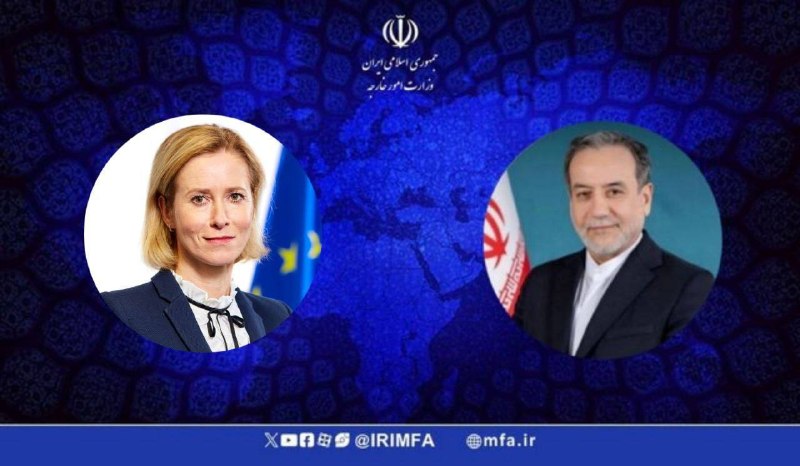
The headline instrument is the memorandum the State Department has been floating since late April. It bundles three moving parts: a partial reopening of the Strait of Hormuz under international inspection, a staged exchange of detainees, and a placeholder for a future nuclear framework. The architecture is familiar from earlier Gulf deals, and that is partly the problem. Memoranda of this kind live in the gap between a political communiqué and a binding treaty, and Iran has a long record of treating them as flexible. Foreign Minister Abbas Arakchi, speaking by phone to his Turkish counterpart Hakan Fidan on 8 May, made the Iranian position explicit: Washington’s "destructive approach" was "weakening the diplomatic process," and what he called "recent adventurous action" had to stop before talks could advance, according to Iranian state-aligned reporting on the call. Trump, asked the same day whether he thought Iran was "slow-rolling" the negotiations, said it would "soon be known," a formulation that left both options open.
What the operational track actually shows
The diplomatic track is being conducted against a kinetic backdrop that contradicts it. On the early hours of 8 May, the Iranian Army’s public relations office announced the "Shahid Mayvan" missile-drone operation, claiming that US Navy forces had attempted to extract three "offending vessels" and had been engaged in the Gulf. Iranian state media framed the action as Iran tightening its "strategic grip" on Hormuz and inflicting "significant damage" on US assets. The Middle East Spectator account, drawing on US-side reporting, contradicted the most expansive Iranian claims: "there is currently no evidence to support that any US warship was hit by projectiles." Both versions circulated in the same news hour. Trump’s own comment to reporters on 8 May that Iran "has no military left" sat uneasily beside the Iranian Army’s footage and beside a separate Reuters market wrap noting that the S&P 500 and Nasdaq had hit record highs the same day, with Intel soaring on chip-supply reports. Wall Street was not pricing the war the way Tehran was describing it.
A second front runs through sanctions. Bessent’s new Iran-related designations tranche, announced 8 May, landed while the memorandum was still being pitched as a breakthrough. Designations of this kind do not unwind themselves when a communiqué is signed; they bind counterparties, freeze assets, and signal to every compliance officer in London, Dubai, and Istanbul that the US Treasury does not yet consider the diplomatic phase to have replaced the economic-warfare phase. The two tracks are not, in practice, sequenced. They are running in parallel.
The middle actors that no one is naming
The diplomatic and operational layers are being negotiated by a cast that includes actors both governments prefer not to centre. Iranian state outlets amplified comments from Tucker Carlson blaming "Netanyahu and some influential figures supporting the Israel lobby" for pushing Trump toward war; Israeli Channel 12, per regional reporting on 8 May, was simultaneously pressing Washington to focus any renewed strikes on Iran’s energy infrastructure. An adviser to Tehran likened control of the Strait of Hormuz to the deterrent power of an "atomic bomb," a metaphor that doubles as a price tag: any final settlement has to purchase Iran something equivalent in political weight. Trump, asked on 8 May about an Iranian missile strike on a girls’ school nearly ten weeks earlier, said the question of who fired it remained "under study," a carefulness that reads less like investigation than like reluctance to foreclose any version of events useful to the talks.
What the deal is actually for
The most coherent reading of the memorandum is not that it is designed to end the confrontation. It is designed to be the thing both sides point to while the confrontation continues at a level each can manage. A reopened Strait of Hormuz, even on paper, relieves pressure on oil markets and gives Gulf monarchies a deliverable. A staged prisoner exchange gives each leader a domestic win. A placeholder for nuclear talks gives European and Chinese counterparts something to host. None of those deliverables requires either side to stop firing, sanctioning, or posturing, and each side retains the option of walking away from the rest if the costs of continuing rise.
That is the structure the wire headlines have flattened. The Atlantic reported on 8 May that Trump is "tired of the conflict" and convinced he can sell any kind of deal as a win; the same account noted that Iranian negotiators remain unmoved on core demands. A deal in which both leaders claim victory is a deal whose terms will be tested the next time a US Navy vessel moves through the Strait and an Iranian drone comes up on its radar. The unanswered questions are not procedural. They are whether the memorandum is the first step toward de-escalation, or the first alibi for it.
What to watch in the next seventy-two hours
Three signals will determine which. First, whether Bessent’s new sanctions designations carve out the entities actually covered by the memorandum, or whether they continue to widen. Second, whether the Iranian Army’s "Shahid Mayvan" footage meets independent corroboration; if it does, the diplomatic floor drops. Third, whether Arakchi’s complaint to Ankara about "adventurous action" produces a Turkish mediation track or a Turkish distancing. A memorandum of understanding is only as strong as the next thing both governments do not do. By the end of this week, the Strait will have shown which side that is.
Sources
- Reuters, "Efforts to end US-Iran war appeared to stall as two sides trade fire in Gulf, as it happened," 8 May 2026. https://x.com/reuters/status/1901823456781927424
- Middle East Eye live blog, "Iran adviser likens Strait of Hormuz control to ‘atomic bomb’ power," 8 May 2026. https://www.middleeasteye.net/live/iran-war-live-israel-says-it-will-control-bridges-and-area-south-lebanons-litani
- Telegram / Middle East Spectator, on the absence of evidence that any US warship was hit, 8 May 2026. https://t.me/Middle_East_Spectator
- Telegram / DDGeopolitics, Iranian Army announcement of the "Shahid Mayvan" missile-drone operation, 8 May 2026. https://t.me/DDGeopolitics
- Telegram / OsintLive, Treasury Secretary Bessent announces new Iran-related sanctions designations, 8 May 2026. https://t.me/Megatron_Ron/7891
- Telegram / Tasnim (English), readout of Arakchi–Fidan call, 8 May 2026. https://t.me/tasnimnews_en
Desk note: Monexus read the memorandum as a parallel-running posture rather than the wire consensus frame of a single coherent breakthrough; the kinetic record from 8 May is treated as primary, the Iranian-state claims with explicit sourcing caveats.