Trump Survives Apparent Assassination Attempt at Virginia Property
The White House podium appearance came hours after a counter-sniper operation at Trump's Virginia estate; the same week the administration publicly pledged to keep the Strait of Hormuz open — a claim critics say rings hollow against the morning's security failure.
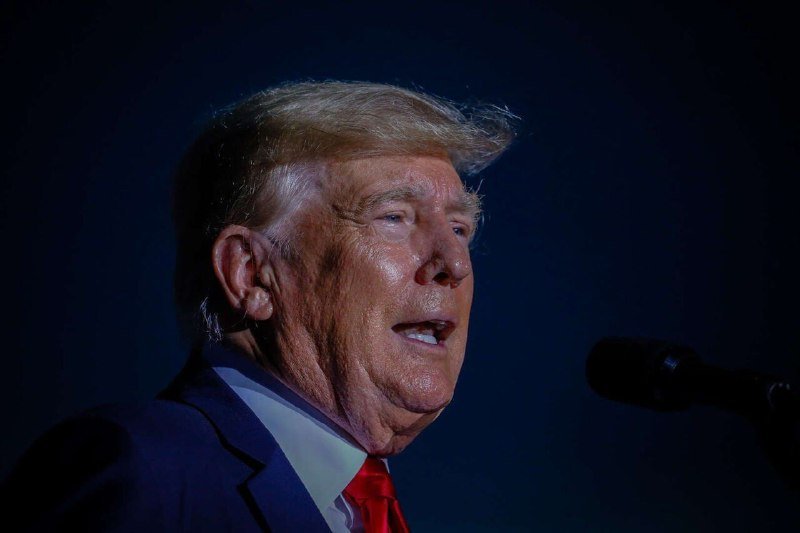
On the afternoon of 27 April 2026, a Secret Service counter-sniper neutralised a threat at Donald Trump's Virginia property. The suspect was later taken into custody in Pennsylvania; no injuries were reported. By evening, Trump stood at the White House podium and declared the perpetrator "already dead" — casting the episode as political violence directed at his return to power.
"When you're impactful, they go after you," Trump said, hours after the incident. The statement was covered by major wire services, which described it as the latest apparent attempt on his life within days of his return to office.
The episode arrives at a moment of acute contradiction. The same administration that publicly committed to securing the Strait of Hormuz — one of the world's most geopolitically sensitive oil transit corridors — appeared unable to prevent a direct threat materialising at the President's personal residence. Iranian-aligned commentators were quick to note the juxtaposition. An English-language analyst writing via Tasnim News observed that while the White House claimed authority to police a waterway carrying roughly a fifth of the world's oil, it could not "even secure a hotel in Washington DC."
The security failure at close range
The details remain the subject of an active investigation. What is established is that the threat emerged at Trump's own property — a location with the highest concentration of protective resources available to the executive branch. The counter-sniper response indicates that Secret Service posture was sufficient to detect and neutralise the threat before harm occurred. But the incident itself — an individual reaching the immediate perimeter of a sitting President at a private venue — represents a material breach of layered protective architecture. Whether the individual acted alone, what prior intelligence existed, and whether the timing reflected coordination with any other actors remain open questions. The sources reviewed do not detail the investigation's findings.
Trump's characterisation of the episode as politically motivated, delivered from the podium without the formality of a prepared statement, reflects the transactional communication style that has defined his return to office. The decision to speak publicly within hours, rather than through a formal written statement or press secretary briefing, signals an instinct to own the narrative before competing framings take hold.
The Hormuz pledge and its structural contradictions
The Strait of Hormuz sits at the intersection of Gulf energy flows, Iranian military doctrine, and the broader architecture of US alliance management in the Middle East. The administration has signalled a commitment to keeping the waterway open — language that carries weight given Iran's documented history of threats to mining, drone saturation, and anti-ship missile deployment in the strait during periods of heightened tension.
The problem is not the commitment itself. Iranian-aligned commentary captures the appearance problem rather than the underlying strategic logic: a White House that cannot fully secure its own President's residence is not necessarily incapable of projecting decisive force across a strategically critical maritime corridor. But the juxtaposition — an event that forced a visibly shaken administration into immediate political recovery mode — provides foreign adversaries with a data point about operational coherence that the Hormuz commitment cannot offset.
The sources do not specify what concrete capabilities or diplomatic arrangements the administration has proposed to back its Hormuz pledge. What is clear is that the gap between the claim and the morning's optics has given critics an easy line of attack.
What the episode reveals about signal and reception
The framing from Iranian-aligned media — that Trump's Hormuz claim is hollow — is not simply a geopolitical argument. It is a signal reception problem. Foreign actors watching a White House that cannot prevent a direct threat at its own doorstep will calibrate their own assessments of US resolve, particularly in theatres where escalation is plausible. This is not a matter of whether the US military retains the capacity to secure Hormuz. It is a matter of whether the current occupant of the executive office projects the operational steadiness that allies read as a credible deterrent and adversaries read as a constraint on miscalculation.
The incident does not necessarily alter that calculus in a durable way. Assassination attempts on US Presidents have historically produced short-term rally effects rather than structural credibility shifts. But the specific timing — directly preceding a foreign policy week in which Hormuz, Iran, and Gulf energy security were all in active discussion — means the episode will shape the interpretive frame through which allied and adversarial capitals receive subsequent administration statements.
The sources reviewed do not include direct statements from Gulf state officials, the Pentagon, or State Department spokespeople regarding the incident's implications for regional posture.
The broader credibility question
What the incident surfaces is not simply a Secret Service failure — the counter-sniper response indicates the system functioned as designed at the point of detection. What it surfaces is a question about institutional coherence at the executive level: can the White House manage a crisis of this nature without it being read as a symptom of deeper operational disorder?
Trump's response — the podium statement, the immediate political framing, the refusal to let the episode be defined by the initial reporting — is consistent with an approach that treats crisis management as narrative management. Whether that approach is sufficient to prevent the episode from being weaponised by adversaries is the question that remains unanswered.
The Strait of Hormuz pledge sits inside this same credibility problem. The administration has not yet had to demonstrate what it means in practice. The week of the apparent assassination attempt is not the week in which that demonstration is likely to come — but it is the week in which adversaries are most likely to test whether the Hormuz commitment is backed by the kind of institutional steadiness that credibility requires.
This desk covered the assassination attempt through a combination of Western wire reporting on the White House podium event and Iranian-aligned commentary on the Hormuz contradiction. The dominant Western frame emphasised Trump's public recovery and political resilience; the Tasnim and Farsna framing foregrounded the domestic security failure as evidence of broader overreach. The structural analysis above attempts to hold both framings simultaneously rather than selecting between them.
Wire provenance
This editorial synthesis draws on the following public wire/social posts:
- https://t.me/tasnimnews_en
- https://t.me/farsna