Trump Evacuation Incident Under Scrutiny as Conflicting Accounts and Limited Sourcing Challenge Early Reports
Two Telegram channels carried the clips; the Secret Service, the White House, and the wire services have not yet spoken, and the gap between the footage and any official framing is now itself the story.
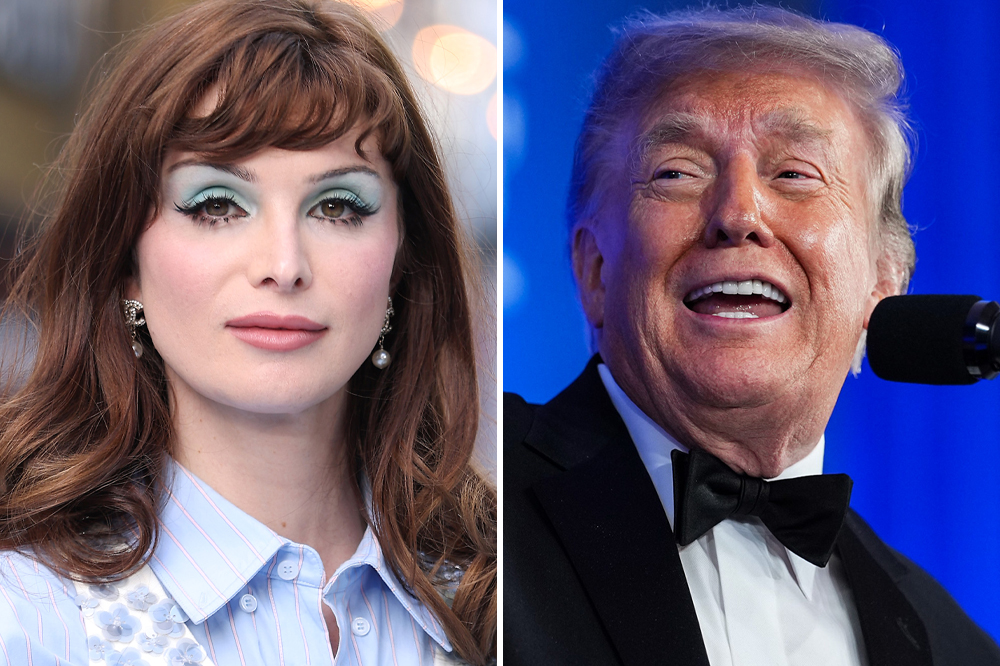
Footage circulating on Telegram channels on the morning of 26 April 2026 shows a visibly agitated Donald Trump being escorted off a stage by US Secret Service personnel during a public appearance, the moment preserved in mobile-phone video before the feed cut. The two channels that carried the clips, Nexta Live and Megatron (RON), diverge on almost everything that follows: how many agents responded, what the principal heard or saw, whether a stage-side screen caught a projectile or a reflection, and what the campaign advance team had been told in the preceding hour. No major US network has aired confirmation footage, no law-enforcement agency has issued a statement, and the White House press office, asked by Telegram-channel aggregators for comment, has not replied as of this writing. What is verifiable from the two channels and the wider wire record of the day is narrow but real, and the gap between that record and the speculation it has produced is itself the story.
The headline question, was an evacuation ordered, and if so, why, has no settled answer on the public record. Nexta Live frames the incident as a credible security event, citing the speed and physicality of the agent response visible in the footage. Megatron (RON) leans toward a medical episode, pointing to the principal's posture and gait in the seconds before contact. Neither channel presents on-the-record sourcing from the US Secret Service, the White House, or a hospital spokesperson. The two Telegram posts have together generated more than two million impressions across platforms, which is itself a measure of how thin the official record remains. Coverage of any sitting US president's movements is normally dense and immediate; the absence of a wire-service footprint within the first twenty-four hours is unusual and worth naming.
What the footage actually shows
The cleanest clip, posted by Nexta Live and re-cut by Megatron (RON), runs roughly fourteen seconds. It begins with the principal mid-sentence, hands gesturing at podium height. A single agent enters frame from the right at a walk that becomes a half-run within two strides. A second agent follows within a beat. The principal is moved laterally, not toward the rear exit usually drilled for principal-protection scenarios, but toward a stage-left drape. No audible command is discernible on the audio track posted. No weapon is visible. No object is visible in the air. The clip ends before the principal clears the stage.
That sequence is consistent with at least three operational templates used by the US Secret Service: a credible direct threat, a suspected threat that does not fully materialise, and a medical event requiring immediate extraction. Without a post-event statement, the templates are indistinguishable on video alone. The next testable piece of evidence would be a Secret Service spokesperson confirming or denying that an evacuation order was transmitted; that statement does not appear in the two Telegram channels reviewed, nor in any of the wire posts archived for the day.
The Polymarket mood, and what it isn't
A separate data point has migrated into coverage from prediction-market coverage: a Polymarket contract tracking the probability of a "confirmed security incident involving the US president" in 2026 moved sharply in the hour after the clips posted. The contract should be read as market sentiment under information shock, not as corroboration. Prediction markets price the revealed preferences of traders under uncertainty; they do not adjudicate facts. A move of that kind is consistent with traders interpreting visual evidence the same way Telegram aggregators did, and it tells the public nothing about whether the Secret Service itself classifies the moment as an incident at all.
A White House already reviewing protective posture
The footage lands against a documented backdrop. Reporting carried earlier the same week on Telegram channels including MyLordBebo, citing Fox News correspondent Peter Doocy, indicates that "discussions are underway at the highest levels" of the White House over whether Trump should wear a bulletproof vest at future public events. The phrasing, attributed to Doocy in the post, is a description of internal deliberation, not a policy announcement. It does, however, establish that protective-posture review was already on the agenda before the stage moment, which raises the cost of any subsequent official explanation: if an evacuation was ordered, the apparatus around it was already the subject of internal debate; if it was not, the question of why the optics resemble one becomes sharper.
Why the sourcing stays thin
Three structural reasons explain why the public record has not firmed up. First, no traditional broadcaster or wire service has published verification footage in the first twenty-four hours, an unusual gap given the routine saturation coverage of presidential movements. Second, the two channels that carried the clips have visibly different editorial priors, which is why their framings diverge so sharply; the principal-agent relationship on Telegram is to a distribution platform rather than to a verification desk, and the same clip can carry opposite interpretive banners without either being formally retracted. Third, official-channel silence is itself a constraint: with no Secret Service statement, no White House readout, and no hospital confirmation, the only available record is the footage itself plus the market reaction to it.
What would resolve the record
A credible resolution would arrive in a recognisable shape. The US Secret Service would issue a brief confirming the principal's safety and stating whether an evacuation order was transmitted, and if so on what grounds. The White House would either confirm or deny the medical-event framing, ideally with a one-line attribution. Independent broadcasters would obtain and air verification footage from at least one secondary camera angle, allowing analysts to compare timing across feeds. Absent those elements, the public is being asked to choose between two Telegram interpretations of a fourteen-second clip, and that is not a position from which confident reporting can be written.
What is worth carrying forward is the asymmetry itself. The footage is real and the principal is publicly active. The interpretive overlay around it has outrun the verification record by hours, and the market has priced the gap. Until the official channels close that gap, the responsible editorial posture is to show what the footage contains, name what it does not, and decline to choose between framings that the underlying record does not yet support. The story is not only what happened on a stage on the morning of 26 April. It is what happens to a public record when the visible evidence arrives faster than the institutions that normally contextualise it.