Tehran's rebuff and the diplomatic channel that just won't close
On 23 July 2026, Iraqi Prime Minister Ali al-Zaidi left Tehran having signed four bilateral cooperation agreements announced by PressTV, while a Telegram relay chain attributed to the New York Times an unverified claim that Iran had rejected a Trump ceasefire proposal. The asymmetry is itself the story.
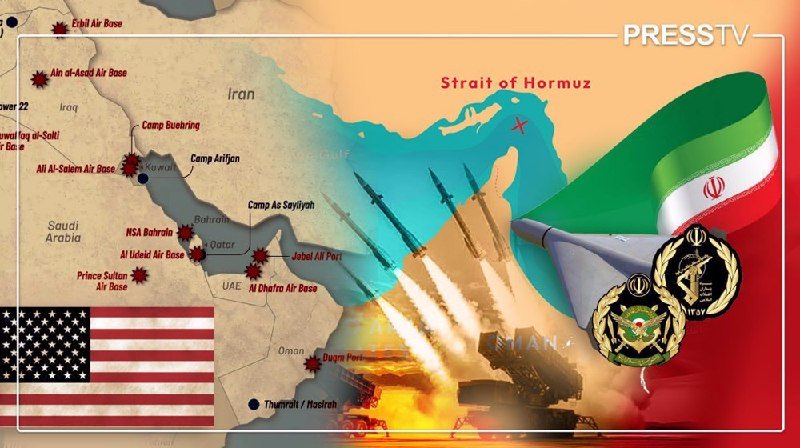
Iraqi Prime Minister Ali al-Zaidi's visit to Tehran on 23 July 2026 produced two stories running in parallel, and only one of them sits on a citable record. Iranian state television, via PressTV's Telegram channel at 00:30 UTC on 24 July, framed the day around four signed bilateral cooperation agreements and a partnership summit. Separately, a chain of Telegram relays (surfacing on OSINTdefender and Faytuks Network at 00:20 UTC) and an X post by Disclose.tv at 01:20 UTC on 24 July attributed to the New York Times a claim that Iran had rejected a ceasefire proposal that the same relays said President Donald Trump had carried to Tehran via al-Zaidi. The proposed terms, the Iranian counter-position, and any first-party confirmation from Washington, Baghdad, or Tehran do not appear in the source items available to this article.
Read the rebuff carefully and the diplomatic geography of the Gulf comes into focus. Monexus analysis: Baghdad is now functioning as a semi-permanent mediator between Washington and Tehran, and the 23 July visit is the kind of evidence that confirms, rather than disrupts, that role. The structural question is whether a channel built on Iraq's plausibility to both sides can also deliver what one of those sides wants. The available record says no, not on this trip.
The mediator with one record on tape
Al-Zaidi's usefulness to Trump depends on a fiction everyone involved is willing to maintain: that Iraq is a neutral courier rather than a country whose governing coalition includes Shia Arab blocs with structured ties to Tehran. The 23 July agreements, announced by PressTV via Telegram at 00:30 UTC on 24 July, were not a sideshow. They were the point. Iran received the Iraqi prime minister in a setting calibrated to look like a partnership summit, and used Iranian state media to make that visible to a domestic Iranian audience.
The Western wire line on this story will, predictably, frame the visit through the rejected ceasefire, once a first-party report confirms what the relays have only attributed. Monexus assessment: the structural read is different. Iran's leadership is being offered a choice between escalation and a face-saving diplomatic settlement, and is choosing a third option. Talk to Iraq, sign economic agreements, and let the ceasefire proposal die on the table while bilateral business proceeds. That posture buys time without paying the political cost of an outright public rejection.
What the relays reported, and what the available record does not
The initial reporting on the rejection, surfacing on Telegram at 00:20 UTC on 24 July via OSINTdefender and Faytuks Network relays and on X via Disclose.tv at 01:20 UTC, attributes the claim to the New York Times. No primary NYT URL appears in the available source material. The relays specify that Iran rejected; they do not specify the terms of what was rejected, who in Tehran delivered the answer, or how the proposal reached al-Zaidi in the first place. The news has travelled through a single relay chain. Every consequential factual claim about the rebuff in this article is therefore hedged to that provenance: it is what the relays say the NYT reported, and nothing more.
For a story of this consequence, the provenance is thin. The wording across the relayed posts is consistent, and the timing fits the visit. But the underlying document, the actual terms Trump reportedly offered, and any Iranian counter-position are not on the record in the sources available to this article. Read it as a plausible claim with one named outlet's name attached by relays, not as a confirmed first-party report.
Iraqi state media's account of the visit, by contrast, is heavy on deliverables: four cooperation agreements, public handshakes, statements about bilateral partnership. The asymmetry is itself a tell. When one side talks about outcomes and the other side's reporting travels only through relay chains, the side talking about outcomes has usually already decided its position, and the side whose story is unattributed is usually still working out its talking points.
The corridor that will not close
The Iran-Iraq relationship is thick enough to function as a regional infrastructure project in its own right. Energy, trade, pilgrimage routes, and the political coordination of Shia Arab parties inside Iraq's governing coalition all run through it. The 23 July agreements are a continuation of that build-out, not a detour. Whatever Washington wants from Baghdad, Baghdad is delivering to Tehran first, and on camera.
That structural fact is what makes the unverified rejection claim more than a news cycle. Trump's bet on al-Zaidi as a courier rests on the assumption that Iraq can be flipped from a partner of Iran into a mediator between the US and Iran. Monexus analysis: the 23 July evidence available to this article suggests the opposite within Iraqi domestic optics. The same prime minister can sign cooperation agreements in one half of the day and carry what the relays describe as a ceasefire proposal in the other, because the two roles do not actually conflict inside Iraqi politics. Iran has made sure of that, over years, by embedding the relationship at the level of energy contracts, parliamentary alliances, and religious-tourism flows. A single diplomatic visit cannot unwind that, and the available reporting does not show it was designed to.
Stakes
The forward question is whether Washington reads the rebuff, once a first-party source confirms it, as a tactical delay or a strategic no. If the former, expect a second messenger, and possibly a more generous proposal behind it. If the latter, the diplomatic track collapses into its alternative: escalation, sanctions tightening, or a unilateral US move that closes the channel with Iran for a generation. The next scheduled pressure point is whatever first-party confirmation or contradiction emerges from the New York Times, the Iraqi government, or the Iranian government in the days following the 23 July visit. Until then, the rejection is a claim with one relay chain behind it; the partnership summit is a claim with Iranian state cameras behind it. Both are in circulation. Only one is on the record.
Desk note: Monexus frames this as a story about diplomatic geography, not presidential failure. The wire line on a rejected ceasefire proposal will emphasise the messenger once the relay chain is confirmed. The structural line, which the available source material supports more clearly than the rejection claim, is about an Iran-Iraq partnership that has become thick enough to absorb the role of US intermediary without visibly breaking stride.
Wire provenance
This editorial synthesis draws on the following public wire/social posts:
- https://t.me/osintlive/558694
- https://x.com/disclosetv/status/2080463039220814146
- https://t.me/presstv/200114
- https://t.me/osintlive/558674
- https://t.me/osintlive/558671