Iran tells SCO foreign ministers the bloc must speak for sovereignty
At the SCO Council of Foreign Ministers in Cholpon-Ata, Abbas Araghchi argued the ten-member bloc must function as a clear voice on national sovereignty, a framing pitched at Iran's standoff with the West as much as at Beijing's.
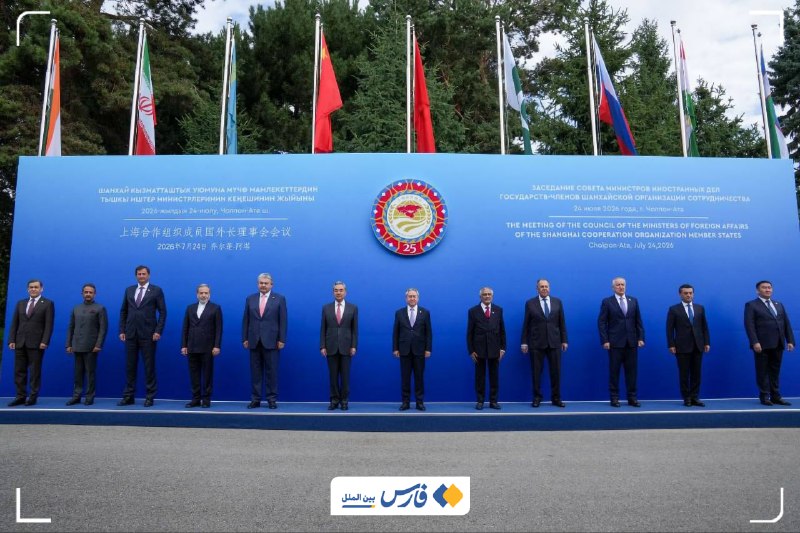
Foreign ministers of the ten Shanghai Cooperation Organization member states sat down in the Kyrgyz lakeside town of Cholpon-Ata on 24 July 2026, and Iran's Abbas Araghchi used the opening to push the bloc toward a sharper diplomatic posture. Iran, he said, wants Shanghai to function as a clear voice in defence of national sovereignty, language that doubles as a frame for the standoff between Tehran and the United States and a signal to the body's larger members about the kind of order they say they are building.
Araghchi's argument is the analytical story. The body has become one of the standing venues where sanctioned and sanctions-adjacent states coordinate language at a moment when the Western-led financial architecture is under sustained questioning in the Global South. What the publicly available reporting from Cholpon-Ata establishes is that Iran is investing diplomatic capital in seeding sovereignty vocabulary into the meeting's text; what it does not establish is whether that vocabulary will survive contact with the bloc's internal disagreements.
What was on the table
According to the Tasnim News correspondent in Cholpon-Ata, the agenda carries about 25 draft resolutions covering political, security, economic and humanitarian cooperation. Iranian foreign ministry spokesman Ismail Baqaei, travelling with the delegation, told the same outlet that Iran attaches special importance to the SCO and to "similar international arrangements." Fars News confirmed Araghchi's travel to Kyrgyzstan earlier in the day. None of the draft resolutions have been published in the cited reporting; the figure of "about 25" is the only quantitative handle on the meeting's workload available at the time of writing.
The number matters because foreign ministers' meetings typically wrap with a communiqué listing priorities for the year ahead, in advance of the heads-of-state summit that follows. The communiqué is the document Western foreign ministries and sanctions-monitoring desks actually read. Iran's attempt to seed sovereignty language into that text is therefore not symbolic, it is procedural.
The sovereignty frame, in context
So-called sovereignty-based diplomacy has become the standing vocabulary of an emerging alignment. The framing carries an obvious counter-narrative that the available reporting does not address: the same sovereignty argument is also the principal diplomatic vocabulary used by governments that have conducted cross-border operations against neighbours in recent years. The Iranian argument has internal logic, it is also one a careful reader should read against the grain. The bloc's inability, evident across years of communiqués, to enforce its own commitments is part of what makes it useful to a sanctioned state: it offers language without obligation.
What the meeting can and cannot deliver
The SCO operates by consensus among ten members whose interests diverge. The realistic Iranian gain from Cholpon-Ata, on the evidence available, is the seeding of vocabulary that can be cited later in bilateral talks, at the UN General Assembly in September, and in any future sanctions-related dispute at a venue like the International Court of Justice. A communiqué that simply reaffirms sovereignty and territorial integrity is achievable on past form. A communiqué that names a third country as violator, the kind of language Iran has sometimes sought, is not.
Monexus analysis: the meeting is one more data point in the long, slow consolidation of a non-Western diplomatic vocabulary that allows sanctioned and sanctioned-adjacent states to claim standing inside institutions where they are not in fact under enforcement pressure. Whether that vocabulary translates into any enforceable change in the architecture that the dollar and the dollar-clearing system underpin is a separate question. The bloc can speak; it cannot yet move money.
What to watch before the September summit
Three things will tell readers whether the Cholpon-Ata meeting produced anything beyond the communiqué. First, the text itself: does it contain the phrase "respect for sovereignty" in the operative paragraph on international law, and does it appear without softening qualifiers. Second, any bilateral on the margins: the readouts from those meetings will matter more than the public communiqué for the state of relations among the larger members. Third, Iran's follow-through in the months between Cholpon-Ata and the heads-of-state summit. A clear sovereignty paragraph in the communiqué would be a useful prop in any future sanctions-related dispute. A muted one would suggest either that Iran failed to convince its partners or that it calculated the cost of a sharper text was higher than the benefit.
The available source items do not specify the contents of any draft resolution, the names of any other foreign minister who spoke, or whether a bilateral between Araghchi and any counterpart took place on the margins. Readers should treat this article's reading of the meeting's strategic value as Monexus analysis grounded in the publicly stated Iranian framing, not as a description of outcomes that have not yet been reported.
Monexus framed this story against the wire's tendency to treat SCO meetings as atmospheric. The substantive question is whether the body's vocabulary travels into the sanctions and sovereignty fights that actually bind Iran's room for manoeuvre. The Cholpon-Ata communiqué will tell us that. Until then, what we have is the speech.
Wire provenance
This editorial synthesis draws on the following public wire/social posts:
- https://t.me/tasnimnews_en/27630
- https://t.me/tasnimnews_en/27634
- https://t.me/JahanTasnim/226464
- https://t.me/JahanTasnim/226467
- https://t.me/FarsNewsInt/257386
- https://t.me/tasnimnews_en/27638
- https://t.me/JahanTasnim/226479
- https://t.me/tasnimnews_en/27642