Sana'a reopens the file: Yemen's blockade warning puts Riyadh back in a corner it thought it had walked out of
A statement from the Houthi-aligned foreign ministry in Sana'a rejects the Saudi foreign ministry's latest line and warns of consequences if the blockade continues. The exchange lands less than a day later and pulls the Yemen file back into a corridor Riyadh had been working, quietly, to de-escalate.
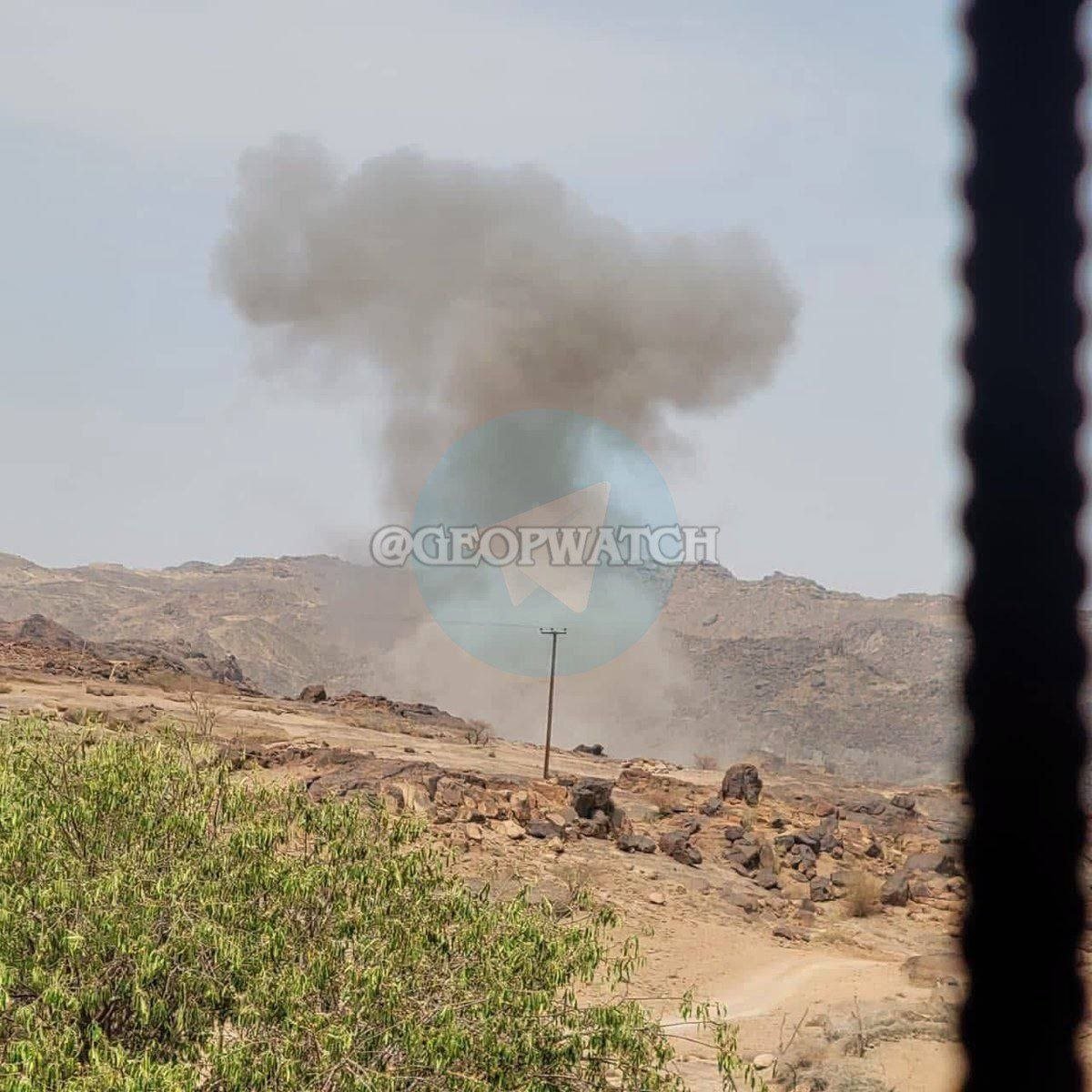
Sana'a's foreign ministry fired a sharply worded rejection of Riyadh's statement at 22:57 UTC on 20 July 2026, warning Saudi Arabia about the consequences of continuing what the Yemeni government calls the aggression and blockade against the country. Within roughly an hour, Tasnim, Fars, Al-Alam and other Iranian state-linked outlets had carried the text. By 00:56 UTC on 21 July, the warning had been reframed for Persian-language audiences as a direct Saudi-Yemeni confrontation, with the explicit caveat that the blockade, if sustained, would carry costs Riyadh had not yet priced in.
What makes the exchange worth treating as a discrete event, rather than another round in the long-running Yemen file, is the choreography. Sana'a rejected a Saudi foreign ministry statement, rather than letting it pass. It then escalated from rejection to explicit warning, naming consequences. And it did so on a working-week evening, when Saudi and Emirati communications teams would normally be signing off for the night, suggesting the timing was designed for second-morning headlines in the Gulf rather than for an Iranian audience. The file that Riyadh had spent the better part of two years working to lower in volume has just been reopened by the other side, on its terms.
What Sana'a actually said
The text published via Iranian outlets, and relayed in parallel by Al-Alam's Arabic service, rejects the foreign ministry of the Saudi regime, language that mirrors the framing Yemeni authorities have used since the resumption of strikes against Israel-linked shipping in late 2023. The ministry in Sana'a emphasised, according to the Tasnim and Al-Alam wire versions, that what it called aggression and blockade would carry consequences. The text did not specify the nature of those consequences, did not name a deadline, and did not threaten any specific actor, including Saudi Arabia's Red Sea ports or its east-west pipeline corridor. The careful absence of operational specificity is itself the message. Sana'a is signalling that the next move is conditional on Riyadh's next move, and that the burden of de-escalation now sits on the Saudi side of the table.
The Saudi framing, and what is missing from it
The Saudi foreign ministry's earlier statement, which Sana'a rejected, has not been reproduced in the Iranian relay. That is a small but important gap. Riyadh's line in similar 2024 and 2025 episodes tended to combine three elements: a condemnation of Houthi cross-border capability, a reaffirmation of support for the Presidential Leadership Council in Aden, and an appeal to the international community to constrain Iran's role in arming Yemeni actors. Sana'a's rejection can be read as a refusal to engage on any of those three frames at once. By rejecting the statement wholesale, the Yemeni foreign ministry is signalling that it considers the Saudi text itself the problem, not its contents.
The Saudi side has not, in the materials available to this publication, issued a follow-up. That silence, in a foreign ministry that has historically been quick to clarify when its words are misread, suggests either that Riyadh is content to let the exchange die, or that it is calculating a response that does not require a statement at all. Both readings are plausible. Neither is reassuring for the corridor Riyadh has been trying to keep open with Tehran, which has spent eighteen months arguing that the Yemen file is separable from the wider regional file and can be managed through quiet pressure rather than public confrontation.
Why the timing lands harder than the language
The exchange is small in word count and large in signalling. Sana'a has spent most of 2026 in a posture that Western analysts describe as managed de-escalation: strikes against shipping have been calibrated, public statements calibrated, prisoner files have moved in slow increments. The rejection of a Saudi statement breaks that posture. It tells three audiences simultaneously. It tells Riyadh that the blockade file is not closed. It tells the broader axis of resistance that Sana'a is willing to take public risks to keep the file alive. And it tells Western diplomats that the diplomatic off-ramp they have been sketching, the one that assumes a quiet Saudi-Houthi deconfliction channel, is not yet operational.
There is also a domestic-political read. The Yemeni foreign ministry is not a unitary actor. The text reflects the line of the Ansar Allah political leadership, which has held the foreign ministry portfolio in Sana'a since the Houthi takeover of state institutions in 2014-15. That leadership faces its own pressures, including an internal audience that wants a harder line on Saudi Arabia than the quieter posture of the past two years allowed. A rejection of a Saudi statement, on the record, with consequences named, gives that internal audience something to point to without committing Sana'a to an irreversible action. It is calibrated escalation, not escalation for its own sake.
What the Gulf and the West have not yet said
The silence from Riyadh is matched, so far, by silence from Abu Dhabi, from the GCC Secretariat in Riyadh, and from the office of UN Special Envoy Hans Grundberg. The Biden-era US framing of the Yemen file, which held that the war was a Saudi-Iranian proxy dispute with a Yemeni civilian cost, has been quietly retired in Washington since 2025 in favour of a framing that treats the Houthi capability, particularly the anti-ship missile and drone programme, as a regional security problem in its own right. That reframe has not produced a policy. It has produced a vocabulary. The vocabulary is now being tested by a Sana'a statement that uses the older vocabulary, the one Riyadh would prefer to retire.
Western wire coverage of the exchange has so far been limited. Reuters and the BBC have not, as of this writing, filed a story on the rejection. The regional coverage that does exist runs through Iranian, Turkish and Houthi-aligned channels, with the Tehran-Mediterranean axis carrying the text at speed. That asymmetry of voice matters. When the only English-language coverage of a Sana'a statement comes from outlets that are themselves the targets of Saudi framing, the statement ends up framed twice over: once by Sana'a, once by the relay. The Western reader who only sees the second frame cannot tell that the underlying text is more cautious than the relay suggests.
Stakes, and what to watch
If the trajectory holds, the next forty-eight hours will produce one of three outcomes. The first is a Saudi response that reopens the channel quietly, via a back-channel readout, and lets the public exchange die. This is the outcome Riyadh has historically preferred and the one the Iranian framing, with its careful silence on operational detail, leaves room for. The second is a Saudi response that escalates the framing, in which case the blockade file becomes the regional file and the deconfliction channel collapses. The third, and least likely, is a unilateral Saudi de-escalation that ignores the Sana'a statement and proceeds on its own timeline, in which case Sana'a is left with a warning on the record and no audience for it.
The thing to watch is not the next statement. It is the next movement. Sana'a has signalled that consequences exist. The question is whether those consequences are diplomatic, economic, or kinetic, and on what timetable. Western analysts have spent two years arguing that the kinetic option is the least likely because it would damage the very bargaining position Sana'a has spent the same two years constructing. Sana'a has just reminded those analysts that bargaining positions are built, in part, by reminding the other side what they would lose if the position were abandoned.
The sources that carried the text on 20 and 21 July do not specify what form the consequences might take, or which actor they would fall on. They do specify that Sana'a considers the Saudi statement itself, not just the blockade, to be the issue. That is a narrower reading than the headlines suggest, and a harder one to walk back from.
How Monexus framed this: the wire's instinct is to lead with the warning and the word blockade, both of which land hard. This piece instead leads with the choreography of the exchange, because the rejection of a Saudi statement is a discrete act, and the word consequences is doing different work in Sana'a's text than in the Persian-language relay. The structural frame is the re-opening of a file Riyadh had been quietly trying to close, not a new round of escalation. Both readings can be defended from the source material; this publication judged the framing-by-omission read the more durable one.
Wire provenance
This editorial synthesis draws on the following public wire/social posts:
- https://t.me/FarsNewsInt/0
- https://t.me/alalamfa/0
- https://t.me/JahanTasnim/0
- https://t.me/tasnimnews_en/0
- https://t.me/farsna/0