Kyiv Under Fire Again as Japan Reworks the Office Wardrobe and Ponders Rules for a ¥338 Billion Card Market
Two overnight alerts in Kyiv bracketed a string of explosions in the capital, while in Tokyo Nikkei Asia flagged shorts as office wear and a separate report said Japan is weighing rules for a trading-card market that grew 90% in four years to ¥338 billion.
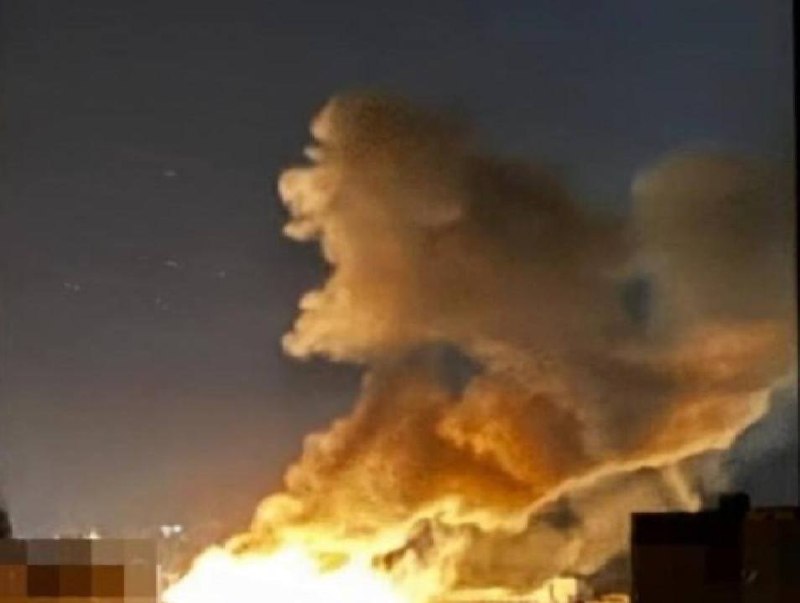
The Kyiv night began with a string of explosions and ended with a second air-alert siren. At 23:14 UTC on 25 July 2026, the Ukrainian newsroom TSN reported explosions across the capital; roughly two hours later, at 01:14 UTC on 26 July, the same outlet logged a fresh ballistic-missile warning covering Kyiv and several other regions. Two alerts in a single overnight window. The rhythm has become familiar across this phase of the war, but familiarity has not made it less consequential for the civilians who live under it.
A continent away, the temperature gauge reads differently. In Tokyo, summers are running hotter and office workers are answering with shorts. Nikkei Asia reported on 26 July at 02:01 UTC that shorts are gaining traction as office wear, with apparel brands rolling out new products to cash in on the trend. Days earlier, on 25 July at 01:31 UTC, market commentary picked up a separate Japan story: the domestic trading-card market expanded 90% over four years, reaching ¥338 billion ($2.1 billion) by 2025, with Japan now considering regulation of the Pokemon-card market.
Three stories, on the surface unrelated: a city under bombardment, a wardrobe loosening in a heatwave, a children's collectible market grown large enough to invite the regulator's eye. They are not the same story. Read together, what Monexus analysis finds is a particular kind of 2026: a moment when durable strategic pressures force adaptation in real time, on very different clocks.
Kyiv's overnight pattern
The first TSN bulletin of the night, at 23:14 UTC on 25 July 2026, recorded explosions ringing out across Kyiv and asked the question its readers already knew the answer to: what hit the capital. The follow-up, at 01:14 UTC on 26 July, was shorter and starker: a second air alert had been declared for Kyiv and a number of other regions, with the warning specifying a ballistic threat.
The reporting is brief, almost clinical. The two cited Telegram posts together describe the audible detonations and the subsequent alert, not the after-action picture. The cited channel did not in these items identify weapon systems, name districts, or carry casualty or infrastructure-damage figures. Reads as a snapshot of the alert cycle rather than a confirmed damage summary. The available source items cover the sirens and the blasts; they do not, on their own, tell the reader what was struck, what was intercepted, or how the night ended.
The shape of the night still matters because it matches the pattern the wire has documented in recent reporting: overnight, often multi-wave attacks, with alerts staggered to compress the time civilians have to seek shelter. The two TSN posts capture only the alerts and the explosions heard, not the broader strategic picture, and Monexus has not independently established what hit the capital or which air-defence units responded.
Shorts at the office, heat at the window
Japan's contribution to the day's news cycle is, by any measure, lighter. The Nikkei Asia brief at 02:01 UTC on 26 July frames the change plainly: shorts are gaining traction as office wear in Japan, with apparel brands rolling out new products to cash in on the trend. The cited excerpt does not enumerate brands, price points, or distribution channels, nor does it quantify the share of offices that have formally relaxed dress codes.
Two pressures plausibly sit underneath the wardrobe shift, and Monexus analysis frames them as structural rather than sourced fact. The first is climate: Japanese summers have been running hotter, and the cited headline itself points to record-breaking summers as the framing condition. The second is corporate culture, which has historically been one of the more dress-conservative in the developed world; the brief flags shorts as a casual item only now crossing into office wear. A garment category moving from casual-only to office-acceptable in a single news cycle is, in this reading, a tell that the cost of formal wear is being repriced against the cost of thermal discomfort, and that employers and employees are quietly adjusting the trade-off.
The market response, per the cited reporting, is straightforward: apparel brands are rolling out new products to cash in on the trend. The cited reporting does not specify that those products are aimed at office buyers beyond the framing of the trend itself; this article has not independently established the brand list, price points or distribution channels.
A ¥338 billion card market, and a regulator's pause
The most consequential Japan story of the day, on any measure of regulatory stakes, is the trading-card market. The figure cited on 25 July at 01:31 UTC is unambiguous: the domestic trading card market expanded by 90% over four years, reaching ¥338 billion ($2.1 billion) by 2025. The headline that follows is direct: Japan is considering regulating the Pokemon-card market, per the cited Unusual Whales report.
The regulator's interest follows from the sizing. A market at this scale, growing 90% in four years, has crossed the threshold Japanese authorities have historically used to begin a review of consumer-protection arrangements in adjacent categories. The cited reporting does not itself lay out the rationale; this article has not independently established which ministry is leading the review, what specific conduct any rule-making would target, or the consultation timeline. The headline is the only sourced content; the institutional mechanics behind it are not in the cited items and should be read as backdrop rather than fact.
The generational and financial context that makes the figure land is widely reported elsewhere but is not entailed by the cited items. Monexus assessment: trading cards, particularly graded Pokemon cards, have moved visibly into a quasi-asset register in several markets, and a 90% expansion in four years to ¥338 billion is the kind of figure that pulls a consumer product into the perimeter of investor-protection rule-making. The cited reporting supports the size and the regulatory interest; the surrounding market-structure description is presented as analysis, not as fact.
Reading the three together
None of these stories, taken in isolation, breaks new analytical ground. A Ukrainian city absorbing another night of strikes. A Japanese office adapting to another hot summer. A Japanese regulator noticing another consumer market that has outgrown its light-touch regime. The interest comes from the simultaneity, and from what Monexus analysis reads as a shared pattern: each item describes a system under pressure and a slow-moving response.
In Kyiv, the alert system is the response: it does not stop the incoming ordnance, it compresses the time civilians have to act, and it forces every urban routine to bend around it. In Tokyo, the wardrobe is the response: a soft cultural concession to a hard climatic fact. In the card market, the regulator is the response: a delayed institutional recognition that a consumer product has become large enough to warrant review.
Monexus assessment: what links them is the gap between the pace of the underlying change and the pace of the institutional adaptation to it. Ukraine's alert cadence has matured faster than the air-defence systems it coordinates with, in the sense that alerts are issued and broadcast in near real time; how the intercept story played out across the night is not in the cited items. Japan's office-dress consensus is shifting in public while HR manuals lag. Japan's consumer-protection perimeter is being redrawn in real time around products whose current form is recent. Reads as a partial, improvised, continuously patched set of responses.
The forward view
The most useful question is not which of the three stories will dominate the week. It is what each one will look like in three months.
For Kyiv, the cited alerts are a single overnight data point; the operational question is whether the cadence and composition of attacks, and the Ukrainian air-defence posture against them, have shifted by the next reporting cycle. The cited items do not establish that. For Japan's office shorts, the test is whether major employers formalise the dress shift in their policy documents before the end of the summer cooling season, or whether the change remains informal and seasonal. For the Pokemon-card market, the test is whether Japan's regulators publish a concrete consultation document with named conduct rules, or allow the review to drift.
The common variable is whether adaptation keeps pace with the pressure it answers to. In Kyiv, that question is lethal. In Tokyo, it is uncomfortable. In the card market, it is fiscal. The clocks run at different speeds. The institutional reflexes, in each case, are the variable worth watching.
Desk note: Monexus paired three short, date-stamped wire items from different regions into a single long read to examine how systems respond under compounding pressure. The Kyiv reporting here draws only on the cited TSN alerts; structural claims about the alert pattern are framed as analysis and grounded in what the cited items do and do not specify. The Japan material relies on the Nikkei Asia brief and the trading-card reporting cited above; brand-list, ministry and timeline specifics are flagged as not established from the cited items rather than filled in. The SpaceX lock-up and US credit-card figures carried in the source ledger are not used as factual claims in the body.
Wire provenance
This editorial synthesis draws on the following public wire/social posts:
- https://t.me/TSN_ua/581556
- https://t.me/TSN_ua/581562
- https://t.me/NikkeiAsia/21068
- https://t.me/nikkeiasia/21068
- https://unusualwhales.com/news/japan-considers-regulating-pokemon-card-market
- https://x.com/unusual_whales/status/2080828127719133309
- https://unusualwhales.com/news/google-94-billion-spacex-stake-after-ipo
- https://x.com/unusual_whales/status/2080819822892294148
- https://unusualwhales.com/news/americans-credit-card-grocery-debt-repayment
- https://x.com/unusual_whales/status/2080774524409151791
- https://t.me/TSN_ua/581556
- https://t.me/TSN_ua/581562
- https://t.me/NikkeiAsia/21068
- https://t.me/nikkeiasia/21068
- https://unusualwhales.com/news/japan-considers-regulating-pokemon-card-market
- https://x.com/unusual_whales/status/2080828127719133309
- https://unusualwhales.com/news/google-94-billion-spacex-stake-after-ipo
- https://x.com/unusual_whales/status/2080819822892294148
- https://unusualwhales.com/news/americans-credit-card-grocery-debt-repayment
- https://x.com/unusual_whales/status/2080774524409151791