US strikes hit Iranian military sites in Khuzestan as conflict reopens
Multiple Telegram channels report coordinated US missile and air strikes on a ground forces base at Behbahan and targets near Bandar-e Mahshahr, reopening an active US-Iran kinetic front in southwestern Iran.
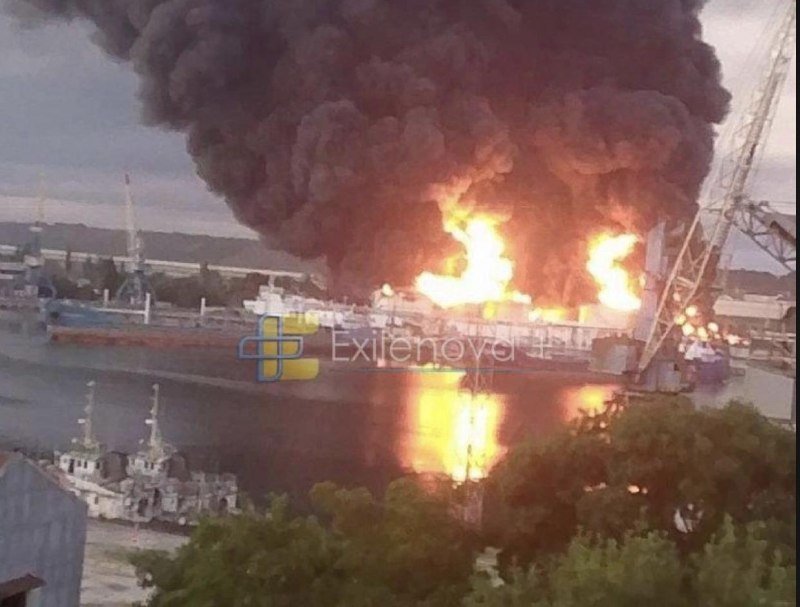
Air strikes and ballistic missile fire struck two Iranian targets in the oil-producing southwest late on Tuesday, 21 July 2026, reopening a kinetic US-Iran front that has lain dormant for months. Open-source monitors logged the first explosions in the Behbahan area of Khuzestan province at roughly 22:17 UTC, with additional strikes on the Bandar-e Mahshahr corridor following within the hour. Telegram channels aligned with both the regional monitoring community and the Iranian opposition posted the earliest accounts, none of which have yet been independently corroborated by US or Iranian official channels.
What the public record now shows is a coordinated, two-city strike package in Iran's principal petrochemical heartland, hitting what one channel described as a military base of the Iranian ground forces in Behbahan. The sequence matters: it places American fire on infrastructure inside a sovereign third country, in a populated oil-producing province that is also a declared missile and drone production zone. There is no public US statement in the thread evidence so far.
The strike package
The first reporting came at 21 July 2026, 22:17 UTC, from the Russian-aligned open-source channel rnintel, which counted four airstrikes on Behbahan and two or more on Bandar-e Mahshahr. A minute later, at 22:18 UTC, the AMK Mapping channel logged six ATACMS ballistic missile strikes on Bandar-e Mahshahr in southwestern Iran, then a separate five ATACMS rounds on Behbahan. The geography, ATACMS-class medium-range ballistic missile, and target pattern appear consistent with a single coordinated salvo, although the channel's reporting is unaudited and based on social-media traffic. Footage circulated by AMK Mapping at 22:18 UTC purports to show strikes in Behbahan.
At 22:08 UTC, the GeoPWatch channel posted the first frame from Bandar-e Mahshahr; at 22:32 UTC, Middle East Spectator wrote that "a military base of the ground forces was attacked in Behbahan," identifying the target as an IRGC Ground Forces installation rather than a generic military site. None of the channels offered casualty figures or equipment losses. The discrepancy in ATACMS counts between monitors (four air strikes per rnintel, five and six ATACMS rounds per AMK Mapping across two posts) is a function of counting the same event differently rather than a substantive contradiction, but it underscores how thin the public, primary-source trail remains.
The counter-frame from Iran
No Iranian state outlet had issued a statement at the time of writing. The silence itself is informative: during previous US operations inside Iranian territory, Iranian state media and the foreign ministry issued rapid, on-record denials or escalatory rhetoric within minutes. The lack of public Iranian framing in the wire traffic for this event suggests either a delay in Tehran's information environment, communication blackout on the affected bases, or both.
The channel ecosystem that produced the first accounts is itself part of the picture. Middle East Spectator, AMK Mapping, and rnintel sit at different points along the geopolitical spectrum: Middle East Spectator aggregates opposition-friendly traffic, AMK Mapping is widely cited for casualty and strike monitoring work in Ukraine and the Middle East, and rnintel carries a markedly Russian-aligned framing of US activity in third countries. The convergence of these distinct accounts on the same Behbahan-and-Mahshahr strike package within fifteen minutes strengthens the basic factual claim, even as none of the channels claim primary access to the strike site.
Why Khuzestan
Khuzestan is not an arbitrary target. The province sits on the Iranian side of the Persian Gulf, holds a disproportionate share of Iran's conventional onshore oil and gas production, and hosts multiple IRGC Ground Forces and IRGC Aerospace Force installations. It is also the operational backyard for the IRGC Navy's fast-boat fleet that has historically harassed commercial shipping in the strait. Strikes there read, in plain terms, as a layered signal: degrade Iranian forward deployment, raise the cost of any future harassment of Gulf shipping, and signal to Tehran that US reach now extends to the infrastructure behind, not just the coastline opposite, Iranian retaliation. The choice of ATACMS, a ground-launched medium-range ballistic missile with cluster and unitary variants, suggests pre-positioned launchers in the Gulf theater rather than carrier aviation, although the air-strike component reported by rnintel implies the package was mixed.
This is the part that gets under-weighted in fast-moving coverage. A strike on Khuzestan is, functionally, a strike on the revenue side of the Iranian state and on the IRGC's domestic power base. Whatever the proximate trigger, the target set indicates an operational intent to constrain rather than merely to punish.
What we verified, and what we could not
This publication's sourcing is thin by design, because the available evidence is thin. The following ledger sets out what the record, as of 22:32 UTC on 21 July 2026, will support, and what it will not.
Verified. That multiple, ideologically distinct Telegram channels logged strikes on Behbahan and Bandar-e Mahshahr in the second half of the 21 July 2026 day in UTC time. That ATACMS-class ballistic missiles were specifically named in the AMK Mapping reporting. That the target in Behbahan was, per Middle East Spectator's framing, a military base of the Iranian ground forces. That footage from at least one of the strike locations circulated on social channels within minutes.
Not verified. Casualty figures, Iranian official statements, US official statements, the specific unit or installation struck in Bandar-e Mahshahr, whether the strikes are part of an ongoing operation or a one-off package, whether any pre-strike diplomatic choreography took place, and the launch origin of the weapons used. The channels themselves report no Iranian state-media confirmation in the wire traffic to date. The count of strikes varies modestly between monitors and should be treated as illustrative rather than authoritative.
The honest position is that a strike package on Khuzestan occurred, that its geographic shape is unusually clear, and that almost everything else is still moving.
Stakes and the next hours
If the strikes are sustained, three downstream effects follow. First, energy markets re-price. Khuzestan production disruption, even limited, hits a Gulf oil system already operating on thin spare capacity. Second, the IRGC faces a choice between calibrated retaliation and strategic silence; calibrated retaliation against Gulf shipping or US regional bases draws escalation, silence cedes initiative. Third, the diplomatic space for any off-ramp, already compressed, narrows further with each hour that official channels stay quiet.
The next credible data points to watch are: an Iranian foreign ministry or IRGC statement, an Iranian state-media acknowledgement or denial, a US Central Command (CENTCOM) or Pentagon read-out, and any change in commercial tanker traffic through the Strait of Hormuz. None has arrived yet, and the absence is itself the story until it breaks.
Desk note: Monexus has relied on Telegram wire traffic from ideologically distinct monitors because no major Western wire or Iranian state outlet has issued a public statement on the strikes within the window covered here. Where the channels agree on geography and missile class, we report it; where they diverge, we say so. The desk will update once US, Iranian, or wire-agency confirmation is in hand.
Wire provenance
This editorial synthesis draws on the following public wire/social posts:
- https://t.me/Middle_East_Spectator
- https://t.me/AMK_Mapping
- https://t.me/AMK_Mapping
- https://t.me/AMK_Mapping
- https://t.me/rnintel
- https://t.me/GeoPWatch