Trump's UK blast and the Guantanamo detention plan: two signals in one night
On 20 July 2026 two short wires landed within minutes of each other: a presidential insult aimed at Britain and a reported expansion of US detention infrastructure. Read together they look less like coincidence than doctrine.
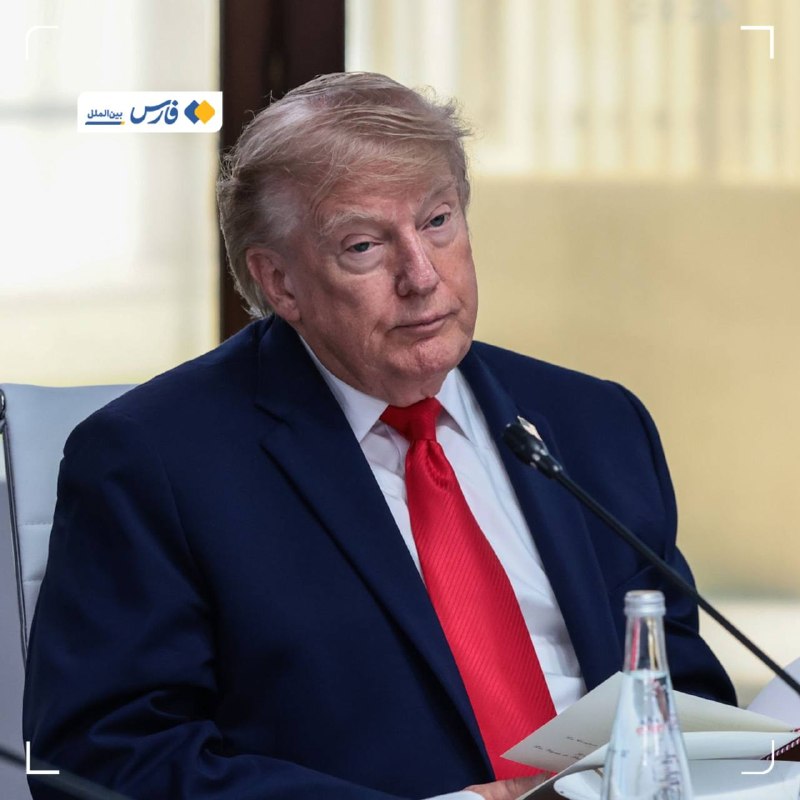
At 22:56 UTC on 20 July 2026, Donald Trump called the United Kingdom a "poverty-stricken disaster." Nine minutes earlier, at 22:47 UTC, a separate wire reported that US Immigration and Customs Enforcement was weighing new detention facilities at Guantanamo Bay. Two short items, nine minutes apart, from one news feed. Read on their own, they are colour pieces. Read together, on the same evening, with no diplomatic event scheduled to justify either, they look like a single signal broadcast on two frequencies: contempt for an ally that will not bend, and a build-out of the physical apparatus for a migration policy that bends everyone else.
The point of writing these two wires side by side is not to argue that the White House coordinated the timing. Coordination is the cheapest possible explanation, and it explains nothing. The point is what they reveal about the operating doctrine. One half of the doctrine is rhetorical: a transactional insult delivered to a NATO ally with no immediate payoff. The other half is logistical: extra beds for people the same administration has spent two years telling the world are unwelcome. The two halves reinforce each other. The insult tells the ally it is replaceable. The beds tell the migrant it is containable. The press cycle moves on, the policy stays put.
The insult and the alliance
The UK line, circulated through the Polymarket news desk at 22:56 UTC on 20 July, was delivered with the cadence of a campaign rally rather than a diplomatic exchange. There was no negotiation under way, no trade dispute at the boiling point, no security crisis to blame. Britain is, in institutional terms, the United States' most embedded intelligence partner under the Five Eyes arrangement, a NATO founding member and the custodian of the country's nuclear deterrent. Calling such a partner a "poverty-stricken disaster" is not an argument. It is a price.
The price is paid in two currencies. First, predictability: foreign ministries in London, Berlin, Paris and Warsaw now have to price a small but non-zero risk that the next presidential statement lands on them. That risk feeds directly into procurement decisions, intelligence-sharing depth and the political cover domestic governments feel they need for any US-facing commitment. Second, transactional leverage: an insult with no proximate cause is a standing invitation to extract concessions later, because the ally is already on the back foot and any visible retaliation would confirm the label. The economy of the remark is the economy of the wider Trump-second-term foreign policy: raise the temperature first, then negotiate against the heat.
The counter-narrative, that this is mere rhetoric for a domestic audience, does not survive contact with the institutional cost. US-UK trade, defence procurement and intelligence cooperation run on documented expectations that a US president does not casually shred. A second-term White House has fewer, not more, reasons to performatively destabilise a relationship of this density. If the remark is performance, it is performance at a price the prior administration judged too high.
The beds and the border
The ICE wire, logged at 22:47 UTC the same evening, points in the opposite direction in tone but the same direction in structure. Adding detention capacity at Guantanamo Bay would extend an existing footprint at a site whose symbolic weight is unique in US policy. The naval base at Guantanamo has been a holding site for migrants at earlier points in the post-2001 period; the legal architecture around the facility is permissive in ways domestic US bases are not. That is precisely the appeal for an administration that has been blocked, repeatedly, by federal courts on domestic detention expansion.
The numbers behind the move are not in the wire itself. Reporting over the preceding months has put ICE detention populations at historic highs, with capacity strained across the southern border and a contracting network of state-level willing participants. Adding beds off-shore, on a base the US controls outright, is the infrastructure answer to a judicial constraint. It also solves a political problem: it places the most politically combustible category of detainees beyond the reach of US federal courts in the way the post-2001 detainee population was, and beyond the reach of domestic media in a way no Texas or Florida facility can be.
The structural frame, in plain terms, is the convergence of two trends that until recently sat in different parts of the executive. The first is the steady erosion of the distinction between criminal and administrative detention for non-citizens. The second is the use of overseas US military territory to host populations that domestic courts have ruled cannot be held indefinitely on the mainland. Neither trend is novel. What is novel is the speed of the build-out and the candour of the public-facing language around it.
Why the two wires matter together
The temptation in a story like this is to treat it as two unrelated news items that happen to share a date. That temptation should be refused. The shared date is the news. On the evening of 20 July 2026, the same US administration signalled, in adjacent minutes, that an ally of seventy-five years is disposable in language and that a category of human beings arriving at the border is disposable in infrastructure. Both signals were sent on the record. Both were sent through feeds that price in volatility.
For the UK, the practical question is whether the Starmer government treats the remark as a mood or a method. The historical record on presidential insults toward close allies is that the method tends to win, because the domestic political returns to the White House from the line far exceed the diplomatic cost. For the EU and the wider European project, the implication is more structural: any defence, intelligence or trade agreement struck with this administration will be struck on terms that include a public insult risk premium, and that premium compounds with every additional wire of this shape.
For migration policy, the implication is that capacity is being built for a sustained operational tempo rather than an emergency surge. Detention beds built today will be filled next year under a legal architecture that the same executive has spent two years trying to expand. Whether or not a court eventually curtails the offshore model, the visible capacity itself is the deterrent product.
What remains uncertain
Two caveats worth holding. First, the ICE plan is reported as a weighing, not a decision; the wires do not yet describe a contract, a construction timeline or a transfer of detainees. The gap between an interagency discussion and a bed in use at Guantanamo is months, sometimes years. Second, the insult to the UK is one line in a feed; the question of whether it reflects a deliberate posture or a spontaneous remark is precisely what the diplomatic record will eventually have to answer. The sources available tonight do not answer it. Monexus treats both wires as primary facts and as signals, and the evidence for the second reading rests on the accumulation of similar signals over the preceding months rather than on either line alone.
The honest summary is this: a NATO ally was publicly derided, and a Caribbean detention footprint was publicly floated, inside nine minutes. The two items do not prove a strategy. They prove an operating tempo.
Desk note: Monexus frames these two wires as a single operating signal rather than two unrelated items, because the policy logic of contempt for allies and capacity for migrants runs through the same executive. The wires themselves are short; the structural reading is ours.
Wire provenance
This editorial synthesis draws on the following public wire/social posts:
- https://t.me/x/polymarket
- https://t.me/x/polymarket