Trump's Iran ultimatum puts markets on a hair trigger as decision window narrows
U.S. equities shed close to a trillion dollars after President Trump warned Tehran over American military casualties. The Pentagon is now preparing attack options for a decision due within days.
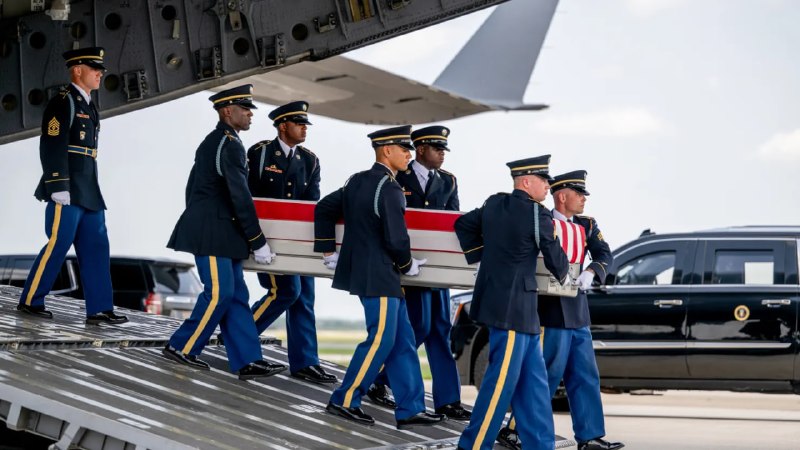
U.S. equities shed close to a trillion dollars in value on 21 July 2026 after President Donald Trump delivered a fresh public warning to Iran over the loss of American military personnel, according to the Telegram channel Two Majors, which reported the move in a 06:02 UTC post. The size of the move, captured in real time by market terminals rather than in any official communique, signals how a single presidential sentence now sits inside the pricing of the largest equity benchmark in the world.
A foreign-policy choice that until recently read as a regional escalation is now priced as a macro event. What is at stake is no longer just the bilateral U.S.-Iran ledger. It is the question of whether a sitting president can treat Tehran as a discretionary target without first absorbing a domestic market reaction, and whether the reaction itself becomes a constraint on the decision.
A warning and a clock
Two Majors, a Telegram channel with a Russian military-blogger readership, framed the move as a direct market response to a presidential threat, posting at 06:02 UTC that "U.S. stocks lost nearly a trillion dollars after Trump issued a new warning to Iran regarding the loss of American military personnel." The phrasing carries the unmistakable cadence of a regime-of-escalation update rather than a routine market wrap, suggesting the channel's contributors treat the warning as operational rather than rhetorical.
On Fox News, reporting relayed at 05:10 UTC by the Telegram channel abualiexpress citing an official American source, the picture narrows: "Trump will decide within days on the issue of expanding the fighting against Iran. The US military is preparing attack options. It is likely that Israel will", the channel's headline cut off at that point, but the operative message is that the option set is on the table, not in the drawer. The decision window now measures in days rather than weeks.
The mechanics matter. A "warning" from the U.S. president about American military casualties is not a diplomatic signal in the traditional sense; it is the precondition for a retaliatory strike under standing U.S. force-protection doctrine. The market reaction is downstream of investors reading the warning as a probability update on whether the strike happens, not as a statement of regret.
The Tehran read
Tehran's framing of the same contest is more existential. Seyed Mohammad Marandi, an academic and frequent English-language surrogate for the Iranian position, posted on X at 05:52 UTC: "Iran will win this war, no matter the cost. For Trump, it is a war of choice, waged on behalf of Netanyahu and the genocidal Zionists. For Iran, it is a war of survival." The post, which linked to a Rumble video, repackages the official Iranian line that any conflict is an imposed one and that Iran's posture is calibrated accordingly.
That framing should be read for what it tells us about Iranian signalling, not necessarily as ground truth. It is the line Tehran needs its allies, proxies and domestic audience to internalise: that a U.S. president is acting as an agent of a foreign premier, and that Tehran is fighting to exist rather than to win a contest of interest. The market, unsurprisingly, prices none of this argument; it prices the strike probability and the disruption to oil transit through the Strait of Hormuz. The Iranian argument is a domestic-credibility instrument, not a market-moving one.
The contrast is the story. Washington reads the contest through a market-risk and force-protection lens. Tehran reads it through an existential-sovereignty lens. Each side is optimising for a different audience, and the gap between those audiences is what makes the next seventy-two hours particularly difficult for any back-channel.
The Israeli variable
Fox's reporting, as relayed by abualiexpress at 05:10 UTC, attaches an Israeli tail to the U.S. decision: "It is likely that Israel will", completing the channel's own sentence, the conventional phrase in such reporting is "act in coordination" or "join a U.S. operation". Whatever the exact text, the operative signal is that Jerusalem is treated by U.S. planners as a co-belligerent in the option set currently on the table, not as a passive downstream recipient of American decisions.
This matters because Israeli coordination is the variable that converts a presidential warning into a multi-theatre operation. Iran has, since the 12-day war of June 2025, calibrated its deterrence messaging around the assumption of an Israeli component in any U.S. action. The reverse engineering of that assumption by the Israeli press, which has spent the past year publishing detailed reconstructions of what worked and what did not in the June operation, suggests that whatever options are being prepared are not being designed in isolation from Tel Aviv's lessons learned.
What the market is actually pricing
A trillion-dollar move on a single day's warning is not, on its own, a freak event. Equity benchmarks of the size of the S&P 500 absorb that kind of move on tariff announcements, surprise jobs data, or a poorly phrased Federal Reserve press conference. What makes this move noteworthy is the source: a presidential statement about a third country, with no immediate data release, no central-bank move and no scheduled event. The market is pricing a tail that is under direct White House control.
The transmission channel runs through oil and through defence. A strike on Iran, or a strike posture that lasts long enough to disrupt tanker traffic in the Gulf, lifts the price of crude fast enough to feed into consumer prices in the United States within weeks. Defence names, in the meantime, ramp on the option value of a multi-billion-dollar munitions drawdown. Sectoral rotation inside a single trading session is therefore the visible market reaction; the macro reaction, in the form of a Federal Reserve reaction function, is the slower-moving payload.
None of this is new. What is new is that the option is being priced while the president is still deliberating. In prior U.S.-Iran escalations, the January 2020 strike on Qassem Soleimani, the 2019 tanker incidents, the 2023 Houthi-related disruptions, the market reaction came after, and was conditioned by, a known event. Here, the event is still optional, and the market is doing the work of pricing the decision before the decision is taken. That is unusual, and it feeds back into the presidential calculus: every additional basis point of expected damage tightens the political cost of striking.
The decision window
"Within days," in the Fox-account reporting, means a window that, at the time of writing, extends from the publication of this article to roughly the end of the working week. The U.S. military's preparation of "attack options" is consistent with that timeline; it is the time required to position naval assets, compose targeting packages, run legal review, and brief congressional leadership under the War Powers Resolution.
What the sources do not specify is the trigger condition. The reporting references "the loss of American military personnel", which is plural and unspecified; it does not name a date, a unit, a base or a country of origin for the casualties. That omission is itself a signal: the White House is signalling a posture without committing to a casus belli, which is the diplomatically optimal structure if the goal is to extract a concession rather than to strike.
The plausible alternative read of the same facts is that this is pressure, not war. A president who wanted a war would not telegraph the option through a Fox News read-out and a Telegram-channel signalling chain; he would strike, and then explain. The structure of what is on the wire is consistent with a coercive bargaining frame, in which the market reaction is an input into whether Tehran chooses to de-escalate before the option becomes the action.
Stakes and uncertainty
If the trajectory continues, the immediate losers are the Gulf's energy importers, Israel's defence-production backlog (which is already constrained), and U.S. equities on the days the strike option is re-priced. The immediate winners are defence names, oil producers, and the Iranian-aligned axis's recruitment narrative across the region. Over a longer horizon, the loser is the U.S. market's prior assumption that a presidential foreign-policy decision can be made without an instantaneous repricing event.
What remains genuinely uncertain is the trigger. The reporting references American military casualties without specifying them, which leaves open the possibility that the president is signalling around an event whose details are still contested. The Iranian read, as articulated by Marandi, treats the contest as existential, which leaves open the possibility that Tehran will choose escalation over concession. The market, in turn, cannot price what it cannot observe, and is therefore pricing the option premium rather than the event. Three days from now, the answer to the question "did the president decide" will determine whether today's trillion-dollar move is, in retrospect, the right one to have ignored.
How Monexus framed this: The wire cycle on 21 July 2026 is a single, fast-moving story: a presidential warning, a market reaction, a decision window measured in days. The cleanest sourcing path was through Telegram and X, which is where the operational claims and the Tehran response surfaced first. This piece treats the market reaction as the macro event the warning has become, and treats the Iranian framing, via Marandi's X post, as a counter-narrative to be reported rather than a posture to be adopted.
Wire provenance
This editorial synthesis draws on the following public wire/social posts:
- https://t.me/two_majors
- https://x.com/s_m_marandi/status/2079444305941331968
- https://t.me/abualiexpress