Zelensky weighs the sack of his top general as the political bill comes due
A Financial Times report and a parliamentary push from MP Zheleznyak converge on the same calculation in Kyiv: removing Colonel-General Syrsky as Commander-in-Chief would let the president convert a personnel headache into a political reset.
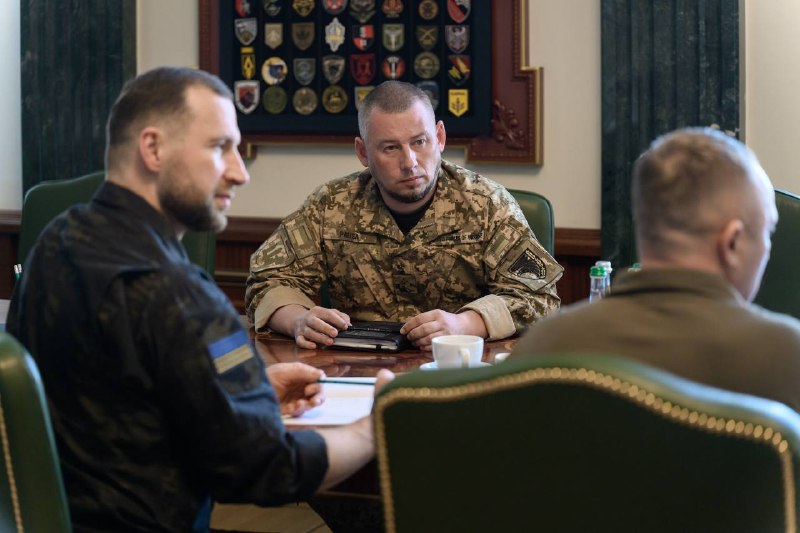
Volodymyr Zelensky is weighing the dismissal of Colonel-General Oleksandr Syrsky as Commander-in-Chief of the Armed Forces of Ukraine, according to sources in the Ukrainian government cited by the Financial Times and relayed by RFE/RL's Ukrainian service on 18 July 2026 at 12:48 UTC. The calculation is political before it is military: with street protests tied to the dismissal of a defence minister still fresh and parliamentary patience visibly thinning, the president appears to be looking for a single high-profile removal that converts grievance into momentum.
What started as a leaked whisper inside government channels has, within hours, hardened into a formal push from the Rada. At 13:57 UTC, lawmaker Yaroslav Zheleznyak said parliamentarians intended to send a request to the presidential office urging Syrsky's removal, framing the move as a response to the same street pressure that prompted the defence-minister shake-up. By mid-afternoon Kyiv time, Euronews was reporting, citing its own sources, that Zelensky is "studying" the dismissal precisely as a way to "get out of the crisis". The framing across the wires converges: Syrsky, in this telling, is the available scapegoat.
The timing is doing most of the political work. The protests that gave the government its current headache were triggered by a personnel decision, not a battlefield reverse. Ukraine is the invaded party in a war that has run nearly four years, and the legitimacy of any personnel change has to be measured against that backdrop. Front-line commanders do not get fired in peacetime democracies on the strength of newspaper sourcing alone; they get fired when political coalitions demand a name. The available reporting suggests the coalition is now forming.
A chief of staff and a chief general on different clocks
For most of 2024 and 2025, Syrsky's standing inside the Western defence press was that of a competent, methodical operational commander, careful with his troops, less flashy than his predecessor Valeriy Zaluzhny, on whom Zelensky had placed distance after Zaluzhny's post-rotation public profile grew. Syrsky's elevation in early 2024 came with an implicit contract: fewer headlines, fewer interviews, more attrition math. That contract was workable as long as the political weather held.
The political weather has not held. The dismissal of a defence minister earlier in the summer exposed a fault line inside the executive that Kyiv had so far been able to keep off the front pages. MPs who until recently were content to let the General Staff's talking points stand are now willing to be named in foreign-media stories pushing for further sackings. That is a meaningful shift: in a wartime legislature, signing on to a public dismissal campaign is a step most politicians have wanted to avoid. Zheleznyak's intervention makes the shift harder to walk back.
The "scapegoat" framing, and what it costs
Euronews's framing of Syrsky as a "scapegoat" is the cleanest editorial read on offer, but the word carries weight. In a country at war, a dismissed commander-in-chief is not just a civil-service personnel file; he is a signal to brigades, to Western patrons, and to an officer corps whose cohesion is itself a war-fighting asset. Two readings are consistent with the available sourcing.
The first is that the dismissal is a controlled burn: remove Syrsky, install a replacement whose political profile is more pliable, and the street protests dissipate because the headline has changed. This reading treats the parliament as a thermometer, not a driver. The second is the inverse: that the parliament has already decided and that Zelensky is choosing the moment of dismissal rather than the fact of it, in order to retain authority over the choice of successor. On the second reading, the FT sourcing is accurate about the timing without being accurate about who is leading whom.
The available reporting does not yet resolve which read holds. Both, however, agree on the political mechanics: a high-visibility removal is treated as a self-contained fix, and the dissent energy is treated as substitutable between targets.
What a replacement would actually have to do
Whoever lands in the chair inherits a force structure that has been shaped by nearly four years of attritional warfare against a materially larger adversary. The institutional questions, manpower mobilisation law, brigade rotation cycles, the contested terms of mobilisation-age reform, the integration of new Western equipment into formations originally built for Soviet-era maintenance chains, do not move with a signature on a personnel decree.
That is the structural point the available sourcing cannot quite reach. Ukraine's wartime command problem is, at root, an industrial problem wearing a uniform: it is a question of how many trained riflemen the state can put into a rotation under fire at any given month, and on what timelines reservists can be cycled through training without breaking the production base on which the rest of the economy depends. A Chief of General Staff who is also the Commander-in-Chief answers to the president; a Chief who is the commander of the Armed Forces has a different bureaucratic anatomy, and the choice between the two is itself part of the political read-out.
The parliamentary move and the line it crosses
Zheleznyak's statement, as relayed on 18 July 2026 at 13:57 UTC, moves the story from the leak register into the formal-demand register. In Ukrainian constitutional practice, the Verkhovna Rada does not appoint or dismiss the Commander-in-Chief of the Armed Forces; that authority sits with the president as supreme commander. A parliamentary "request", however, is the recognised mechanism by which the legislature signals that political cover for the existing command has eroded.
That signal is what makes the next 72 hours worth watching. If the FT and Euronews sourcing holds and Zelensky is genuinely "studying" the move, three decision points stack on top of each other: a signed dismissal decree; the identity of a successor whose politics the president finds workable; and a public justification that satisfies the street without degrading frontline command credibility inside Western defence ministries that fund and supply much of the force. Each of those moves imposes a cost on the others. The classic trade-off is a politically compliant successor whose military standing is lower, against a more credible successor whose public profile is harder for the executive to manage.
What the sources do not settle is whether the parliament's request, once made, becomes a ceiling or a floor for further pressure. A request honoured quickly is a concession; a request ignored becomes a precedent. The character of the answer, when it comes, will say more about the next phase of Kyiv's wartime politics than the request itself has.
What stays uncertain into 19 July
Two things remain genuinely unsettled in the reporting.
The first is whether Syrsky himself has been formally informed. In the available sourcing, the operation is described from the president's side (FT) and the parliamentary side (Zheleznyak); no Western wire has quoted Syrsky, his office, or the General Staff press service denying or acknowledging the move. That asymmetry suggests the firing, if it happens, has not yet been operationalised at command-post level.
The second is the identity and the lobbying of the successor. Without that, the "scapegoat" framing is structurally correct but operationally empty: a president who removes one commander to install another has not reduced his political exposure, he has only re-priced it.
Watch the General Staff press service, the presidential late-evening briefings that have become routine since 2022, and the parliamentary channel of committees whose chairs have so far not commented. The order in which any of them speak will narrow the gap between FT's leak and Zheleznyak's request.
Monexus framed this against the wire default, which treats any Ukrainian-side leak as opportunistic noise. The reporting here treats it as a coordinated operation across the presidential, parliamentary, and sympathetic-foreign-media channels, and reads the convergence as the political bill rather than as a personnel story.
Wire provenance
This editorial synthesis draws on the following public wire/social posts:
- https://t.me/Tsaplienko/19040
- https://t.me/euronews/25012
- https://t.me/DDGeopolitics/81205