Trump presses Beirut on disarmament as IDF draws down in south Lebanon
At the White House, Trump told Aoun to move on Hezbollah's arms; in southern Lebanon, IDF troops are still pulling out of pilot zones the Lebanese Army is supposed to inherit.
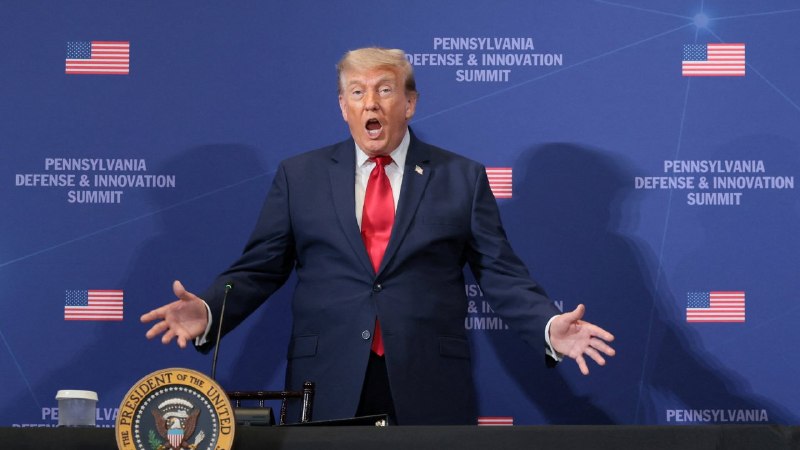
Lebanese President Joseph Aoun sat down with Donald Trump in the White House on 21 July 2026 and walked into the same conversation that has defined every U.S.–Lebanon contact since the November 2024 ceasefire: the guns. Trump told his guest that the Israel Defense Forces remain in the process of withdrawing from pilot zones in southern Lebanon, which are to be handed over to the Lebanese Army, while pressing Beirut, in the same sitting, to finish the job of disarming Hezbollah south of the Litani. The two agendas sit on a knife's edge: a phased Israeli pullback that is publicly visible and politically indispensable to Aoun, and an internal Lebanese monopoly on force that the Lebanese state has so far only partially rebuilt.
What the White House produced on Tuesday was less a deal than an alignment. Trump publicly affirmed the IDF drawdown as a work in progress, signalled U.S. patience with the timeline, and used the meeting to remind Beirut that the second half of the arrangement, Hezbollah's weapons, is unfinished business. Whether Aoun returns home with leverage or with new obligations depends on facts the briefing room did not produce: how fast the IDF actually vacates the agreed zones, whether ceasefire violations continue, and whether the Lebanese Army has the matériel to hold what it inherits.
The southern handover, still in motion
The core of the U.S.-brokered arrangement is a staged transfer of territory in south Lebanon from IDF control to the Lebanese Armed Forces. According to reporting carried by the OSINTdefender channel on 21 July at 16:46 UTC, Trump told the meeting that the IDF remains in the process of withdrawing from the pilot zones that will be handed over to the Lebanese Army. The framing matters: "in the process" is the diplomatic verb of choice when neither side wants to concede delay, but it also concedes that the handover is not complete. The pilot zones, which had functioned as the testing ground for the post-ceasefire security architecture, are the visible seam in the deal.
That seam is widening on the ground. Reporting carried the same day at 16:15 UTC noted that, amid ongoing U.S.-brokered Israel–Lebanon dialogue, the Lebanese Army announced its positions had been fired on by Israeli forces in southern Lebanon. If the firing is confirmed and traced to IDF units inside the declared pilot zones, the gap between Trump's "withdrawal in process" language and the lived experience of Lebanese soldiers on the ridge is the story. If it is confirmed as a misfire, crossfire, or a faction outside the IDF chain of command, the framing narrows but does not close.
Aoun's tightrope at the White House
The Cradle's read of the meeting, carried in its channel at 16:01 UTC, emphasises the political theatre: Trump publicly described Tom Barrack, the U.S. envoy overseeing the file, as Lebanese, in what The Cradle presented as a tribal-personal register of U.S. Middle East diplomacy. The framing on the same channel quotes Trump telling Aoun, "I have so many Lebanese friends so I understand Lebanon," a line that travelled on the Warfront Witness feed at 16:19 UTC. Read generously, it is the choreography of a White House that wants the Lebanese presidency to feel heard. Read cynically, it is the choreography of a White House that wants the Lebanese presidency to feel owned.
The harder content of the meeting was the disarmament demand. U.S. messaging through 2026 has consistently coupled the IDF drawdown with a Lebanese commitment to extend state authority south of the Litani and to dismantle Hezbollah's military infrastructure outside the framework agreed in the November ceasefire. Aoun's margin of manoeuvre is narrow. Hezbollah retains domestic political legitimacy through its parliamentary bloc and its social-service network; the Lebanese Army, restructured under U.S. and Gulf patronage since 2024, is doctrinally loyal to the state but operationally untested at the scale the disarmament timetable implies. The Lebanese presidency can promise; only the LAF, the interior ministry, and the country's fractured coalition can deliver.
Why the U.S. is pushing now
The Trump administration's interest is not abstraction. A southern Lebanon in which the LAF, and not Hezbollah's reconstructed units, holds the ground reduces the daily caseload of ceasefire violations Washington has to mediate. It also clears a runway for the wider Trump-brokered architecture across the Levant: a quieter Lebanon makes the Israel–Syria track easier, eases the political cost of any Israel–Gaza endgame, and reassures Gulf capitals whose quiet conditional support for Lebanon's reconstruction is denominated in LAF performance, not in Hezbollah restraint.
The second-order U.S. interest is Lebanon itself as a state-credibility investment. U.S. officials have argued publicly, in background briefings across 2025 and 2026, that a Lebanon that holds the south without reverting to militia rule is the cleanest evidence the post-2005 order can be rebuilt from the centre. If the experiment fails in the pilot zones, the diplomatic cost falls on Trump personally: he is the guarantor of the deal on the Israeli side and the convenor on the Lebanese side.
What can plausibly go wrong
Three failure modes are visible in the reporting without inventing any. First, the IDF can move slowly without technically violating the ceasefire, using "ongoing operations" or "engineering work" as cover for a presence that outlasts the political calendar in Beirut. Second, the LAF can take positions in the pilot zones and then discover it lacks the anti-tank and counter-drone capacity to hold them against a Hezbollah that wants the ground back. Third, domestic politics in Beirut can move faster than the security file: a cabinet fight over the next phase of disarmament could collapse the government before the LAF consolidates one hilltop.
What the open sources on 21 July do not resolve is whether the firing reported by the Lebanese Army was an isolated incident or part of a pattern. They do not specify which pilot zone is in question, whether any casualties occurred, or whether the U.S. side has acknowledged the incident. The two-week window after this meeting, when the next tranche of withdrawals is supposed to become visible, will do most of the answering.
The desk's framing choice: Monexus is leading on the disarmament file, which is what the White House meeting actually decided to push, and treating the IDF drawdown as the visible but secondary track. Where Western wires frame Aoun as the actor under pressure and regional outlets frame him as the actor with U.S. backing, this publication is holding both readings and noting which side of the line each fact sits on.
Wire provenance
This editorial synthesis draws on the following public wire/social posts:
- https://t.me/s/osintlive
- https://t.me/s/wfwitness
- https://t.me/s/osintlive
- https://t.me/s/thecradlemedia
- https://t.me/s/TheCradleMedia