Gaza health ministry cumulative toll reaches 73,329, with 1,203 dead and 3,900 wounded logged since the October 2025 ceasefire
On 27 July 2026, the Palestinian Ministry of Health in Gaza put the cumulative wartime toll at 73,329, with separate ministry bulletins reporting 1,203 deaths and 3,900 injuries since the 11 October 2025 ceasefire and three dead plus twelve wounded arriving at hospitals in the preceding 24 hours.
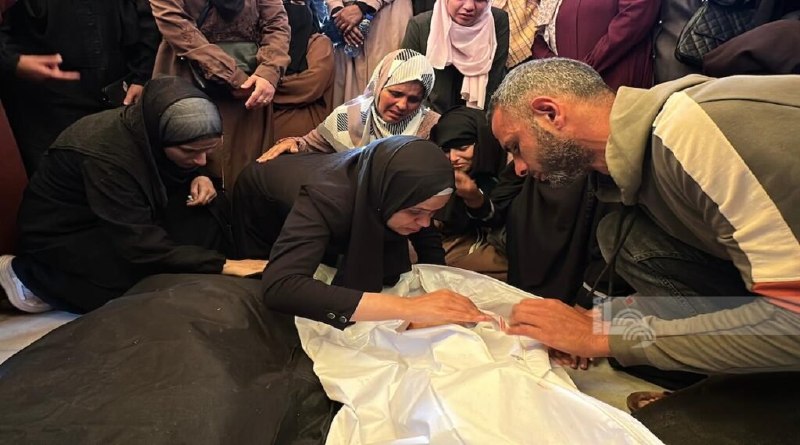
On the morning of 27 July 2026, three Iranian state-affiliated Telegram channels carried overlapping bulletins from the Palestinian Ministry of Health in Gaza within a few minutes of each other. Tasnim's Persian desk posted at 09:16 UTC, Mehr News at 09:16 UTC, and Tasnim's English desk at 09:17 UTC, each relaying a revised cumulative wartime death toll of 73,329. The English-language Tasnim post carried additional figures the other two did not: 174,990 wounded, 803 bodies recovered from rubble, and 1,203 martyrs and 3,900 injuries recorded since the 11 October 2025 ceasefire. A separate strand of ministry data, posted by Al-Alam Arabic at 08:42 UTC, gave the same post-ceasefire toll of 1,203 dead and 3,900 injured and added a 24-hour hospital intake of 3 dead and 12 injured across the strip.
The pattern is the story. Roughly nine and a half months after the ceasefire took effect, Gaza's hospital intake ledger is still being updated daily, and the cumulative wartime toll continues to be revised upward in near-real-time by a ministry operating under Hamas administration. International wire reporting has historically treated such figures as the best available proxy for civilian harm, even where the underlying methodology cannot be independently audited. The 27 July bulletins, amplified by Iranian state media, are the most recent expression of that data flow.
What the bulletin says, and what it does not
The five Telegram items overlap but are not identical. The Mehr News post and the Tasnim Persian post both lead with the 73,329 cumulative figure and attribute it to the Palestinian Ministry of Health in Gaza; neither carries the post-ceasefire breakdown. The Tasnim English post is the most detailed of the three: it adds 174,990 wounded, 803 bodies recovered from rubble, and the 1,203 martyrs and 3,900 injuries since the 11 October 2025 ceasefire. The two Al-Alam Arabic posts, the earliest items in the cluster at 08:42 UTC, disaggregate the toll differently: they record the post-ceasefire toll of 1,203 dead and 3,900 injured and a 24-hour intake of 3 dead and 12 injured at hospitals across the strip.
Three things the available source items do not specify: the demographic breakdown of the 73,329 figure (civilians versus combatants, women, children, men), the geographic distribution of the post-ceasefire 1,203 fatalities across the strip's governorates, and whether the daily intake of 3 dead and 12 injured refers to injuries from fresh kinetic incidents, delayed deaths from earlier wounds, or both. A reader who treats 73,329 as a fully audited civilian count is reading past what the source material actually establishes. A reader who treats it as fabricated is reading past what international wire services and UN agencies have historically accepted as the baseline Gaza fatality figure, contested in detail but not dismissed in principle.
The information chain, from hospital to Telegram to reader
The bulletins reach an English-speaking audience through a specific pipeline. The Palestinian Ministry of Health in Gaza issues a daily or near-daily statement; Iranian state outlets (Tasnim, Mehr, Al-Alam Arabic, PressTV, IRNA) republish those statements to Persian- and Arabic-speaking audiences within minutes; English-language desks at Tasnim push the headline figure outward in English. The same primary source feeds other news ecosystems: regional wires, UN OCHA situation reports, and Israeli authorities, who frequently cite the ministry's totals while disputing their breakdown.
Monexus assessment: the figure that travels down this chain is best understood as a system-attributed count rather than a verified statistic. The number originates with a health ministry operating in a strip where independent forensic access has been restricted for most of the war's duration, where the ministry's staffing and data infrastructure have themselves been damaged, and where rival authorities in Israel and the diaspora dispute the categorization of the dead. Treating 73,329 as a propaganda number treats it more certainly than the source material warrants; treating it as a clean civilian count does the same. The honest reading is that it is the official Palestinian count, contested in parts, and that the available source items contain no methodology appendix that would let a reader resolve the contest.
The post-ceasefire ledger
The more politically charged number in the 27 July bulletins is the smaller one. 1,203 dead and 3,900 injured since the 11 October 2025 ceasefire, per the Palestinian Ministry of Health as relayed by Tasnim English and Al-Alam Arabic, is a figure that complicates every framing any major participant has an interest in preserving. For the Israeli government, a non-zero post-ceasefire toll complicates the position that the campaign has wound down and that remaining deaths are incidental rather than structural. For Palestinian factions, the figure legitimises the position that the ceasefire has not held in any meaningful sense. For mediators in Cairo, Doha, and Washington, it undercuts the narrative of a stable arrangement worth defending in its current form.
The 24-hour intake of 3 dead and 12 injured is small enough to be plausibly consistent with several readings: residual unexploded ordnance, skirmishes involving armed groups, delayed deaths from wounds sustained earlier, and the everyday infrastructure failures of a damaged health system. The source items do not specify which. They do establish, in aggregate, that the post-ceasefire ledger is not closed and is being updated daily.
Why the same figure, four times in thirty-five minutes
The near-simultaneous publication of the casualty figures across the Iranian state cluster is the standard broadcast pattern of a coordinated information relay. State-aligned outlets do not scoop each other on Palestinian casualty figures. They receive the ministry's update, translate or format it according to each desk's house style, and push it out in close succession to maximise the surface area of the English- and Persian-language information environment. The pattern is visible in the timestamps: 08:42 UTC for Al-Alam Arabic's two disaggregated posts, 09:16:35 UTC for Tasnim's Persian desk (Jahan Tasnim), 09:16:51 UTC for Mehr News, and 09:17:57 UTC for Tasnim's English desk.
Monexus analysis: the political utility of that simultaneity is to make the figure appear corroborated rather than relayed. A reader who encounters 73,329 on three channels within roughly ninety seconds is likelier to treat it as a confirmed number than a reader who encounters it on one outlet at 09:17 UTC. The mechanism is structurally similar to wire-service syndication, except that the wire here is a state-aligned media cluster rather than a Reuters or AP desk. The substantive question, whether the underlying figure is accurate, is independent of the propagation method; but the appearance of independent confirmation is part of what the propagation is designed to produce. The most-read version of the bulletin, on Tasnim's English desk, is also the most detailed, carrying the post-ceasefire breakdown, the wounded count, and the rubble-recovery figure that the Persian and Mehr posts omit.
Stakes, and what to watch
The immediate stakes are interpretive. A revised cumulative toll of 73,329, juxtaposed with a post-ceasefire toll that has climbed past 1,200, sharpens the question international journalists and humanitarian agencies have been answering unevenly since the ceasefire: what does "ceasefire" mean when the daily intake of dead and wounded at Gaza hospitals has not returned to a peacetime baseline? The Israeli framing treats the post-ceasefire period as a security arrangement that has held; the Palestinian framing treats it as a pause whose terms have not been respected; the Iranian framing, visible in these bulletins, treats it as a continuation of war under another name, using language ("genocidal war," "Zionist regime") that the channels apply to the toll.
Two specific items to watch in the coming weeks. First, whether international wire services (Reuters, AP, AFP, BBC) issue their own tallies that ratify, revise upward, or revise downward the 73,329 figure, as they have at irregular intervals during the war. Second, whether the post-ceasefire ledger continues to be updated daily or whether the reporting cadence shifts as the political pressure to declare the arrangement stable intensifies. The 27 July bulletins establish the baseline against which both of those developments will be measured.
Desk note: Monexus has treated the Palestinian Ministry of Health's figures as official-source data rather than as either propaganda or verified statistic, in line with how international wire reporting has historically handled Gaza casualty counts. We have not adopted the Iranian state media's framing ("genocidal war," "Zionist regime") and have used it only to characterise how the bulletins travel. We have labelled the structural observation about coordinated channel publication as analysis. The year of the ceasefire (2025) is stated explicitly throughout to avoid the ambiguity created by source phrasing that names only the day and month.
Wire provenance
This editorial synthesis draws on the following public wire/social posts:
- https://t.me/tasnimnews_en/28208
- https://t.me/mehrnews/400183
- https://t.me/JahanTasnim/227073
- https://t.me/alalamarabic/490221
- https://t.me/alalamarabic/490220