Ten nights over Iran: what the strike cadence and the casualty count are telling us
The US is on its tenth consecutive night of strikes inside Iran. WSJ reports at least 18 US service members killed since February, and Tehran is now firing ballistic missiles back across the Gulf.
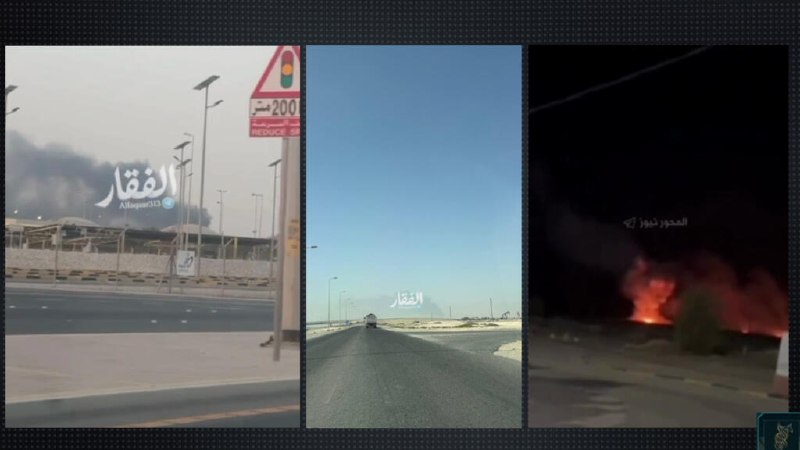
Reuters confirmed at 07:50 UTC on 21 July 2026 that the US military had completed its latest round of strikes inside Iran, the tenth consecutive night of bombardment since the operation began. Within two hours, the Telegram channel intelslava was reporting ballistic missile launches from Iran toward US bases around the Gulf. The Wall Street Journal, cited by the wfwitness channel at 07:49 UTC, puts US fatalities from the war at no fewer than eighteen service members killed in support of operations since the conflict opened in February. The tempo and the toll are now publicly visible at the same moment, and the question is which one bends first.
The arithmetic is straightforward and unforgiving. A nightly strike cadence implies fixed logistics: tanker aircraft cycling out of Gulf airfields, munition stockpiles drawn down on a known schedule, forward operating bases running at a sustainment tempo that consumes spare parts and airframe hours faster than peacetime planning ever anticipated. Tehran's reported missile response closes the loop. If the launches are confirmed by independent observation, the conflict has passed the threshold of one side trading at long range while the other absorbs it, and entered a phase where both sides are exchanging precision fires nightly. That is a categorically different war.
The cadence itself
Ten nights of consecutive strikes is not, strictly, evidence of escalation. It is evidence of a campaign plan. The pattern resembles the Israeli model of night-after-night strikes on Iranian proxy logistics and air-defence nodes that became standard in 2024 and 2025: a defined target set, prioritised by intelligence, hit on a rhythm that exhausts Iranian counter-air and costs Tehran interceptors faster than they can be replaced. The US side has not, on the public record, named the daily target list. What the record does show is that each night's strikes have been declared "complete" inside roughly the same window, a sign of centralised target approval rather than ad-hoc retaliation.
The distinguishing feature of this campaign, against the Israeli precedent, is what is being traded back. The intelslava report of ballistic missile launches toward US bases around the Gulf, if corroborated, is the first time in this war that Iran has aimed conventionally-armed ballistic missiles at American positions rather than at Israel. That step changes the signalling. It tells Gulf host governments that they are now inside Iranian target planning. It tells US Central Command that fixed Gulf bases are no longer sanctuaries. It tells Tehran's own public that the regime is willing to absorb a fourth or fifth night of strikes and still have missiles left to fire back.
What the casualty ledger shows
The Wall Street Journal figure of "at least 18 US service members killed" since February is a floor, not a ceiling. Eighteen killed across roughly five and a half months of a regional war with air, naval and ground elements implies a casualty rate per sortie and per deployment broadly in line with US experience in the 1991 Gulf campaign and well below the rates seen in Iraq from 2003 to 2007. The figure does not separate killed-in-action from non-combat deaths, and does not name which of the eighteen were lost to Iranian fire versus accidents, disease or friendly-fire incidents endemic to forward operating tempo. WSJ's figure is the most concrete number on the public record, and the press read of it is therefore necessarily partial.
Iranian casualty figures are far less visible. Iranian state media does not publish daily operational losses, and the morgue-and-hospital OSINT that tracked Russian losses in Ukraine has no equivalent in the Islamic Republic. What can be said is that ten nights of uninterrupted Western precision strikes on a sovereign state's air-defence network, command-and-control nodes, and (according to earlier reporting) oil-export infrastructure will accumulate damage even against a deeply-fossilised defence establishment.
The structural frame
Two trajectories are running in parallel, and they pull in opposite directions. The first is the US-led campaign logic: degrade Iranian air-defence, attrit Iranian proxy networks, demonstrate that direct state-on-state strikes on Iran can be sustained for weeks without strategic cost. The second is the Iranian regime's survival logic: demonstrate to the Gulf monarchies, to Russia, and to the domestic street that Iran retains the capacity to inflict costs on US bases in the region and can therefore not be written off as a defeated party.
Where the two intersect, the strategic risk sits. A nightly US strike plan runs on assumptions about Iranian missile inventory, Iranian command-and-control coherence, and Gulf host-nation tolerance of being inside Iranian retaliation geography. Each Iranian missile that lands close to a US base or a Gulf capital resets those assumptions and lengthens the timeline. The conflict has begun to look less like a finite punitive operation and more like a war of maintenance, which is the hardest kind to terminate because neither side has yet paid a price that changes its internal politics.
What remains contested
Three things the public record does not yet resolve. First, the intelslava report of Iranian ballistic missile launches toward US bases has not, at the time of writing, been independently confirmed by a wire service with on-the-ground verification; Reuters' reporting at 07:50 UTC covers the US strike round, not the Iranian response. Second, the Wall Street Journal casualty figure cannot yet be cross-checked against a Pentagon release, and the service-branches and units of the fallen have not been named publicly. Third, the strategic objective of the campaign, publicly, has never been precisely defined in terms beyond degrading Iranian military capacity; absent a declared end-state, the campaign's own success criteria are unclear. Each of these uncertainties will resolve in the days ahead, and each will shape whether the tenth night of strikes is read as the high-water mark of the operation or as the moment the conflict began to set its own tempo.
How Monexus framed this: where the wire cycle is reporting the strike count, this publication reads the same day for what it reveals about Iranian counter-escalation and the emerging maintenance character of the war.
Wire provenance
This editorial synthesis draws on the following public wire/social posts:
- http://reut.rs/3TaV6Vm
- https://t.me/intelslava
- https://t.me/wfwitness
- https://t.me/ClashReport