Stokes answers the only question that mattered: can he still bat?
A hundred on his first competitive outing since retiring from Test cricket is not a comeback. It is a reminder that the man has not lost the thing that made him worth watching.
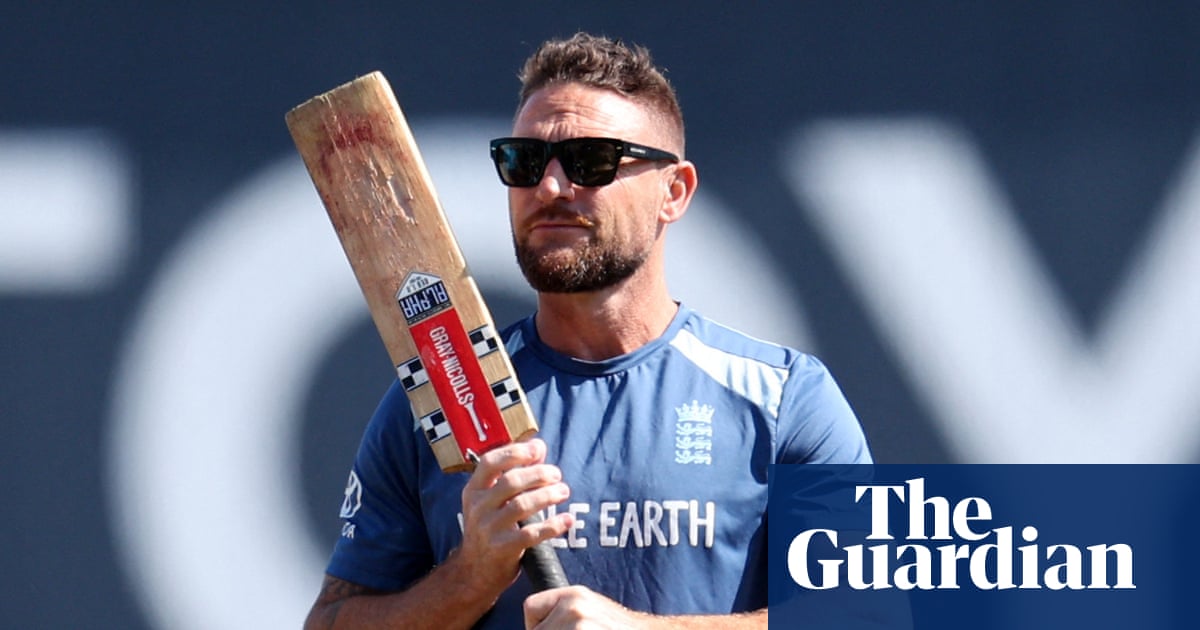
Durham's Ben Stokes walked out at the Seat Unique Riverside on 21 July 2026 and did the one thing English cricket needed him to do, which was not retire again, nor announce a comeback tour, nor grant an interview about his feelings. He scored a century. His first competitive innings since stepping away from the Test arena ended with a hundred against Derbyshire in the One-Day Cup, and the rest of the conversation writes itself, or would, if any of it were genuinely new.
The numbers, briefly, because the numbers are the only part that can be checked. Stokes marked his return to competitive cricket with a stunning century that helped Durham beat Derbyshire in the One-Day Cup, per BBC Sport's 21 July 2026 report. That is the sentence. Everything else is interpretation layered on top of a single innings in a domestic List A fixture on a Tuesday afternoon in Chester-le-Street.
What the century actually tells us
Domestic hundreds in mid-summer are not, on their own, evidence of anything in particular. County pros score them all the time; the format rewards them; the attacks are routinely second-string. The interesting question is not whether Stokes can still bat. He has always been able to bat. The interesting question is what his presence in a Durham shirt, in a competition that does not pay particularly well and is not televised beyond the BBC's regional highlights, signals about his relationship with the England set-up, and whether the door he walked out of is the same door he intends to walk back through.
The standard reading of Stokes's exit from Test cricket was that the body had finally presented an invoice the mind could not dispute. He had bowled through injuries that would have ended most careers; he had captained England to a defining home Test win in 2023 and then to a much harder stretch after that; his ODI retirement in 2024 had already cut one format loose. By the time he stepped away from the longest format, the only surprise was that anyone was surprised. So a return, in any form, has to be read as a renegotiation rather than a reversal. Durham are not England, and the One-Day Cup is not the Ashes.
The selection question that follows
If Stokes is fit enough to score a List A century in late July, the conversation immediately turns to whether he is fit enough to play Test cricket in late August, when England's international programme resumes and the selectors have to pick a squad. There is no public answer to that yet, and the sources do not contain one. Speculation here would be cheap. What is worth noting is the structural problem Stokes creates for England. A side built around him cannot be built around a part-time him. Either he is in the XI as a bowler, which he has not been for a long stretch, or he is in the XI as a batter who can give eight or nine overs when the situation demands, which is a luxury pick rather than a foundational one.
The selectors, in other words, have to decide whether to treat this century as a courtesy call or a job application. Stokes's history suggests he does not do courtesy.
Why the framing is doing too much work
The temptation, after an innings like this, is to read it as a story about willpower. A man retired, then he came back, therefore the will was stronger than the reasons. This is the framing the sports pages prefer because it is clean and it photographs well. It is also largely meaningless. What happened on 21 July 2026 is that a 34-year-old professional cricketer played a List A game and scored runs. Whether that constitutes a return to Test cricket is a separate question that depends on factors the century itself does not resolve: the bowling workload he is willing to absorb, the knee, the elbow, the family calculus that produced the first retirement in the first place, and the schedule of the England team across the back end of 2026 and into 2027.
The structural fact is that English cricket has spent the last eighteen months learning how to operate without its most visible player. The Bazball project predated Stokes's exit, the post-Ashes reset postdates it, and the captaincy question has been answered in his absence. Reversing that on the strength of a domestic hundred would be a category error. So would refusing to consider it at all.
What to watch next
The honest landing point is this: a hundred in a One-Day Cup group game is a data point, not a verdict. The verdict, if it comes, will arrive when Stokes pulls on an England sweater again, or when he confirms he has no intention of doing so. In the meantime, Durham have a player who can win them List A games, Derbyshire have a defeat to digest, and English cricket has a debate it did not quite ask for. The sources do not specify Stokes's post-match comments, his exact score, or the precise ball on which he reached three figures, so this piece does not invent them. The rest is a conversation, and conversations, like innings, can change shape quickly.
Desk note: Monexus treated this as a structural question about what a comeback means rather than a hero's-homecoming piece. The wire covered the event; the question worth answering is what the event is evidence of.