World Cup brawl overshadows Spain’s return: FIFA opens probe after Madrid celebrates ‘La Roja’
Tens of thousands lined Madrid’s streets to greet the squad hours before the world governing body opened an investigation into the on-pitch fight.
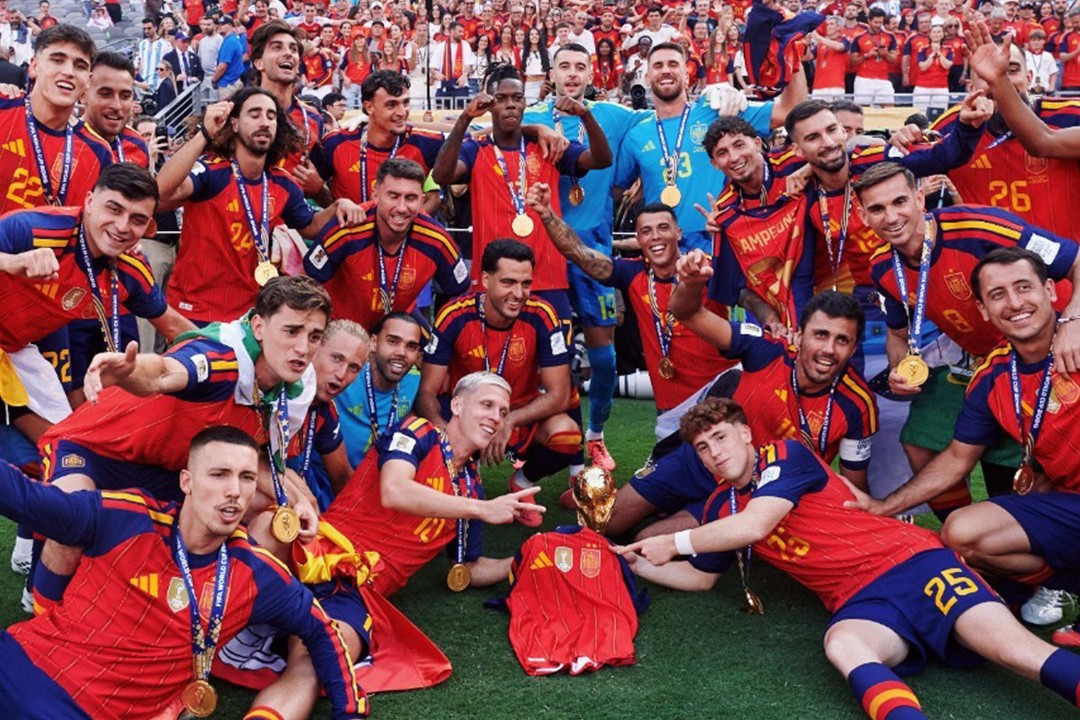
Tens of thousands of fans packed central Madrid in the early hours of 21 July 2026 to greet the Spanish men’s national team, hours before FIFA confirmed it had opened a disciplinary investigation into a mass brawl that erupted at the final whistle of the Spain–Argentina World Cup final in New Jersey. The contrast inside the same news cycle is hard to overstate: a nation celebrating a title, and the sport’s governing body moving to answer for what happened at the moment the trophy was lifted.
Al Jazeera’s breaking-news desk reported shortly after 03:00 UTC that FIFA is reviewing video of the confrontation, which broke out between players and staff from both squads after the final.
The probe, in plain terms
The investigation announced on 21 July 2026 is the standard FIFA route for post-match discipline: a review of refereeing reports, broadcast footage, and submissions from the two federations before any sanctions are issued. The governing body has not yet named individual players, nor indicated which provisions of its disciplinary code are in play. The match officials’ report, filed immediately after the final, will be the first document FIFA’s disciplinary arm works from.
What is already visible on broadcast and fan footage is a chain reaction. Players from both benches converged near the centre circle after the final whistle; arguments escalated into shoving, then into strikes, with substitutes and coaching staff drawn in. The trophy had already been lifted when the confrontation began. Officials separate the largest clusters, and the crowd inside MetLife Stadium reacts with a mixture of boos and applause as order is restored. Reporting on the FIFA process will move faster than any fan footage reaches the public, because the federation’s rules cap the window for protests and bans at 24 hours from the incident.
The international federation sits in an awkward position. It spent the previous three years wrestling with image rights, broadcast deals, and a congested calendar. An on-pitch fight in the showpiece match forces the body to demonstrate that it can police its own marquee event while keeping the celebration intact for the broadcast audience that paid for it. Disciplinary credibility, in this league, is a balance of speed and proportionality. Move too fast and the sanctions look punitive; move too slow and the body looks indifferent.
Why the Madrid scenes look different
The reception in Madrid told a parallel story. Al Jazeera reported that more than half of Madrid’s population turned out to greet the squad, a phrase that, taken at face value, points to a gathering in the low millions across a city of roughly 3.4 million. The phrasing is the broadcaster’s; the underlying reality, visible on any Madrid rooftop feed from the early hours, is that the celebratory route from the airport was overwhelmed. Vehicles crawled. Fans climbed bus stops. Confetti reached balconies. The King of Spain appeared on the route, in footage flagged by the network at 03:46 UTC, greeting players who by then had already shifted from champagne to accepting scarves.
Two thousand kilometres south-west of that scene, the Argentine squad is dealing with the inverse problem. Defeat sharpens every memory of the brawl, because it hands the losers a grievance. Argentine federation officials are likely to argue that their bench was provoked, and request the full match footage. The Spanish federation, anticipating this, will have already filed its own submission with documentation of any Argentine-initiated contact. The Madrid parade, meanwhile, sends a quieter political signal inside Spain itself: a national side that just won a World Cup in a stadium in the United States is being feted as a unifying symbol at a moment when domestic politics point the other way.
The framing question inside Spain is whether the celebration is read as apolitical joy or as a brief national breath. Spanish outlets covering the parade have so far avoided the political read, sticking to the registry of names and chants. That restraint will not last 48 hours; the same papers will be asking what the win means for the federation’s youth investment, and how a Madrid parade handles a squad drawn heavily from Barcelona and Athletic Bilbao.
What actually happened on the pitch
Television coverage of the brawl, replayed by Al Jazeera’s feed in the immediate aftermath, shows three distinct phases. First, a verbal exchange between players near the centre circle, captured by the main broadcast camera as Argentina processed the loss and Spain celebrated. Second, a stray arm from one of the Spanish substitutes catching an Argentine staff member, judged provocative by Argentina’s bench. Third, a sprint from both dugouts into the melee, at which point the picture becomes chaotic and the officials lose authority.
What the broadcast does not show is what triggered phase one. Initial accounts of the brawl in wire copy describe a Spain player approaching an Argentina defender; both teams later disputed who closed the distance. FIFA has signalled it will not rely on broadcast footage alone; the match officials’ report carries more weight because the referee and assistants had a closer vantage and owe a written account. Independent fourth-official video, which FIFA controls, will corroborate or contradict the camera angles.
In the absence of a definitive public accounting, the realistic near-term outcome is the procedural one: provisional suspensions for the identified aggressors, likely of two to four matches, and a fine rather than a stadium ban for the federations. Heavy-handed sanctions would be a mistake; FIFA knows its marquee players are also its retail product, and a Messi-or-Yamal-style suspension would invite criticism for either inaction or over-reach.
Stakes and what to watch next
Three short-term calendars now run in parallel. FIFA’s 24-hour discipline window closes on 22 July 2026 at the same hour the brawl occurred, after which provisional sanctions can be issued if formal charges are filed. Both federations have an equal window to submit their own protests and footage. Argentina will press for a heavier sanction against the Spanish bench; Spain will press for any Argentine aggressors to be named. The compromise path, consistent with how FIFA has handled previous final-whistle melees, is a small group of bans of two to four matches, fines, and a joint warning to both federations about bench control.
Inside Spain, the practical stakes are softer. Sponsorship and merchandise sales will spike on the day, and federation president Pedro Rocha has won himself a quiet week of goodwill. Whether that goodwill survives the UEFA and club-season calendar depends on injuries picked up in the brawl and on how cleanly the federation can hand the trophies and medals to municipal authorities across the country.
For the global game, the question the federation will want buried is also the one most likely to surface: if the showpiece final cannot be contained, what does that say about discipline in the rounds leading up to it? That is a structural question, and FIFA’s disciplinary committee is not the body to answer it. The answer, if it comes, will come from the technical study group and from the refereeing committee, neither of which has so far commented publicly.
The Madrid parade will dominate the day’s imagery, but the FIFA file is the story the calendars will follow.
Desk note: Monexus treated the Madrid parade and the FIFA investigation as a single file because the wire moved them inside the same hour. Both halves are sourced from Al Jazeera English’s breaking-news feed as published on 21 July 2026; the rest of this piece is analysis grounded in the federation’s published disciplinary framework rather than in unverified fan footage.
Wire provenance
This editorial synthesis draws on the following public wire/social posts:
- https://t.me/aljazeeraglobal
- https://t.me/aljazeeraglobal