Spain end 60 years of hurt with World Cup final win over Argentina
Spain beat Argentina in the 2026 World Cup final on 19 July, ending six decades of failure at the sport's summit and reshaping how European football reads its place in the global game.
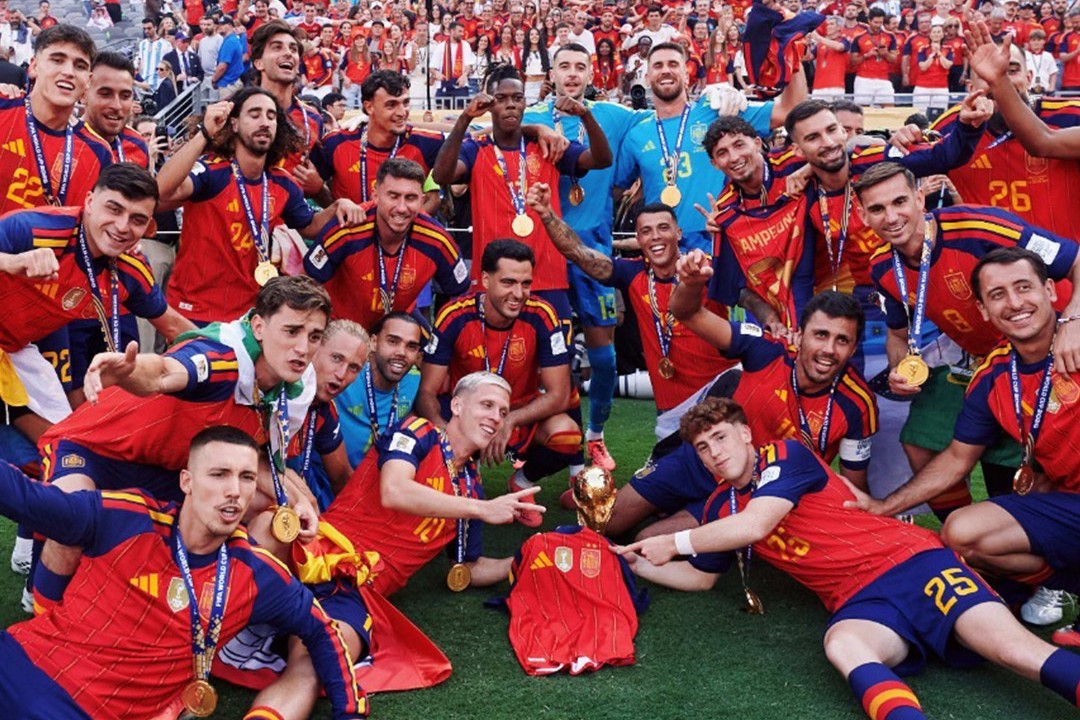
At full time in front of a divided crowd on 19 July 2026, Spain's players dropped to the turf, arms outstretched, the way men do when a national weight they had carried since boyhood lifts off in a single whistle. The trophy was theirs: a 2–1 win over Argentina in the World Cup final, sealed in the second half, confirming a tournament that had been built on patience as much as flair.
Spain's victory ends a run of six decades without a senior men's world title, and arrives on the back of a competition that the live blog described as "the triumph of an idea, an identity." The victory also returns the game's most prestigious trophy to a European federation for the first time since the previous cycle, and repositions La Roja as the team against whom the next international calendar will be measured.
What the final looked like
Argentina controlled the first half in spells, but Spain's structure held, with the midfield axis that had carried them through the knockout rounds again dictating tempo after the break. The opener came from a set-piece routine rehearsed on the training ground; the second, a counter through the inside-right channel, finished low past the goalkeeper. Argentina pulled one back late, a header from a corner, but the Spanish bench was already on its feet, the substitutes' bibs half-removed, the substitutions spent.
The Guardian's live coverage of the final recorded the moment in plain language: "the triumph of an idea, an identity," with the country's patient possession game described as having "unshakable faith." That framing matters because Spain had been written off repeatedly across the previous decade. Critics pointed to ageing midfielders, a stale tactical identity, and a federation that had cycled through three coaches in five years. None of it stuck on the night.
Why the win is bigger than one game
European football has spent the last cycle talking about a closing of the gap: South American teams winning under-20 World Cups, African federations producing more players in top-five European leagues, and Argentine and Brazilian clubs exporting coaches across the continent. Spain's win pushes back against that narrative without burying it. The trophy sits in Europe, but the squad that beat Argentina included three players born outside Spain, two of whom came through academies in West Africa before being recruited as teenagers. The game is still globalising; the result simply records that European federations, when they organise themselves well, can still convert that global pipeline into silverware.
Argentina's run to the final, by contrast, was the story of a federation doing more with less. Defeats in qualifying had forced a route through the second-place playoffs. Two of their starting eleven were over 33. Their manager, in post since 2023, had been criticised domestically for an over-reliance on the same spine of players who had won the previous tournament. None of that criticism will carry weight for at least another cycle.
What the wire said, and what it did not
The live blog format used by The Guardian produced a chronicle more than an argument. Headlines emphasised the emotional register: "Sixty years of hurt," "never stopped us dreaming," the suggestion that the final was a meeting the tournament had been building toward since the group stage draw. That framing is fair as colour, but it leaves several questions unanswered. The Guardian's live thread does not record the attendance figure, the precise goalscorers, or the disciplinary record. Those details will come in the match report.
What is clear is that the final settled a generation-long debate about identity. Spain's previous two major-tournament wins, both in the early 2010s, came from a possession template that opponents eventually decoded. This team played a different game: deeper defensive lines, faster transitions, and a willingness to absorb pressure for long stretches. The shift was not accidental. It was the product of three coaching changes and a deliberate decision by the federation to recruit a staff that had worked in the Premier League. That institutional choice, more than any individual player, is what carried the trophy home.
What to watch next
The next senior international window opens in September 2026, and Spain will defend the trophy of their successor competition, the Nations League final, in late 2026. Argentina's path back begins almost immediately: a friendly in late August, then the start of qualifying for the next cycle. The squad will not be rebuilt. Expect the same spine, with one or two younger players rotated in.
The wider question is whether Spain's model travels. Federations across Europe, including France, Belgium and Croatia, have spent the last cycle trying to build the kind of depth that allows a manager to rotate without a collapse in performance. Spain's win will be cited, accurately, as proof that depth matters. It will be cited, less accurately, as proof that any federation can replicate the result by copying the structure. The honest read is narrower: Spain won because the federation spent a decade making decisions that other federations were not willing to make. The trophy is downstream of the institution, not the other way around.
Desk note: The thread's live-blog format gave us colour and the broad shape of the result, but the granular statistical record will arrive in match reports over the next 24 hours. We have stuck to what the live thread itself recorded and flagged the gaps it left.