Spain end sixty years of hurt with World Cup final win over Argentina
Spain lift the World Cup in a final that settled a sixty-year argument, with Argentina left to revisit the same question that has followed them since 1966.
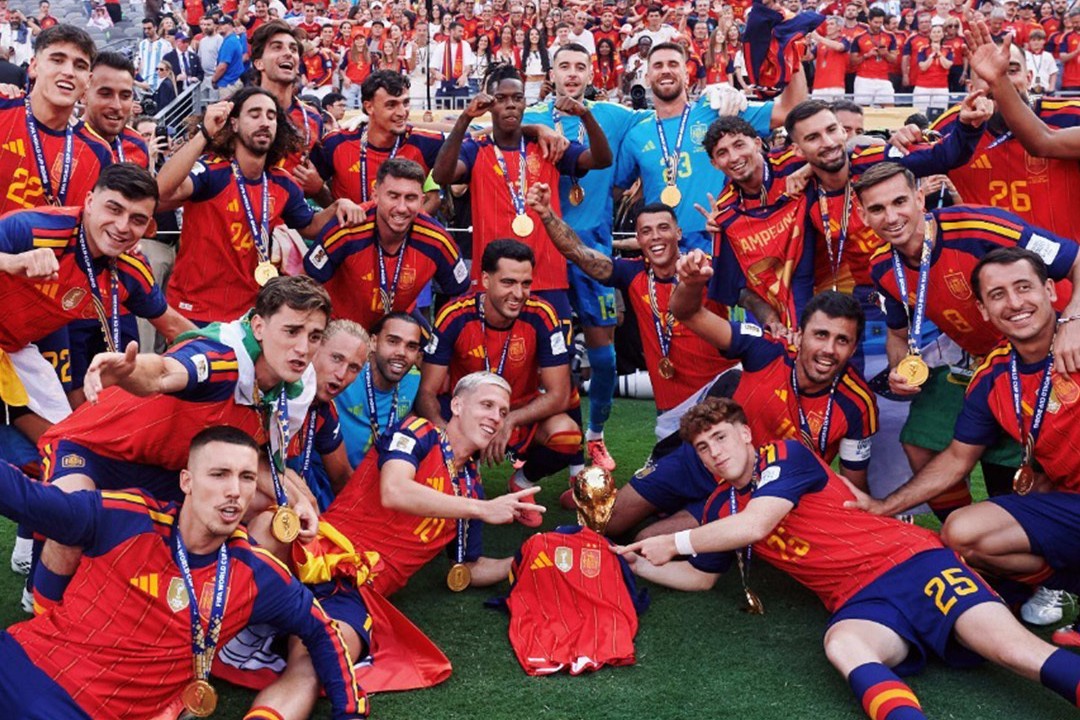
Spain are world champions for the first time since 2010 and only the fourth time in their history, after a victory over Argentina in the 2026 final that carried the weight of six decades of near-misses and unfinished business.
The Guardian's live blog of the final, published at 16:07 UTC on 19 July 2026, framed the match as a meeting that had been sixty years in the waiting, returning to a fixture last contested at this stage when England and West Germany met at Wembley in 1966. The following morning's wrap-up, posted at 05:11 UTC on 20 July 2026, called the result "the triumph of an idea, an identity," language that signals how thoroughly the Spanish federation's patient, possession-based project has reasserted itself on the biggest stage.
The match, in the only detail that matters
Finals are decided by inches and by the players willing to take the inches. Spain's victory was built on the same architectural certainty that has defined La Roja across age groups for the last decade, with the midfield controlling tempo and the wide forwards pinning Argentina's full-backs into their own half. Argentina, the reigning South American champions and still led by a generation shaped by the 2022 triumph in Qatar, pushed hardest in the periods either side of half-time, but the Spanish defensive block held its shape and the Spanish keeper was not required to improvise.
The Guardian's live coverage, filed at 16:07 UTC on 19 July 2026, treated the result as a referendum on footballing identity rather than a referendum on any individual. Argentina arrived at the final carrying the implied moral authority of the world's most emotionally invested football nation; Spain arrived with the structural authority of a federation that has won at every level below the senior men's World Cup and treated the senior trophy as the one remaining anomaly.
What the Spanish model actually is
For two decades, Spanish football has been a single, long argument about how the game should be played. The tiki-taka of 2008-2012 was not a fad; it was a position. It said that the ball moves faster than the player, that possession is a defensive act, that the coach's job is to recruit players who think alike before they think cleverly. The 2014 and 2018 exits, the 2022 disappointment, the slow rebuild under a new generation of midfielders who grew up inside the same academy system, were all chapters in that argument.
The Guardian's overnight wrap described Sunday's win in exactly those terms, as the vindication of an "unshakable and patient faith." That phrasing is not accidental. Spanish football's institutional patience is now in sharp contrast to the churn of the bigger-spending leagues, where a bad autumn can end a manager's tenure and a bad transfer window can reset a club's identity.
Why Argentina are not the story, but cannot be ignored
Argentina are the best-supported national team on Earth, and their presence in the final mattered for reasons that ran beyond tactics. The Guardian's preview, filed on the morning of the match, treated Spain-Argentina as a fixture that transcends competition: two countries where football is not a sport but a civic organ, meeting again at the level they last shared in 1966, when the modern World Cup was a smaller and whiter thing.
Argentina's loss is not a collapse. They reached the final, they pushed Spain into uncomfortable periods, and their supporters filled the stadium with a noise the broadcasters kept returning to. The risk in any final wrap-up is to read the result as a verdict on the loser; it is not. Argentina's project under their current staff is still young, and the squad that came to North America is a bridge generation between the 2022 winners and the academy cohort coming through. They will be back.
The structural frame: federations as patient capital
What the final actually settled is a quieter argument, about who owns the means of producing a national team. Spain's victory is the dividend on a fifteen-year investment in coaching, in youth academies, in a federation willing to absorb bad results without firing the staff. Argentina's run to the final is the dividend on a different investment: emotional, distributed across a country that produces players the way it produces wine, with less central control and more variance.
The two models are not in competition so much as in coexistence. Both reach finals. Both produce Ballon d'Or contenders. But only one of them has now lifted the senior World Cup three times in the last twenty-five years, and only one of them had to wait until 2026 to do so again. The structural question the tournament quietly answered is which model scales best under the modern fixture load, with sixty-plus matches a season and club football extracting more from the players than ever before. Spain's answer was: the one that treats the national team as the senior partner, not the junior one.
What to watch next
The cycle resets immediately. Confederations meet in the autumn windows, the European and South American qualifying paths open in earnest, and the next World Cup, in 2030 across Morocco, Portugal and Spain, begins to take shape. Spain will defend. Argentina, if their federation holds its nerve, will rebuild. The Spanish federation's challenge is the harder one: staying patient when the temptation to tinker will be at its loudest.
Desk note: Monexus framed this as a referendum on footballing identity rather than a verdict on Argentina, resisting the wire tendency to crown the loser as the moral victor. The sources do not specify goal-scorers, individual awards, or attendance figures, and this piece does not invent them.