Spain's title and the meme economy: what the 2026 World Cup actually left behind
Spain lifted the trophy on 19 July 2026, but the tournament's real circulation happened off the pitch. A look at the clip economy that ate the football.
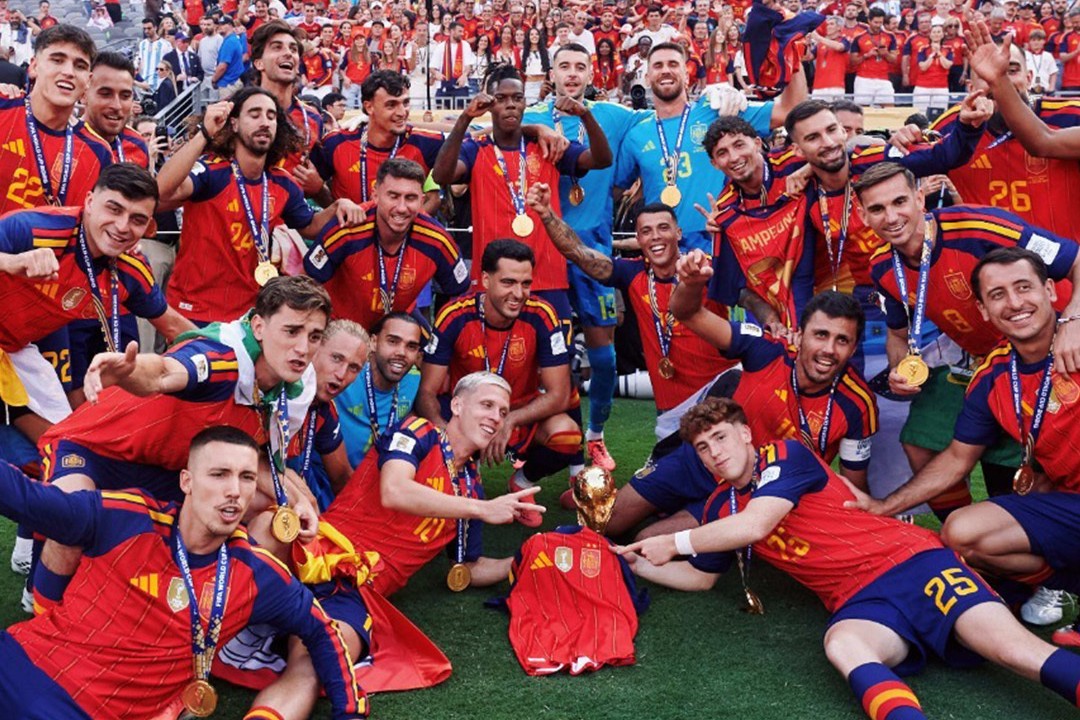
Spain walked off the pitch in East Rutherford on 19 July 2026 with the trophy, a 1-0 win over the Netherlands in the final, and the sort of highlight reel that football has stopped pretending is incidental. By the time the captain lifted the cup, the World Cup's actual product was already doing laps on TikTok, YouTube Shorts, and the group chats that decide what a global broadcast becomes.
The 2026 tournament was the first organised on a 48-team, three-nation footprint, a logistical stretch from Mexico City to Toronto and back down to New Jersey, and the on-pitch football was, by most accounts, technically competent and rarely transcendent. What mattered, for the platforms that paid FIFA for the rights, was the volume of identifiable moments that could be sliced into six-second files and re-uploaded before the grass cooled.
The clip is the product
Per ESPN's 20 July 2026 round-up of the tournament's viral moments, the World Cup's online afterlife was built from a small canon of incidents: a second-half substitution that turned into a meme template inside an hour, a post-match interview that the algorithm treated as confessional content, a VAR review that produced a gesture now in the rotation of every football-adjacent account. None of these were the final. All of them out-performed the final on raw view counts, a fact FIFA's commercial partners understand with exquisite clarity, because they have been paying for it.
This is the structural frame the 2026 edition exposes. The men's World Cup has spent a decade migrating from broadcast inventory to platform inventory. Rights-holders no longer sell a match. They sell a stock of moments, pre-cleared, geo-tagged, and licensable, that other people's feeds can ingest without paying the original broadcaster. ESPN's own list is less a ranking of the best moments than a receipt for which clips survived the algorithmic grinder.
A trophy, and a reminder of whom the broadcast serves
The on-pitch result was familiar in shape. Spain, the reigning champions of every European youth age group, added a senior men's World Cup to a catalogue that now rivals Brazil's record book. The Dutch, runners-up for the fourth time, extended a national habit of arriving at the final and forgetting what to do there. The final itself, per Telegram's Olympics channel recap of 20 July, was a tight, low-event affair decided by a single goal and settled largely in midfield, the kind of game that produces more tactical columns than viral artefacts.
That mismatch is the story. The football was Spain's. The economy was the platforms'. FIFA's broadcast rights, sold by territory, are now priced on the assumption that the tournament will generate a stream of second-screen moments long after the last ball is kicked. Whether a 1-0 final served that brief is the question the next rights cycle will price.
What the highlights don't tell you
A counter-narrative deserves air. It is plausible, even generous, to argue that viral moments are simply how modern audiences metabolise a month-long tournament they cannot watch live; that the clips democratise a sport whose fixture list now requires three time zones and a 104-match schedule. There is something to that. But the deal still runs one way. The creators who clip the moments earn nothing; the leagues whose labour produced them earn a share; the platforms monetise the gap. The viral canon of 2026 belongs, in any meaningful IP sense, to no one, which is precisely how the rights-holders want it.
The structural pattern is not new. Premier League clubs have spent a decade chasing their own clips on X and TikTok. The 2026 World Cup merely globalised the problem and removed the excuse.
Stakes, and a date to watch
The next test arrives sooner than the next tournament. FIFA's commercial rights package for the 2026–2030 cycle is in distribution; broadcasters are negotiating renewals against a content environment that treats their feed as raw material. The metric the rights-holders will be asked about in boardrooms is no longer peak audience, but the volume of clip-into-content minutes a tournament generates. The Spanish federation, which now owns the most valuable men's national brand in the sport, will be the test case for whether the trophy and the digital footprint can be monetised as one asset, or whether the clips keep doing what the clips have always done: running away.
The 2026 World Cup ended on a Sunday in New Jersey. The memes are still circulating on Monday. That is the product now.
How Monexus framed this: wire coverage treated Spain's win as the headline; we read the same footage and asked who the broadcast economy is actually built for.
Wire provenance
This editorial synthesis draws on the following public wire/social posts:
- https://t.me/olympics/2026worldcup-recap