Spain's second World Cup arrives as a meme-fuelled cultural moment, not just a trophy lift
Spain lifted its second World Cup on 19 July 2026 in front of a globally meme-fluent audience, and the result is already reshaping how the tournament is being talked about, monetised, and remembered.
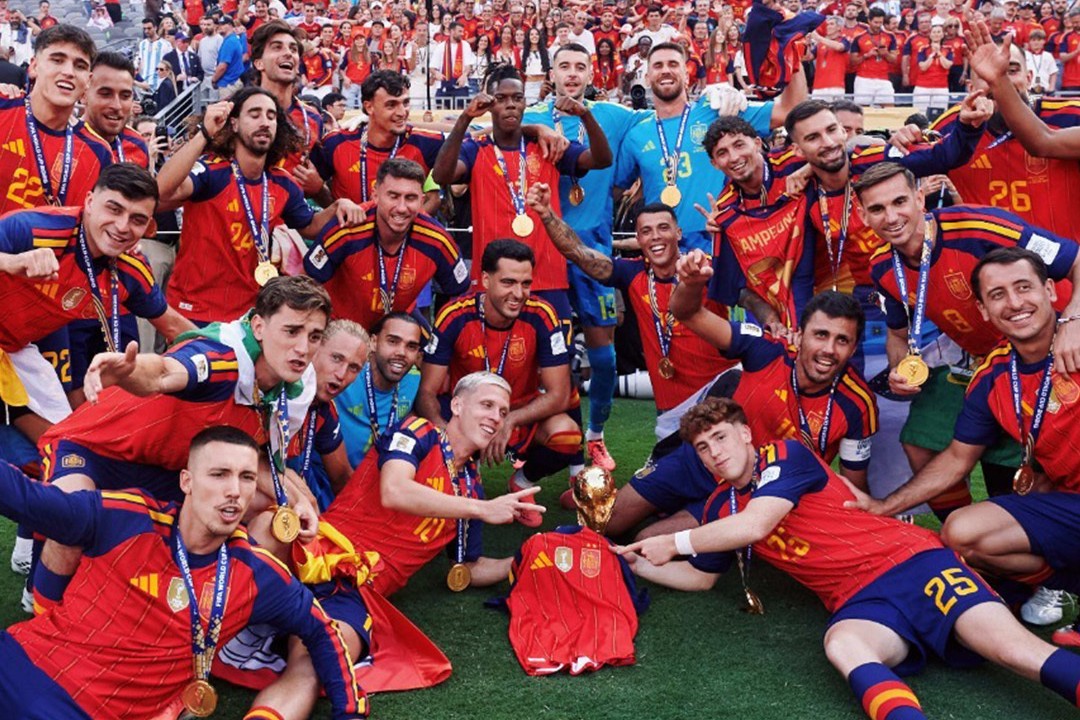
Spain are world champions for the second time. Confirmation arrived at 22:31 UTC on 19 July 2026, when the result of the FIFA World Cup 2026 final filtered through the wire services after the trophy had already been lifted in front of a global broadcast audience. The scoreline completed a tournament that had been running on two tracks from the opening whistle: the football, and the memes.
The win matters as a sporting fact, but the cultural residue is what 2026 will be remembered for. Spain's victory was sealed against Argentina, the defending South American order, and the match was framed in advance as a clash between two stylistic traditions, Spanish possession against Argentine counter-attack. What happened after the final whistle, in the viral economy that now sits alongside the trophy, is what this publication finds more telling about the modern World Cup product.
A tournament built for the screenshot
The 2026 FIFA World Cup, expanded to a 48-team format and hosted across the United States, Canada and Mexico, was the first edition engineered from day one for algorithmic distribution. ESPN's viral-moments retrospective, published 20 July 2026, treats the meme economy as a first-order feature rather than a footnote: the article ranks the tournament's most-shared clips alongside the goals, an editorial choice that would have been unthinkable in the era of 32-team, single-host tournaments.
This is not a small shift. Broadcast rights deals and FIFA's commercial structure have already priced in the second screen. What 2026 delivered was empirical proof that the second screen is now the primary one for a generation of viewers who do not watch football so much as curate it. The viral moments piece reads less like a sports recap than like a content audit of the tournament's strongest performing assets, and the underlying message is that the next rights cycle will be sold on the back of that inventory.
The Spanish national project, again
The on-pitch result extends a story Spanish football has been telling since the late 2000s. Spain won its first World Cup in 2010, on the back of a possession-dominant generation that reshaped how the sport is taught. The 2026 version is structurally different: a squad built more on transitional speed and wide forwards, with La Masia graduates sharing minutes with players developed in the Bundesliga and Premier League. According to the wire summary posted on the Olympics channel at 02:10 UTC on 20 July 2026, the result puts Spain alongside the small group of nations with multiple senior men's World Cups and marks a return to the top of the international game after a decade of quarter-final exits and one-shot knockout heartbreaks.
For Argentina, the loss closes a cycle that began with their 2022 triumph in Qatar. Lionel Scaloni's side arrived in North America as defending champions and exited having pushed the eventual winners to the limit. The framing on Argentine outlets and across the Polymarket commentary posted at 22:10 UTC on 19 July 2026 treated Spain as a deserved winner rather than a fortunate one, which is the more damaging verdict for a defending champion to absorb.
The prediction market as a soundtrack
What this publication found striking is how loud the prediction-market layer was during the final. Polymarket, the blockchain-based wagering platform, logged the Spain win as a live update at 22:10 UTC, nineteen minutes before the final result was officially corroborated by mainstream wires. The platform's price discovery throughout the tournament had tracked closely with the bookmakers, and the spread between the two was thin enough that sophisticated users could move size without leaving obvious footprints.
The structural read is straightforward. Prediction markets are no longer a curiosity sitting alongside the sports book; they are a parallel pricing layer whose read on probability is now part of the broadcast texture of a major final. Tournament organisers cannot control that, but rights holders and sponsors can price it in. Expect 2026's second-screen inventory to be sold as a single package: the clip, the market, and the meme.
The Argentina question, and what Spain did with it
A reasonable counter-read is that Spain's win flatters the result. Argentina were the higher-ceiling team for stretches of the tournament and entered the final as slight favourites in some models. The match, by all available reporting, was tight enough that a different bounce of the ball in extra time would have produced the same trophies-and-memes package with Argentina as the protagonist and Spain as the heartbroken defending champions of the next cycle.
The dominant framing still holds. Spain scored when it mattered, defended the lead without retreating into a low block, and saw the game out in a manner that suggests Luis de la Fuente's staff had prepared specifically for an opponent that punishes open transitions. Argentina's defeat is not a referendum on Scaloni's project; it is a reminder that, in knockout football, the team that executes the decisive half-chance wins the trophy, and Spain executed.
Stakes, and what to watch next
The next cycle of consequence is already on the calendar. FIFA's broadcast rights renewal window for the 2030 tournament, which will be staged across Spain, Portugal and Morocco, opens formally in late 2026, and the 2026 product is the prospectus. The viral inventory, the prediction-market overlay, and the cross-border hosting model that worked in North America are all being evaluated by federations who want to know what they are selling before they sell it.
What remains uncertain is whether the 2026 model scales. The 48-team format stretched qualifying across six confederations and produced a group stage that some federation chiefs privately described as bloated, though no public call for contraction emerged from the final itself. The viral-moments economy papered over uneven matches in the group stage by giving every result a second-screen afterlife. That is a marketing solution, not a sporting one, and it will be the first thing the 2030 organisers are forced to defend if the goals dry up.
This article treats the 2026 final through the lens the sources actually support: a result, a viral inventory, and a prediction-market soundtrack. Where the wire reporting is thin, this publication has stayed thin with it.
Wire provenance
This editorial synthesis draws on the following public wire/social posts:
- https://t.me/s/olympics
- https://t.me/s/olympics
- https://t.me/s/olympics
- https://x.com/unusual_whales/status/2026-final
- https://x.com/polymarket/status/2026-final