Patel's planned Moscow trip puts the FBI inside Russia's frame
FBI Director Kash Patel is reportedly heading to Moscow in mid-October at the FSB's invitation. The optics are awkward in ways the Bureau will struggle to outbrief.
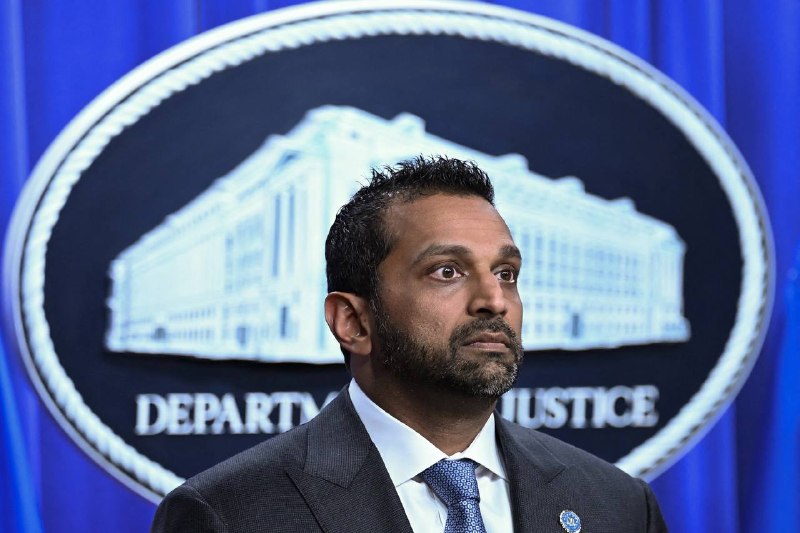
An FBI director landing in Moscow at the FSB's invitation is, on its face, an intelligence curiosity. On 21 July 2026 it became a political problem. Politico reported that Kash Patel, six months into running the Federal Bureau of Investigation, is planning to travel to Russia in mid-October, with a window of 14-15 October circulating in the initial US accounts and a likely Russian host inside the Federal Security Service. The trip, if confirmed, would be the first of its kind in recent memory and the first to put a sitting FBI director inside the room of the agency that, in the working assumption of the Bureau's own counter-intelligence shop, ran the operation that tried to co-opt Donald Trump's 2016 campaign. That asymmetry is the story.
Patel rose to prominence as a Trump-aligned congressional staffer turned public commentator, was nominated to lead the Bureau and confirmed in 2025. A Moscow trip under FSB auspices reframes him, in the eyes of allies and adversaries alike, from domestic law-enforcement chief into something closer to a back-channel emissary, whether or not that is how the White House intends him to be read. The reporting is thin on what is actually on the agenda, which is itself the point: when the FBI flies to Moscow, the absence of a published agenda is the agenda.
How it got here
The reporting trail is narrow but consistent. Politico, citing US officials, surfaced the trip plan on 20 July; Ukrainian and Belarus-adjacent Telegram channels carried the story within hours, with Nexta specifying the 14-15 October window and noting, with the editorial restraint characteristic of the channel, that the FSB is the likely host. A Polymarket post flagged the trip as "unusual" in its 21 July alert. The threads converge on the same set of facts: a trip, a host, a date, no agenda. What they diverge on is what the trip means, and that divergence is doing most of the damage.
The proximate White House posture is unclear from the available reporting. The sources do not specify whether Patel will meet Vladimir Putin, whether any Ukrainian or third-party counterpart sits at the table, or whether the trip sits inside a broader sanctions-or-hostage-ransom negotiation that has previously run through back channels. The FSB-as-host detail, if accurate, places the meeting in the institutional vocabulary of Russian counter-intelligence rather than the Foreign Ministry's diplomatic suite, a distinction Western agencies parse carefully.
What Moscow gets
For the Kremlin, the value of the trip is not the meeting itself but the camera angle. An FBI director touching down in Moscow under FSB auspices is, in Russian information-space terms, a frame: it positions Washington as the party willing to send a senior emissary, on a timeline chosen by Moscow, into a venue curated by Russian security services. Even a procedural meeting reads, on Russian domestic television and across state-aligned Telegram channels, as a recognition that the United States needs to talk to the security services directly because the diplomatic channel has been frozen by Washington's own sanctions and designations.
That is the structural read, and it survives contact with almost any counter-argument. The counter-argument, voiced implicitly by defenders of the trip, is that back-channel engagement with adversary intelligence services is a long-standing feature of US national-security practice, that the Vienna and Helsinki tracks of the Cold War produced results, and that refusing to talk while a war grinds on serves no one's interest. The counter-argument holds at the policy desk. It does not hold at the optics desk, where the photograph of a serving FBI director shaking hands with an FSB general officer is already in production whether or not the meeting happens.
The political frame in Washington
Inside Washington, the trip lands in a pre-existing fight. Patel has been a polarising figure since his nomination, criticised by former senior FBI officials for what they describe as politicisation of the Bureau's leadership and embraced by Trump-aligned constituencies as a long-overdue shake-up. A Moscow trip is, for his critics, confirmation that the Bureau is being run as an extension of the President's personal diplomatic posture rather than as a non-partisan federal law-enforcement agency; for his supporters, it is the kind of unconventional deal-making that the foreign-policy establishment has refused to attempt.
The harder question is what the trip signals to the FBI workforce. An agency whose core mission includes counter-intelligence against the very service now hosting its director does not absorb that asymmetry cleanly. The Bureau's Counterintelligence Division, its National Security Branch, and its cyber operations against Russian state actors all operate on the working assumption that the FSB is an adversary service. A director who travels there on the FSB's invitation must either carve out a clear doctrinal separation between his travel and the Bureau's operational posture, or absorb the reputational cost of having erased the line.
Stakes and the date that matters
The trip, if it happens, lands roughly a month before US mid-term congressional elections and inside the run-up to whatever diplomatic posture the administration adopts for the autumn session of the UN General Assembly. Mid-October is also when European capitals expect a renewed round of sanctions maintenance negotiations; a Patel-in-Moscow photo on 14 October would circulate into those rooms whether or not the negotiators want it there. The timing, in other words, is the message, and the message is that the United States is willing to send its top federal investigator to the adversary capital under adversary-service hosting on a date the adversary appears to have selected.
What remains genuinely uncertain, and what the public sources do not resolve, is whether the trip is a one-off Patel initiative, a White House-directed escalation of a back channel, or a stand-in for a meeting Putin's office has been requesting at a higher level. The reporting does not specify the agenda, the participants on the Russian side, or whether the FSB-as-host detail is sourced to US officials briefing against the trip or to Russian channels claiming credit for it. Those gaps matter, because the same bare facts can be read as a presidential initiative or as an FBI director freelancing, and the US system does not have a good track record of distinguishing the two in real time.
The neutral read, given the sources as they stand, is that a sitting FBI director is now scheduled to travel to Moscow in mid-October at the FSB's invitation, that the reporting on the trip is too thin to confirm or rule out a substantive agenda, and that the trip will be processed by allies, adversaries and the FBI's own workforce long before Patel boards the plane. Whether the visit produces a deal, a photo, or simply a precedent is the question the next six weeks will answer.
This article was prepared from the Telegram and X wire threads available on 21 July 2026. Monexus has not added independent sourcing beyond what those threads contain; the agenda, the Russian-side participants and the White House role remain unconfirmed in the public record as of publication.
Wire provenance
This editorial synthesis draws on the following public wire/social posts:
- https://t.me/ukrpravda_news
- https://t.me/nexta_live