Kuwait blast, Bahrain attacks: Iran-aligned channels claim a third front has opened
An Iran-affiliated Telegram channel says U.S. bases in Kuwait and Bahrain were struck within hours of each other on 21 July 2026, while an image allegedly showing a Kuwait blast circulates on X. The pattern, if confirmed, suggests a widening rather than a winding down.
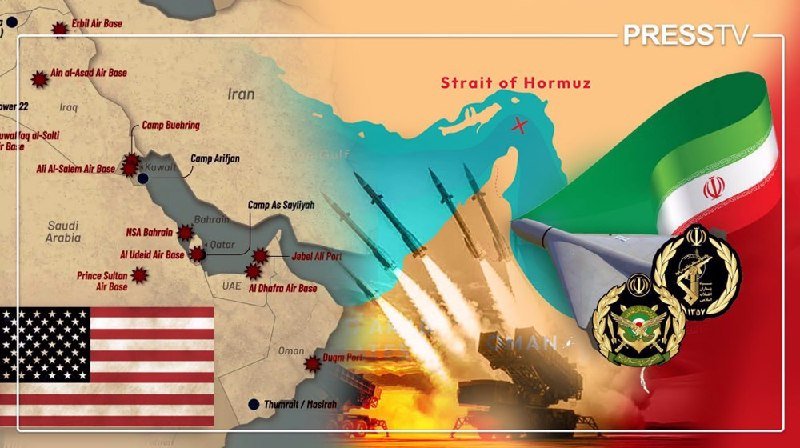
At 17:18 UTC on 21 July 2026, an Iran-aligned Telegram channel with the handle @IRIran_Military posted a two-line claim: U.S. military bases had come under attack twice in Bahrain and once in Kuwait in the preceding two hours. A minute later, the same channel reposted the line with the word "reportedly" softened into the wording. By 18:37 UTC, an image allegedly depicting the aftermath of a Kuwait explosion had been uploaded to X by the account @sprinterpress, captioned in emoji-framed shorthand that named Kuwait and nothing else.
Strip away the formatting and what is on the table is a quiet escalation across two Gulf monarchies within roughly 120 minutes, sourced from a single Telegram account and one undated photograph. If the claims hold, the trajectory of the last week has shifted again: not a single provocation, but a pattern that points outward rather than inward.
What the sources actually say
The Telegram posts carry no attribution beyond the channel itself. @IRIran_Military is not a wire service; it is one of a cluster of Iran-affiliated outlets that routinely publish operational claims first and let official Iranian channels confirm them later. The text it pushed out on 21 July was structurally identical to claims aired during prior rounds of regional escalation: short, declarative, and locationally specific. The Bahrain attacks are said to number two and target U.S. bases. The Kuwait strike is said to number one. No casualty figures, no munitions identified, no origin claimed.
The X image is harder. @sprinterpress published it without provenance metadata visible in the post. It is described, not depicted in any sourced caption, as the "aftermath of today's explosion in Kuwait." Reverse-image checks at the time of writing were not possible; the only contextual anchor is the date stamp on the post itself and the wording. Image-only claims of this kind have been wrong before, in both directions: fabrications circulated as battlefield photography, and genuine battlefield photography uploaded before any wire had caught up. The photograph's evidentiary weight is therefore low until an outlet on the ground in Kuwait publishes a corresponding scene.
Why the Bahrain angle matters more than the Kuwait photo
Bahrain hosts Naval Forces Central Command and the U.S. Fifth Fleet, the principal maritime node for Gulf operations. A claim of two strikes on U.S. positions there inside two hours is, on its face, a more strategically loaded statement than a single explosion of unspecified cause inside Kuwait. U.S. Central Command has not, as of the time of writing, posted a confirming or denying statement on either incident. That absence is itself the story: official silence at the moment a regional adversary's channel is naming targets.
Kuwait, by contrast, hosts a smaller U.S. footprint at Camp Arifjan and Al Jaber Air Base, and the political optics inside Kuwaiti domestic politics are tighter. Any kinetic event on Kuwaiti soil draws swift denials from Kuwaiti officials anxious to keep the country out of the headline. The fact that the photograph was uploaded at all, and by an account that frames it explicitly as aftermath, suggests the channel wanted the visual out before any official comment.
Reading the framing, and the counter-framing
Western wire coverage of Iran-aligned operational claims tends to follow a recognisable pattern: lead with the claim, attribute it cleanly to an Iran-affiliated source, then move to U.S. or Gulf-state denials, and close with the diplomatic consequences. The implicit frame is that the claim is suspect until confirmed, and that official silence equals a non-event. That discipline is not wrong; it is how professional war journalism avoids being used as a broadcast amplifier. But it carries a cost when claims accumulate faster than confirmations, which is precisely the tempo Iran-affiliated channels operate at. By the time a denial is published, three new claims have replaced the original.
The structural read is straightforward. Telegram channels tied to the Islamic Republic's security perimeter have learned to set the news cycle by issuing short, granular, location-specific statements faster than any Western wire can match. The discipline of waiting for confirmation, applied consistently, cedes the first hour of any given incident to the side that least cares about being wrong. That is not a media-bias argument. It is a tempo argument, and it explains why the Bahrain claims are already the lead on regional aggregators an hour after the original post.
What remains genuinely uncertain
Three things. First, no Western wire has independently verified either the Kuwait blast or the two Bahrain strikes; the only named source remains the Telegram channel. Second, the X photograph's provenance is unknown; "allegedly depicting" is doing all the work in the caption. Third, U.S. Central Command and the Kuwaiti and Bahraini ministries of interior have not, at the time of writing, posted operational statements. The default editorial posture is therefore to treat the Telegram claims as primary, treat the photograph as suggestive rather than confirmatory, and watch the official channels for what they do or do not say in the next 24 hours. If the silence holds, the framing choice falls to the channels that spoke first.
Desk note: Monexus leads with the Iran-affiliated claim because the Telegram post is the only dated source on record, then refuses to amplify the unverified photograph beyond what it is. Western-wire confirmation is the next thing to watch.
Wire provenance
This editorial synthesis draws on the following public wire/social posts:
- https://t.me/IRIran_Military
- https://t.me/IRIran_Military
- https://x.com/sprinterpress/status/HNxa1bnWgAA2YBI