Israel tells US Iran has consolidated centrifuges inside Pickaxe Mountain near Natanz
Israeli intelligence has briefed Washington that Tehran relocated thousands of centrifuges into a hardened underground site near Natanz, reviving the question of whether enrichment is being hidden from inspectors.
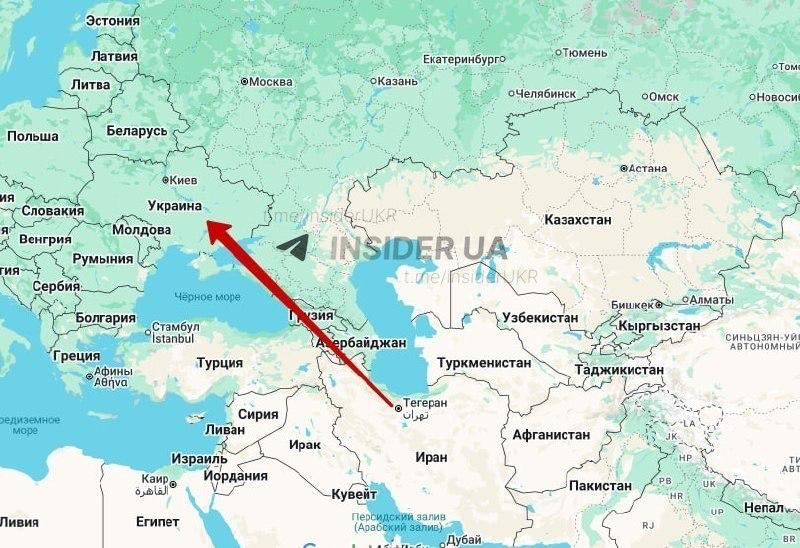
Israeli intelligence has told Washington in the past 24 hours that Iran moved thousands of operating centrifuges into Pickaxe Mountain, a heavily fortified underground nuclear site adjacent to Natanz in central Iran, according to two channel summaries circulated on 21 July 2026 at 04:31 UTC and 04:35 UTC.
The framing matters because it converts a long-running enrichment dispute into a concealment dispute. Centrifuges are not, in themselves, illegal: they are the machines that do the slow industrial work of separating uranium-235 from uranium-238. What Israel is now asserting, on the record to a US administration that has spent the past year trying to constrain Iran's enrichment capacity through diplomacy, is that the machines have been physically repositioned into a mountain. The dispute is no longer about how many centrifuges Iran runs, but about whether international inspectors can see them run at all.
What Israeli intelligence is alleging
The two briefings published by Middle East Spectator on the morning of 21 July, sourced to Israeli intelligence assessments, describe the move as a relocation of "thousands" of operating centrifuges into Pickaxe Mountain, an underground facility near the Natanz complex in Isfahan province. The site is described in the channel's reporting as "highly fortified." Israel is reported to have shared the assessment with the United States. The second bulletin, timestamped 04:35 UTC, frames the exchange explicitly as a joint Iran-Israel-US file, underscoring that the Israeli message is being delivered to Washington as much as to Tehran.
The two bulletins are brief and do not specify which generation of centrifuge is alleged to have been moved. Iran's installed base at Natanz has historically been dominated by IR-6 and IR-2m machines, with older IR-1 cascades still online; Israeli officials in past leaks have pointed specifically to advanced machines as the units worth hiding. The channel reports do not make that distinction, and that absence is itself part of the story.
Why Pickaxe Mountain, specifically
Pickaxe Mountain is not a name that appears often in open Western inventories. The site has been discussed in Israeli and Iranian opposition reporting for years as a hardened tunnel complex built into the mountainside overlooking the Natanz Fuel Enrichment Plant, designed to survive the bunker-buster munitions that destroyed the above-ground cascade hall at Natanz in earlier strikes. Its architectural purpose is concealment under bombardment, not concealment under inspection. The Israeli allegation, if accurate, signals that Iran is now using a facility built for wartime continuity as a peacetime hiding place, a different political decision with different consequences for the International Atomic Energy Agency.
That distinction is where the dispute lives. Enrichment above ground, declared to the IAEA and surveyed quarterly, has been the spine of Western intelligence assessments of Iran's programme for two decades. Enrichment inside a mountain, surveyed only when Iranian authorities allow access and only along routes Iranian authorities have cleared, is a different category of fact. It can still be lawful under the Nuclear Non-Proliferation Treaty if declared. It becomes a violation only when undeclared, and Israel is in effect accusing Iran of crossing that line.
The counter-narrative from Tehran
Iran's official line on Natanz has been consistent: enrichment is for civilian fuel, the facilities are declared, IAEA inspectors have access subject to safety and security arrangements, and any repositioning of equipment reflects operational decisions inside a sovereign civilian programme. Iranian state outlets have repeatedly accused Israel of manufacturing pretexts for military action, and of using selective intelligence leaks to derail diplomacy. Tehran has not, in the open record seen here, responded to the specific Pickaxe Mountain allegation carried by Middle East Spectator on 21 July. That silence is conspicuous but not yet diagnostic; Iranian responses to Israeli leaks have historically taken hours, sometimes days.
The structural point Tehran's defenders make is that Israel has its own undeclared nuclear arsenal, has never signed the NPT, and has resisted IAEA inspections of Dimona for decades. Whether or not that argument survives legal scrutiny, it sits in the room whenever an Israeli intelligence assessment is delivered to Washington about an Iranian centrifuge hall.
What the US actually does with this
Israel telling Washington is not the same as Washington agreeing. US administrations have historically weighted Israeli intelligence on Iran heavily, but they have also, repeatedly, found that Israeli assessments about timing, about operational status, and about breakout timelines outran the underlying evidence. The Trump administration's negotiating posture through 2025 and into 2026 has been to demand that enrichment itself end, not merely that declared enrichment be moved; the Israeli briefing, if it lands as described, hardens the US position by reframing enrichment as concealment.
The downstream question is whether the IAEA is asked to verify. A US demand for inspector access to Pickaxe Mountain, backed by the Israeli read, would force Tehran into a binary: open the tunnels or refuse and confirm the Israeli framing. Iranian refusal would not, on its own, produce a strike. It would, however, collapse the diplomatic track and shift the burden of decision back onto Tel Aviv and Washington. That is the trajectory the 21 July briefing is built to start.
What remains uncertain
The two channel summaries do not carry an IAEA confirmation, a US official on-the-record statement, or a technical annex showing which centrifuges, in what configuration, were moved. The "thousands" figure is unattributed beyond Israeli intelligence. The site name, Pickaxe Mountain, is consistent with prior Israeli and opposition reporting but is not, in the materials available here, corroborated by IAEA imagery or by independent technical analysis. Readers should treat the assertion as an Israeli framing of an Iranian act, not yet as an established fact about Iran's enrichment inventory.
This publication has treated Israeli intelligence assessments on Iran as Israeli framing, weighted against the IAEA's documented inspection record and against Iran's stated civilian-fuel rationale, rather than as stand-alone confirmation. The dispute over Pickaxe Mountain is, at root, a dispute over what counts as verification.
Wire provenance
This editorial synthesis draws on the following public wire/social posts:
- https://t.me/middleeastspectator/1234
- https://t.me/middleeastspectator/1235