Iran warns US allies are next if nuclear sites hit, as Hegseth frames the war as 47 years old
Tehran's joint command broadens its threat to US-allied assets worldwide, days after Washington struck Iranian nuclear infrastructure, while Sofia resists an aircraft-basing request.
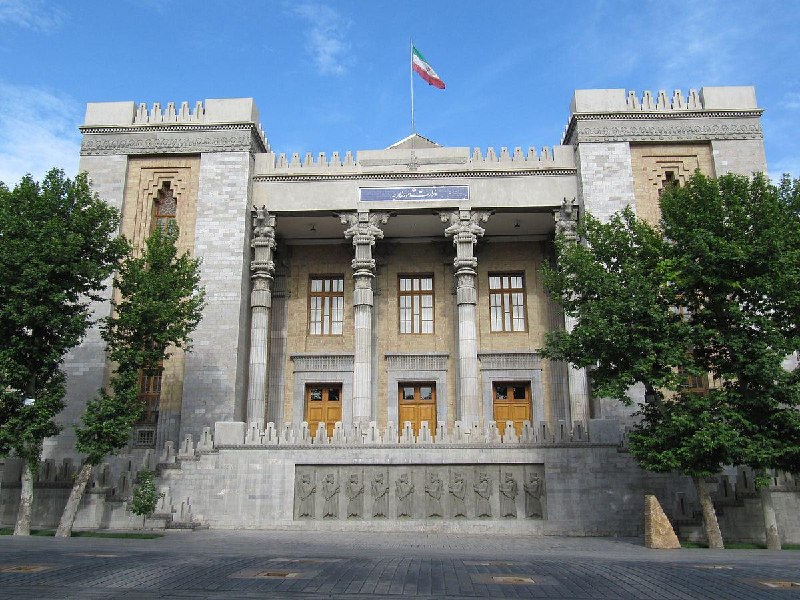
Iran's joint military command broadened its threat on 21 July 2026 to target the interests of the United States and its allies if Iranian nuclear facilities are hit, escalating a war of words that has now drawn in a NATO member on the Black Sea. The warning, carried by Middle East Eye at 22:12 UTC, came hours after Iran's army said it was "fully ready" to keep any enemy from approaching its borders, and after a separate Iranian notice to Bulgaria not to host US aircraft for strikes it called "war crimes."
The exchange, played out in real time across state-aligned and independent channels, lays bare the speed at which a bilateral confrontation is metastasising into a wider regional and NATO-perimeter test. US Defense Secretary Pete Hegseth put the American framing in bluntly historical terms: "We didn't start this war. Iran started this war 47 years ago. We didn't start it. They did!" The line, picked up by the Telegram channel Clash Report and by Iran's PressTV at roughly 21:00 UTC, is now the cleanest articulation of Washington's case to a domestic audience.
The Iranian threat, widened
Iran's warning is no longer confined to American forces in the Gulf. According to the country's top joint military command, as relayed by Middle East Eye, the target set extends to "interests of US and its allies" if Iranian nuclear sites are struck. PressTV carried the same line at 20:57 UTC. The phrasing is deliberately broad: oil installations, diplomatic compounds, transport hubs, and the bases of any state considered aligned with Washington are now inside the threat envelope. The signal is to coalition partners in Europe and the Gulf that the price of participation is paid on their own soil.
A separate Iranian army statement, distributed by PressTV at 21:40 UTC, framed the country as already prepared to fight: the army "will not allow enemy to even come close to country's borders." The two readouts, one political-diplomatic, the other operational, are calibrated together. One names the cost of joining a US campaign; the other asserts the capacity to impose it.
Sofia as the test case
The most concrete instantiation of that threat is Bulgaria. PressTV reported at 21:31 UTC and again at 20:55 UTC that Iran has warned Sofia against approving a US request to station military aircraft at a Bulgarian air base. Tehran's language is unambiguous: any cooperation, it says, would amount to "complicity in war crimes."
That makes Sofia a NATO frontline test. Bulgaria hosts rotational US forces and shares Black Sea airspace with the alliance's eastern flank. A refusal is a quiet rebuke of Washington. An acceptance, by Iran's stated logic, marks Bulgarian infrastructure as a target. Either way, the request has turned a small member state's base access into a question of alliance burden-sharing under fire. NATO allies will be reading Sofia's reply for what it tells them about the cost ceiling of US basing arrangements in any future Iran operation.
Hegseth's framing, and what it concedes
The Hegseth line does important work for the administration's domestic case. By dating the war to 1979, the Pentagon sidesteps the more uncomfortable question of who struck first in the current cycle of escalation and recasts the conflict as a long-running American defence of an international order that Iran has, in this telling, been assaulting for nearly half a century. It is the same rhetorical move the US has made with al-Qaeda and, before that, with the Soviet Union in Afghanistan: a forty-year ledger that compresses a dozen distinct decisions into a single story of patient aggression.
The accompanying Hegseth line, distributed by Clash Report at 20:56 UTC, is the policy tell: "We are not fighting stupid wars again. We haven't been trying to remake Iranian society." That is meant to reassure a war-weary American public that the military footprint will be bounded, the aims limited, and the nation-building off the table. It also narrows the war aim, by implication, to a narrow set of nuclear- and missile-related targets rather than to a change of regime. Whether the public buys a 47-year frame, and whether Tehran interprets it the same way, is a different matter.
What the wire does not yet tell us
The cluster of Telegram and live-blog reports is dense on declared positions and thin on the underlying events that prompted them. The thread context does not specify the location or scale of the recent US strikes on Iranian nuclear infrastructure, nor does it confirm whether further strikes are imminent. The Bulgarian request itself is reported as a request, not as an approved basing arrangement. The number and identity of any Iranian-aligned responses inside Iraq, Syria, Yemen, or Lebanon have not been carried in the material in front of this publication, and would need to be sourced from wire agencies or OSINT trackers before being repeated.
That leaves the newsroom question for the next 24 hours sharp and narrow: does Sofia publicly accede, defer, or refuse; and does Iran's broadened threat translate into an action against a named allied asset, or remain a deterrent signal. The answer to the first tells NATO something about the cohesion of its southeastern arc. The answer to the second tells Tehran's adversaries something about the credibility of the warning.
How Monexus framed this: the wire is currently dominated by reciprocal declaratory statements; this piece treats Iran's broadening of its threat to allied assets, and Bulgaria's emergence as a NATO test case, as the news, and lets the official framings from both capitals stand as evidence rather than as conclusion.
Wire provenance
This editorial synthesis draws on the following public wire/social posts:
- https://t.me/presstv
- https://t.me/presstv
- https://t.me/presstv
- https://t.me/ClashReport
- https://t.me/presstv
- https://t.me/ClashReport
- https://t.me/presstv