Trump to query Putin on Russian satellite imagery allegedly shared with Iran, plays down Zelenskyy claim
On 27 July 2026, the US president said he would ask Vladimir Putin directly whether Russia has passed satellite imagery of US Gulf bases to Iran, while signalling he does not yet credit the Ukrainian assertion that prompted the question.
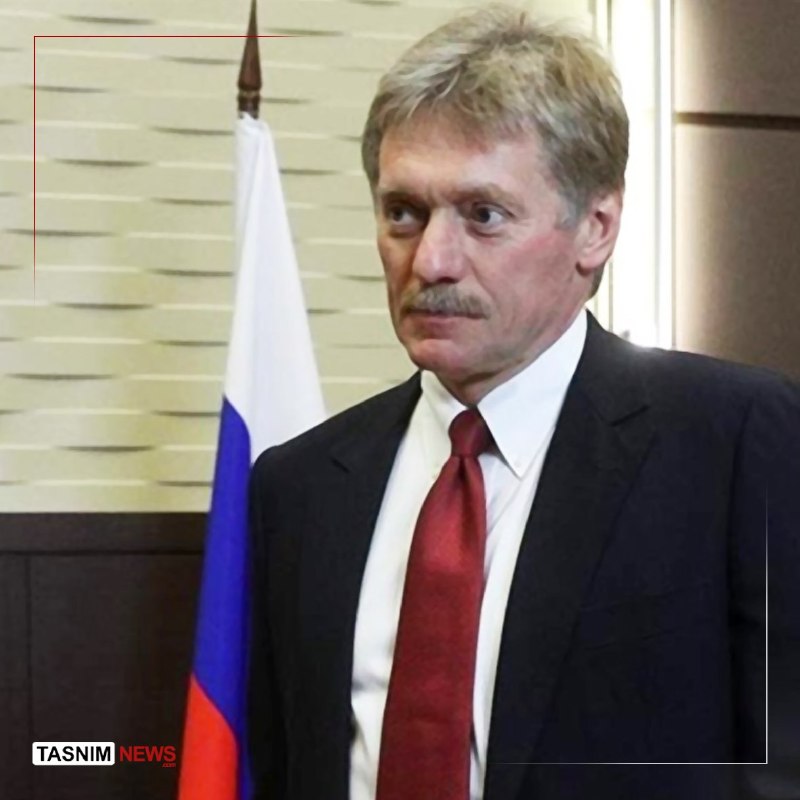
At 16:38 UTC on 27 July 2026, a reporter at the White House asked Donald Trump about a statement from Volodymyr Zelenskyy alleging that Russia had transferred satellite imagery of US military facilities in the Gulf to Iran. Trump's answer, captured on the press-pool feed and republished by the ClashReport Telegram channel, was characteristically transactional. "We will find out if that's true," the US president said. "I will ask Putin about it." He added that the alleged transfer, "if that's the case," had not yet had much impact.
Within the hour, three more items crossed the Monexus newsroom feed. At 16:59 UTC, DDGeopolitics flagged a separate exchange in which Trump was asked what Israeli Prime Minister Benjamin Netanyahu wanted from him. At 17:00 UTC, ClashReport posted another pool clip in which a reporter asked whether Saudi Arabia had given any indication it would sign on to the Abraham Accords; Trump replied that the two governments had not discussed the framework. At 17:02 UTC, noel_reports carried a longer version of the satellite-imagery exchange, recording Trump's more pointed formulation: he did not believe Zelenskyy's claim, but he would raise it with the Russian president.
The pattern is the story. Three live diplomatic threads (Ukraine-to-Iran intelligence cooperation, Israel-Iran pressure management, and the stalled Saudi-Israel normalisation track) are running on parallel tracks through the same press appearance, and the US president is managing each one in his accustomed register: sceptical of the premise, transactional in the follow-through, and explicit that the conversation will move through his direct line to Moscow rather than through any institutional channel. The most consequential of those threads is the first, because it ties together the two adversaries Trump has spent the year trying to keep apart.
What Zelenskyy actually said
The wire cycle that prompted the pool question originated with Zelenskyy's assertion that Moscow has been passing satellite imagery of US bases in the Gulf to Tehran. The cited posts do not specify the venue, the date, or the full text of Zelenskyy's statement; what the pool exchange confirms is only that the claim reached Trump's lectern in Washington on 27 July, and that the US president's first public response was to disavow credence in it while promising a direct readout from the Kremlin. The epistemic gap matters: as of the cited items, neither the Ukrainian presidency nor any Western intelligence agency has been named in the available reporting as having published corroborating imagery, transmission records, or satellite-tasking data. The cited posts contain no independent confirmation that the alleged transfer took place; this article has not independently established whether it did. Monexus analysis: the absence of corroborating detail leaves the claim operating at the level of leader-to-leader diplomacy, where its primary effect is to seed a Trump-Putin phone call rather than to constrain either government's behaviour on the ground.
Israel, Iran, and the Gaza-shaped background
The second thread surfaced at 16:59 UTC, when Trump was asked what Netanyahu wants him to do. The cited DDGeopolitics item does not specify the wording of Trump's answer, only that he responded "in the most Trump way possible." That editorial framing is itself a signal: the answer, whatever its content, was treated by the channel as a performance rather than a policy disclosure. Monexus assessment: when the US president is asked about Israeli war aims in the middle of an active Iran-policy track, the question worth watching is not what he says about Bibi but whether anything he says is then carried into the Putin call. The cited items do not specify any such linkage.
The Abraham Accords, or the absence of them
The third thread is the quietest, and may be the most informative. Asked whether Saudi Arabia has given any indication it will sign on to the Abraham Accords framework, Trump replied that the two governments have not discussed it. The ClashReport pool clip, posted at 17:00 UTC, is short enough that there is little room for interpretive ambiguity: the framework that animated Middle East diplomacy through Trump's first term has, as of this press appearance, no live bilateral channel between Washington and Riyadh on it.
That is a meaningful absence. The original Abraham Accords of 2020 normalised relations between Israel and the United Arab Emirates, Bahrain, Sudan and Morocco; Saudi Arabia, the largest Arab economy and the custodian of Mecca, has never joined, and its potential accession has been treated by successive US administrations as the prize that would consolidate a regional realignment. The cited posts contain no indication of why the channel is dormant; whether the suspension reflects the Gaza war, the Iran file, internal Saudi recalibration, or simply a lack of bandwidth on the US side is not specified in the available material. Monexus analysis: the most natural reading is that the framework is being held in reserve while the US runs the harder Iran and Russia tracks, but that reading cannot be confirmed from the cited items alone.
What to watch
Three filings and phone calls will tell us whether the 27 July press appearance was operational or merely atmospheric. First, the Trump-Putin call, which Trump said he would initiate specifically to query the satellite-imagery allegation; the readout, when it comes, will be the first independent test of whether Zelenskyy's claim has any purchase in Moscow. Second, any Saudi-US read-out from the coming days; the explicit denial of an active Abraham Accords channel is itself a data point, and a reversal of it would be the loudest possible signal of movement. Third, the Israeli track: the cited DDGeopolitics item frames Trump's answer to the Netanyahu question as performative rather than substantive, and the next substantive signal will come from whatever Israel does next on Iran, not from what Trump says about it.
The thread running through all three is the same: a single press appearance is being asked to do the work of three separate diplomatic strategies, and the US president is answering each one in his own register. Whether that register amounts to policy is the question the next 72 hours will resolve.
Desk note: Monexus framed this as one event with three diplomatic attachments rather than as three separate stories, on the reading that the press appearance itself is the operative unit. We have not asserted any absent fact as confirmed silence; where a detail is unspecified, we have said so.
Wire provenance
This editorial synthesis draws on the following public wire/social posts:
- https://t.me/ClashReport/90594
- https://t.me/DDGeopolitics/190080
- https://t.me/ClashReport/90609
- https://t.me/DDGeopolitics/190081
- https://t.me/noel_reports/50082
- https://t.me/DDGeopolitics/190083