Tehran's message fires land in Sulaymaniyah, but the Kurdish question keeps smouldering
Three Iranian strikes on separatist positions in northern Sulaymaniyah on 21 July 2026 set fires and signalled a familiar warning, yet the politics underneath them remain unsettled.
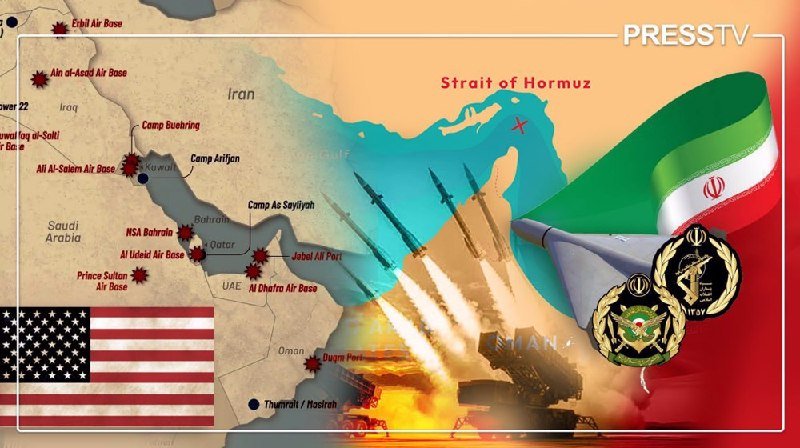
Smoke rose over northern Sulaymaniyah at roughly 21:20 UTC on 21 July 2026, after Iranian artillery and missile units struck positions in the mountainous districts the Kurdistan Region's second city shares with the Iranian border. State-aligned outlets carried video of flames licking the rooflines of compounds used by Kurdish opposition groups, and framed the barrages as retaliation for cross-border activity the Islamic Republic attributes to those same groups. By 22:12 UTC, local crews were still struggling to contain the fires, with one Iranian-aligned correspondent reporting a "failed attempt" by the targeted groups to suppress the blaze.
The strikes were small in geographic footprint and large in signalling weight. Tehran has used Sulaymaniyah province as a stage before, and the script rarely varies: a kinetic message to armed Kurdish factions on Iraqi soil, calibrated just below the threshold that would force Baghdad or Erbil to retaliate. The interesting question is not what burned, but whether the script still works.
The cross-border theatre
Northern Sulaymaniyah has hosted Iranian Revolutionary Guard Corps operations repeatedly since 2018. The targets differ by chapter (rear bases of the PKK, the Iranian Kurdish KDPI and Komala, and offshoots of the larger umbrella of groups Tehran labels "separatist terrorists"), but the choreography is consistent. Iranian drones and precision projectiles hit a fixed number of sites, then a quiet diplomatic back-channel absorbs the noise before Erbil or Baghdad files a formal protest. Iraqi airspace is violated, sovereignty is asserted in fact if not in law, and the cycle resets.
Reporting on 21 July followed that template. Tasnim's English feed circulated footage of the strikes' aftermath and called the targets "separatist terrorists," language echoed by Iranian state television's evening bulletin. The terminology is deliberate. Tehran's domestic audience sees a security operation against armed separatists; Western chancelleries see a routine violation of a neighbour's airspace.
Erbil's uneasy position
The Iraqi Kurdish political class is split along the seams that have defined it for two decades. Erbil's dominant parties, the KDP, maintain a working relationship with Ankara and a transactional one with Tehran; both capitals have leverage through border trade, energy supply, and quiet intelligence channels. Sulaymaniyah's PUK-led establishment sits closer to Tehran historically and has at times hosted, at times contained, Iranian Kurdish exile activity on its territory. Neither pole has an interest in a direct confrontation with Iran, but neither wants to be seen as the enabler of the other side's crackdown.
That is why Baghdad usually absorbs the diplomatic cost. Iraq's foreign ministry summons the chargé, registers a protest, and the matter subsides. The arrangement is stable so long as the strikes stay small and the targets are framed as armed groups rather than civilians. The reporting on 21 July stayed inside that line: fires at a headquarters, smoke, firefighting, no reported local casualties in the immediate state-aligned wire copy.
What the framing does
Iranian state media's choice of words is worth dwelling on, because it exposes the political work the strikes are doing. "Separatist terrorists" is a single phrase designed to do two jobs at once: domestically, it secures the cover of counter-terrorism for an operation that is also, and primarily, about Iranian Kurdish armed movements; internationally, it ties those movements to a globalised threat frame that gives Tehran a free pass among audiences who never distinguish between an al-Qaeda cell and the KDPI's offices on a mountainside.
Western wire services tend to be more cautious, distinguishing PKK from PKK-affiliated Iranian groups, Komala from the KDPI from the newer generation of armed outfits. Iranian state-aligned outlets collapse them all into one. On this occasion, Telegram channels aligned with Tehran followed that collapsed vocabulary in their initial posts, lending the campaign a rhetorical sweep that the underlying operational record does not fully support.
Stakes beneath the surface
The political architecture underneath these strikes is more fragile than it looks. Turkey's parallel operations against PKK infrastructure in Sinjar and the Kurdistan Region's border have pushed some armed actors further east into Sulaymaniyah, where Iranian surveillance is denser but where the targets are politically more awkward for Tehran's Kurdish audience at home. Baghdad's chronic inability to assert sovereignty over its own frontier compounds the problem. So does the slow drift of Erbil toward energy deals with Turkey and the Gulf that have annoyed Tehran in quieter ways for years.
A single evening of fires will not redraw those lines. What it can do is remind every party at the table that the cost of miscalculation has not gone away. The next named incident will be parsed, again, for which compound burned and which faction owned it, and the smaller signal sitting underneath it.
This publication framed the strikes primarily through Iranian state-aligned reporting, with explicit caveats on the vocabulary used by those channels, and treated Erbil and Baghdad as constrained rather than complicit actors.
Wire provenance
This editorial synthesis draws on the following public wire/social posts:
- https://t.me/JahanTasnim/0
- https://t.me/JahanTasnim/0
- https://t.me/tasnimnews_en/0