Tehran draws a red line in the Gulf as US strikes enter a second week
Two Iranian warnings, two US strike waves, and a tanker corridor that carries roughly a fifth of global oil: the July escalation is now reshaping both Gulf diplomacy and energy pricing in real time.
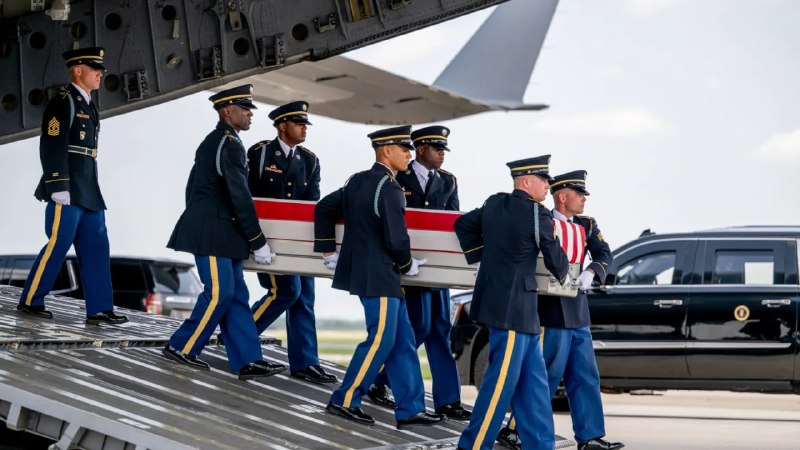
At 23:14 UTC on 20 July 2026, the Telegram channel TSN_ua posted a single line: "The US launched a new series of strikes against Iran." Within the hour, Epoch Times's Telegram feed carried the toll: two US service members had died, the first publicly confirmed American fatalities since Washington broadened its air campaign from nuclear facilities and proxy depots to what officials describe as command-and-control nodes inside Iran itself. The campaign, now in its second week, has stopped pretending to be a quiet counter-proliferation raid.
What changed between 14 July, when the first wave hit, and the evening of 20 July, is not the existence of strikes but the surrounding diplomatic weather. Iran's ambassador to the United Nations, speaking in New York at 05:31 UTC on 20 July, urged Iran's Gulf neighbours to behave as "good neighbours" and warned that Tehran would take "necessary measures" to defend its sovereignty, according to a summary carried by Unusual Whales. The phrasing, studiously non-specific, is the diplomatic register Tehran reserves for moments when it is warning a wider audience than the one it is addressing.
The shipping lane nobody can ignore
The Gulf's strategic value has not changed in a generation; what is changing is the price of using it. Roughly a fifth of the world's seaborne oil transits the Strait of Hormuz, the 21-nautical-mile chokepoint between Iran and Oman. Tehran has, on at least three occasions since 2019, seized commercial tankers in those waters, and its Revolutionary Guard Corps Navy operates fast-attack craft and shore-based anti-ship missiles calibrated for exactly that geography.
On the present trajectory, the question is not whether Iran attempts to impose cost on shipping in Hormuz, but whether it does so before or after the first tanker is hit by a stray munition, an Iranian mine, or a Houthi drone rerouted north. Either scenario adds double-digit percentages to war-risk premia within hours. Insurers at Lloyd's of London withdrew standard hull coverage for Hormuz transits during the last serious Iran-US flashpoint, in January 2020, after the killing of Qassim Soleimani; they will move faster this time.
What Tehran is signalling
Iran's UN message is a diplomatic artefact worth reading slowly. "Good neighbourliness" is the vocabulary of a state seeking to split a coalition: Saudi Arabia, the UAE, Qatar, Kuwait and Iraq all host US Central Command assets, US carrier strike groups, or US logistics hubs. The argument Tehran is making to them is that war on Iranian soil is war on the Gulf's oil revenue, and that the Gulf monarchies have a choice between quiet acquiescence and a slower-burning catastrophe of their own making.
This is the same playbook Iran has run for two decades, but with one new variable: the strikes themselves. Each round of US action gives Tehran a freer hand to argue, internally inside Gulf chancelleries, that the Americans cannot be relied on to de-escalate, and that quiet hedging, including energy contracts priced in yuan or rupee, partial sanctions circumvention, and discreet diplomatic channels through Beijing and Moscow, is the rational hedge.
The structural frame
What is unfolding is not a single crisis but the visible part of a longer rearrangement of energy corridors. The Gulf's oil has been the foundational asset of dollar reserve status for half a century; the infrastructure that moves it, from the East-West pipeline through Saudi Arabia to the UAE's Fujairah terminal bypassing Hormuz, was built specifically to insure against Iranian leverage over the strait. Every new strike series narrows the political space inside which Gulf governments can credibly threaten to shut those bypasses down in a crisis, and broadens the space in which they can quietly diversify away from dollar clearing.
Put plainly: the United States is degrading Iran's military capacity to close Hormuz. It is also, by the same act, raising the probability that Gulf energy and finance will over time re-anchor to a different set of clearing arrangements. The first outcome is the headline. The second is the slow bill that comes due over a decade.
What to watch in the next 72 hours
Three signals will tell whether the second week of strikes becomes a third. First, a Hormuz incident: a tanker seizure, a mine contact, or an attack attributed, however spuriously, to Iran. Second, a Gulf state statement, ideally from Riyadh or Abu Dhabi, that visibly tries to distance itself from the US targeting list. Third, an Iranian energy ministry announcement that reroutes or discounts cargo to Chinese and Indian buyers at terms that imply a sanctions workaround. Any one of those three, on its own, would reset the oil tape. All three together would also reset the conversation about whether the Gulf order that has priced global energy since 1973 is still the order that prices it in 2030.
The sources available to this publication do not specify casualty figures beyond the two US service members reported by Epoch Times, nor do they detail the specific targets hit in the 20 July wave beyond the generic "Iran" framing. They do not yet name the Gulf states, if any, that have replied publicly to Tehran's "good neighbour" appeal. What is unambiguous is that a campaign the US framed, at its outset, as limited and reversible has now produced American fatalities, an Iranian UN démarche, and a diplomatic weather system in the Gulf that did not exist a week ago.
Desk note: the wire coverage of the second strike wave is still partial. Telegram channels carried the launch and the US casualties; the framing of Iran's UN message came from a market-data aggregator summarising an open session. Where Western wires lead with the US military objective and Iranian state media lead with sovereignty, Monexus reads this as a hybrid: kinetic escalation plus a deliberate Tehran play to peel Gulf monarchies off the US coalition. The next 72 hours of shipping and energy reporting will be where that play either lands or fizzles.
Wire provenance
This editorial synthesis draws on the following public wire/social posts:
- https://t.me/TSN_ua
- https://t.me/epochtimes
- https://t.me/TSN_ua
- https://t.me/epochtimes