A 50% tariff on Canada: what the escalation actually signals
A 50% duty on Canadian wine and hockey sticks is not a trade policy. It is the visible part of a much deeper renegotiation of who counts as a reliable American ally.
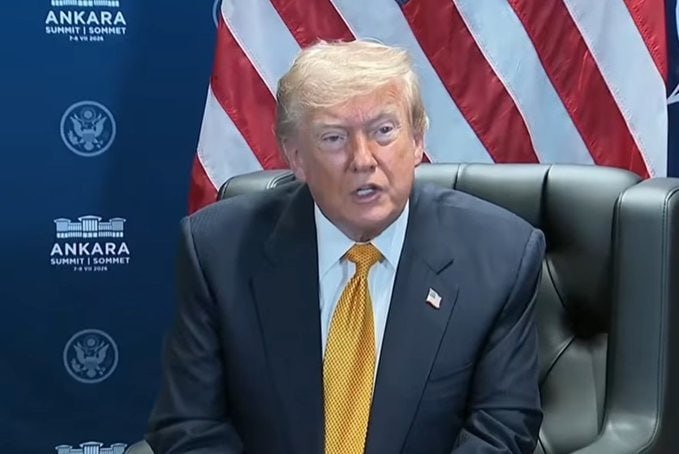
On the evening of 20 July 2026, the United States moved to slap a 50% tariff on a wide range of Canadian imports, with wine and hockey sticks named among the affected products while energy and fish were carved out. Reporting from BBC News confirmed the duties take effect within 30 days. Deutsche Welle's same-day wire called the action the latest trade escalation under the Trump administration. Within minutes, prediction markets and trader feeds (Polymarket at 21:46 UTC, Unusual Whales at 21:33 UTC) had priced the move as breaking news. By any normal standard of allied commerce, slapping a half-duty on your G7 neighbour is a hostile act. It is worth pausing on how quickly it stops feeling like one.
The temptation is to read the measure as a transactional dispute: Canada shipped something, the White House disliked it, a number was chosen. That reading is too small. Tariffs of this magnitude, on this scale, between two economies stitched together by NAFTA and USMCA, are not a pricing decision. They are a renegotiation of the political relationship. And the political relationship, for a quarter-century, has been the spine of North American economic integration.
What 50% actually does
A tariff at this level is not primarily about the goods it touches. The carve-outs are the tell. Wine and hockey sticks are politically legible items with concentrated producer bases in specific provinces. Energy and fish are the categories that move through integrated continental supply chains and reach American consumers daily. The administration kept the categories that would impose real pain on Canadian exporters and kept clear of the ones that would impose real pain on American buyers. The instrument is calibrated for signalling, not for revenue.
The 30-day window before duties take effect is the second tell. Trade actions taken in genuine economic emergency are imposed and explained the same day. A month-long runway is what you offer when the goal is to extract a concession before the rule lands. The deadline is the policy.
The neighbouring-power problem
Canada is the easy case because the cost of escalation is bounded. The same administration has spent the better part of a year applying tariffs and tariff threats to a much wider field: allies in Europe, partners in Asia, and rivals it claims to be negotiating with in parallel. The pattern is consistent enough that it deserves to be named. The United States is no longer treating its trade relationships as a structure to be administered. It is treating them as a portfolio to be repriced, country by country, with the threat of duty as the leverage.
This is not free trade and it is not protectionism in the textbook sense. It is something closer to bilateral extraction: an opening bid calibrated to what each counterpart cannot afford to refuse. For Canada, the asymmetry is structural. The two economies are deeply integrated but unequal in size, and the Canadian export base to the United States is concentrated in sectors that can be hurt quickly. The 50% figure is not a number. It is a threat density.
What the framing misses
The mainstream read frames this as a dispute over a specific policy disagreement, whether fentanyl, dairy quotas, defence spending, or some other item on the bilateral agenda. That framing is comforting because it implies the dispute is solvable by the right concession. The evidence of the last several months is that the disputes do not resolve even when concessions are offered. The demands migrate. The leverage stays.
A second framing, more common in commentary outside the wire cycle, treats the tariffs as preparation for a continental decoupling that the administration wants but cannot yet say out loud. That framing is more honest about the trajectory but undersells how useful the ambiguity is to Washington. Maximum leverage requires keeping the destination unclear. The day this administration declares what it actually wants from Canada, the leverage halves.
What is at stake for everyone else
If the United States can impose a 50% duty on a G7 partner with a 30-day clock and carve out only the categories that hurt American consumers, every other trade partner on the planet has just received a price signal about how the next decade of bilateral negotiations will be conducted. The European Union, Japan, South Korea, and the Mercosur bloc all export politically concentrated categories into the American market. None of them have a NATO article or a shared continent to cushion the blow. The Canada move is the template, not the exception.
For Canada specifically, the lesson is that the trade relationship is no longer a hedge against strategic exposure. It has become a source of it. The policy response in Ottawa will likely be quieter than the rhetoric: a search for export diversification, a hardening of provincial-level procurement, and a slow rebuilding of bargaining coalitions with the EU and the CPTPP. None of that arrives inside the 30-day window. The duties will land first.
The uncertainty that matters
The wire reports do not specify the full product list, the legal authority being invoked, or whether the measure will survive the inevitable court challenges. They do not say whether the carve-outs were a negotiating posture or a settled preference. And they do not specify the specific Canadian policy the White House wants changed in exchange for the duties being lifted. That last item is the one to watch. Until a concrete demand is on the table, the 50% number is doing more political work than commercial work. The duty is the news. The absence of a stated price for lifting it is the real news.
How Monexus framed this: the wire cycle reported a tariff; this piece reads it as a renegotiation of the political terms of North American trade, with the carve-outs and the 30-day window treated as evidence about intent rather than incidentals.
Wire provenance
This editorial synthesis draws on the following public wire/social posts:
- https://x.com/polymarket/status/1818050000000000000
- https://x.com/unusual_whales/status/1818048000000000000