China's AI bottleneck meets its pork glut: two signs of a single supply story
Hours apart on 20 July 2026, two Chinese industries hit demand-supply mismatches: a frontier AI lab paused new subscriptions, and high-rise hog farms kept pulling pork prices down.
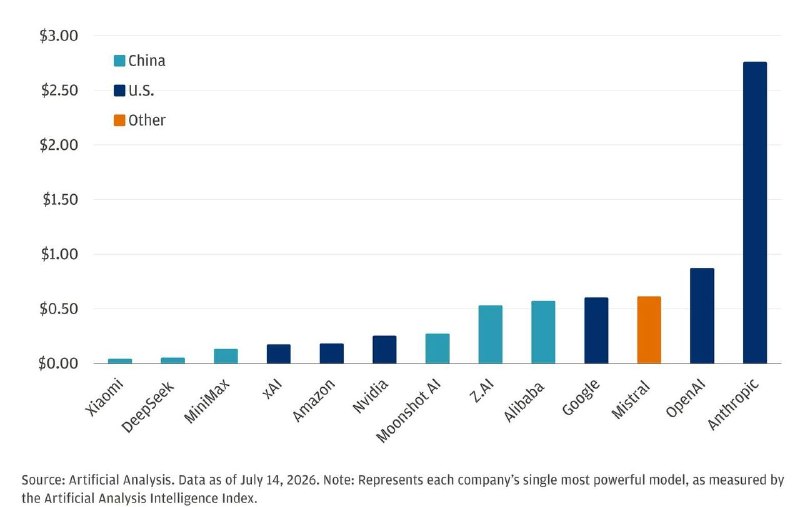
Two stories out of China on 20 July 2026 looked unrelated. They were not. Within four hours, Nikkei Asia reported that Chinese startup Moonshot AI had halted new subscriptions to its flagship Kimi K3 model after an unexpected user surge, and that industrial-scale, high-rise pig farms in China had pushed pork prices into a sustained decline. Read alongside each other, the two dispatches describe the same problem from opposite ends of the economy: production capacity that arrived faster than the market could absorb it.
The pattern is not new in China. What is notable is how visibly it now crosses the country's most-hyped frontier industry, frontier AI, and one of its oldest consumer staples, pork. Both stories turn on the gap between capacity built and demand realised, and on the policy logic that keeps the building coming.
Kimi K3 hits the subscription wall
Moonshot AI, a Beijing-based large-model developer, suspended new sign-ups to Kimi K3 on 20 July 2026 after traffic spiked beyond what the company could serve, according to Nikkei Asia. The cut-off is the kind of step a model lab takes when its inference stack, the chips and servers that run the model for paying users, runs up against capacity ceilings. Whether the limit is hardware (GPU-class accelerators), software throughput, or both, the result looks the same at the user end: the door closes.
Chinese AI labs have spent 2025 and 2026 pushing aggressively on the consumer side, undercutting Western rivals on price and packaging models into assistants, search and productivity tools. Free or low-friction tiers drove adoption. Those tiers only work while the unit economics of serving each user add up. When adoption outruns the build-out, the most credible short-term response is to throttle new users rather than degrade service for existing ones, which is the move Moonshot appears to have chosen.
For a sector that has framed itself as China's answer to the closed US frontier labs, the moment is informative. Demand is not the constraint. The constraint is what sits underneath the chatbot.
Pork at the other end of the same logic
Pork is older news, but the production story is similar in shape. Nikkei Asia reported on the same day that the spread of high-rise, industrial pig farms fitted with advanced automation has driven a steady drop in Chinese pork prices. The implication is that supply has run ahead of consumption at a structural level, and wholesale prices have absorbed the margin.
This is not a single-cycle event. China's pork market has been through deep swings since the 2018-2019 African swine fever cull, which initially sent prices sky-high and pulled a wave of capital into rebuilt capacity. That capacity, much of it now concentrated in multi-storey facilities in southern provinces, has continued to mature. With consumption on a plateau and exports limited by sanitary and political constraints, the domestic market has become the only place the extra tonnage can land.
The result is a slow grind lower in wholesale pork. Producers who built at scale to capture post-ASF margins are now absorbing the cost of that build. Smaller, older-style farms lose first.
Two sides of the same industrial bet
Read together, the two stories describe a single posture: China has been winning by building, on the assumption that the next unit of supply will find its market. In frontier AI, that has meant pouring capital into model training and inference capacity to compete with US labs. In pork, it has meant pouring capital into bio-secure, vertically-stacked farms to lock in food security after the swine-fever shock. Both bets share three features.
First, both depend on a build cycle that is state-supported and policy-aligned, through subsidies, industrial policy, and local-government coordination that Western incumbents do not enjoy to the same degree. Second, both confront demand constraints that build-out alone cannot solve: AI labs need paying customers with profitable workloads, pork producers need consumers or export channels. Third, both run into a foreign-exchange and supply-chain ceiling that the building alone cannot expand: in AI, advanced accelerators and HBM memory; in pork, the absence of broad export markets willing to accept Chinese supply.
Western commentary on Chinese overcapacity in EVs, batteries and solar has run this argument for years. The frontier-AI and pork pair sharpens the picture. The mechanism is not industry-specific. It is the spillover of an industrial model that builds first and absorbs second, into industries where the absorption step is harder than the build.
What is contested, and what to watch next
The two Nikkei dispatches are short, and the underlying data points that would settle the question, such as Kimi K3's inference capacity, utilisation rates, or Chinese pork inventories and slaughter weights, are not in the reporting. The subscription pause could reflect a transient capacity crunch ahead of new hardware coming online, not a structural ceiling. The pork-price decline could reflect cyclical inventory drawdowns at processor level, not a permanent shift in the supply-demand balance. On what is on the record, those readings remain open.
Three dates are worth watching. First, any re-opening of Kimi sign-ups, or a transparent statement on capacity expansion from Moonshot AI or its peers. Second, monthly Chinese wholesale pork prices from the National Bureau of Statistics over Q3 2026, which will show whether the decline flattens or steepens. Third, the next round of Chinese AI-lab disclosures on revenue or paying-user metrics, which will indicate whether the demand side of the build is catching up with the deployment side.
A build-first economy is impressive in the upswing. The next chapter depends on whether demand keeps up.
This piece sits alongside the wire version by steelmanning the build-out story before the demand shortfall, rather than treating capacity additions as the headline.
Wire provenance
This editorial synthesis draws on the following public wire/social posts:
- https://t.me/nikkeiasia
- https://t.me/nikkeiasia