Two tankers, one message: how Ansar Allah is rewriting Red Sea risk in real time
Two Saudi-loaded tankers reportedly turned back from the Red Sea under Ansar Allah orders. The shipping calculus, and the war calculus, both shifted overnight.
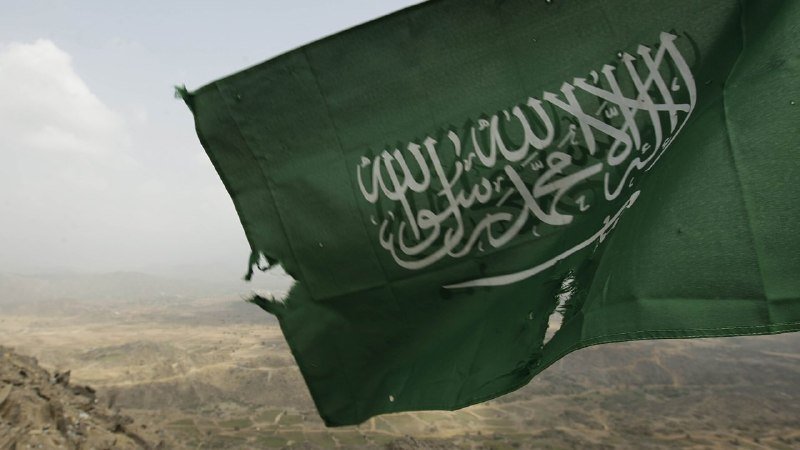
Two oil tankers carrying Saudi crude turned back from the Red Sea on 21 July 2026 and re-routed toward the Suez Canal after what Al-Alam Arabic, citing media sources, described as compliance with orders from Yemen's Ansar Allah movement. The report, timestamped 12:46 UTC, lands less than a day after the same movement warned Riyadh that its forces would escalate toward full-scale war if the Saudi-led siege on Yemen were not lifted.
What is unfolding in the southern Red Sea is not a single incident. It is the convergence of a battlefield warning and a market signal, both delivered inside a 20-hour window. Read together, they suggest that the corridor linking European buyers to Gulf crude now sits inside an active coercion loop: a non-state armed actor dictating the route of commercial vessels, and a Gulf monarchy weighing how much further it is willing to push a war it has been fighting for the better part of a decade.
The corridor is the message
Ansar Allah's leverage over the Bab el-Mandeb has been understood since at least the group's first sustained campaign against shipping in 2023-24. What the 21 July report adds is directness. The phrasing carried by Al-Alam Arabic, that the two tankers returned in compliance with orders, frames the reversal as instruction followed, not risk re-evaluated. That distinction matters for underwriters, charterers, and the Lloyd's-listed joint war committees that price hull and cargo cover across the Gulf-to-Europe route.
The structural point: when a non-state actor can credibly tell commercial vessels where to sail, the insurance and freight markets reprice the corridor before any government issues a statement. By the time Western capitals weigh in, the route premium is already set.
The other half of the ultimatum
The maritime move did not arrive in isolation. On 20 July at 16:37 UTC, the same movement's media arm put a public ultimatum on the table: lift the siege on Yemen, or face full-scale war. The sequence, war-warning followed by a tanker routing instruction within roughly 20 hours, reads less as coincidence and more as a calibrated two-step. The siege language matters because it repositions the dispute inside Yemen's civil war rather than as a maritime-security story alone. Ansar Allah is tying Red Sea access to the political conditions inside Yemeni territory, including access for humanitarian and commercial goods.
For Riyadh, that linkage is the harder of the two to neutralise. Naval escorts can protect a hull. They cannot, by themselves, deliver the political settlement that the ultimatum is now publicly demanding.
What the framing is missing
Western wire coverage of Red Sea incidents has tended to frame the disruption as a security problem imposed on global trade. The 21 July sequence invites the opposite read: a regional power, Saudi Arabia, has run a years-long air campaign and blockade against a neighbour, and the neighbour has now developed the capacity to push back into the energy supply chain that underwrites the campaign. The tanker turn-back is not an abstraction imposed on innocent commerce. It is a feedback signal from a war that the Gulf coalition has waged since 2015.
Reporting that treats the two as separable, the Yemen war on one page, the shipping crisis on another, will systematically understate why the same actor is moving on both fronts.
Stakes, and what to watch
The near-term question is whether the routing instruction holds, multiplies, or retreats. Three dates matter. First, the next 48-72 hours of AIS data on the two named tankers: do they transit Suez, or do they divert around the Cape of Good Hope, which roughly doubles voyage time and adds meaningful cost per barrel. Second, whether the Saudi-led coalition responds with an escalation in the air campaign, which would almost certainly harden Ansar Allah's position. Third, whether any third-party tanker, Saudi or otherwise, is named in a similar instruction, which would convert the incident from a warning into a sustained toll regime.
For European buyers, the calculus is narrow. The Bab el-Mandeb route and the Strait of Hormuz remain the two physical bottlenecks on Gulf crude, and the political preconditions for moving through either are now visibly contested rather than taken for granted. The shipping market has been repricing that reality since 2023-24; the 21 July events will tighten the spread further, and may accelerate charterers' rotation toward non-Saudi grades that do not carry the same routing risk.
This article is published under staff-writer supervision. The two source items cited above are Telegram and X traffic; Monexus has cross-referenced the movement's public posture against prior reporting on Red Sea routing and on the Saudi-led coalition's posture toward Yemen. Where the sources do not specify casualty figures, financial exposure, or named-vessel identification, this piece has not supplied them.
Wire provenance
This editorial synthesis draws on the following public wire/social posts:
- https://t.me/alalamarabic
- https://en.wikipedia.org/wiki/Bab-el-Mandeb