Two-hour queues and a cancelled training: the operational squeeze on the 2026 World Cup final
Hours-long security queues at MetLife Stadium and a storm-cancelled Spain session expose how political theatre and summer weather are reshaping the run-up to the 2026 final.
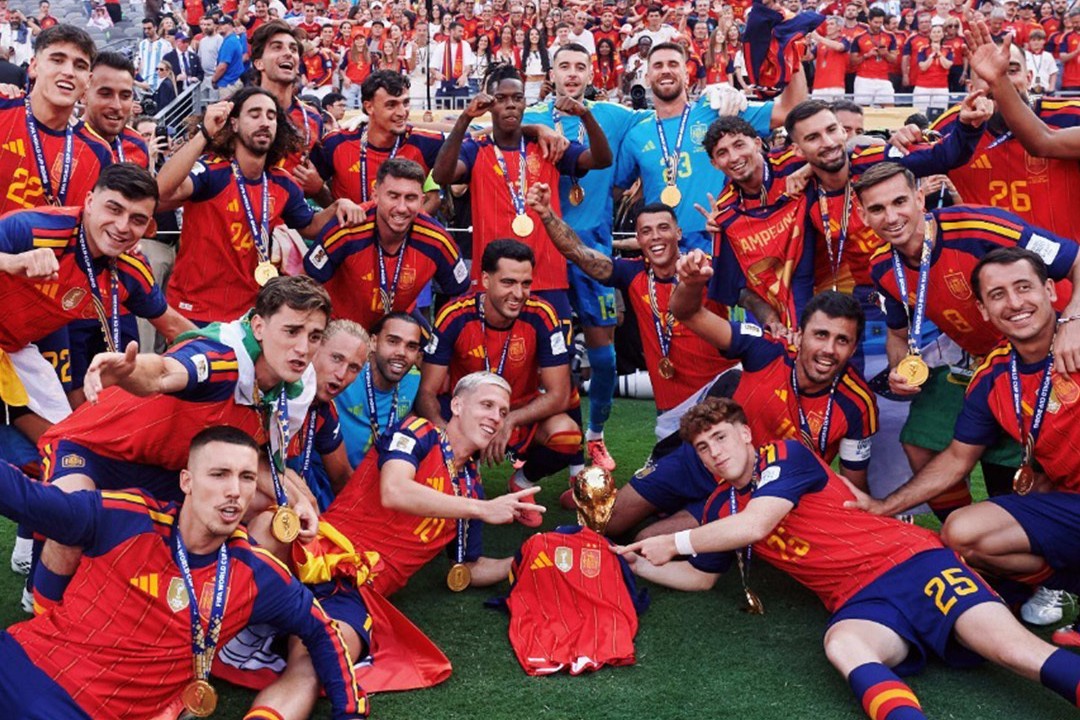
At 16:17 UTC on 19 July 2026, BBC Sport reported that supporters heading into the World Cup final at New York New Jersey Stadium were facing waits of roughly two hours to clear security, a delay the broadcaster attributed to heightened screening protocols around the presence of President Donald Trump. The bottleneck is the most concrete operational fallout yet from a tournament that has spent months in headlines less for the football than for the politics wrapped around it, and it offers a useful window onto how a single VIP can redraw the logistics of an event built for tens of thousands.
The stadium, more commonly known as MetLife, has been pitched since the award stage as the showpiece venue of a World Cup spread across the United States, Canada and Mexico. Security planning for the final has always assumed a heavy federal posture. What BBC Sport's reporting makes plain is that the posture is now being felt by the paying public: ticket-holders, not principals, are absorbing the cost of the longer screens and wider perimeter that come with a presidential visit.
When the perimeter becomes the product
Two-hour queues do not appear by accident. They are the downstream signature of layered screening: magnetometer redundancy, bag re-inspection, K-9 sweeps, and the slow churn of credential checks that compound when one dignitary's motorcade reshuffles entry routes. BBC Sport does not itemise the protocol in its dispatch, but it does identify the cause. That is the editorial point: the inconvenience is a direct, traceable consequence of who is in the stands, not a generic shorthand for "heightened security."
There is also a quieter compression underneath. A final is, by design, the fixture in a tournament's schedule most exposed to logjams; the access map shrinks as broadcasters, dignitaries and sponsors all want the same finite entry slots. When a president attends, those slots re-prioritise. Ordinary ticket-holders hold the longer end of the queue.
Spain's session and the weather variable
Twenty-one hours earlier, at 19:38 UTC on 18 July, the prediction-market account @polymarket posted a short bulletin: Spain's planned final training session at the team base in the New York / New Jersey area had been cancelled after severe thunderstorms rolled through the region. The cancellation is, on its face, a routine weather call: coaching staff rarely risk open-session drills when lightning is within striking distance of the training pitch. But it also slots into the same operational squeeze visible at the gates.
A team chasing a World Cup has a fixed runway of prep days. Lose one to a storm and the calculus tightens: fewer touches on the match-week surface, more reliance on video review, more body management for players carrying tournament load. Spain will not say publicly whether the lost session changed Luis de la Fuente's plans for the eleven. The decision does not need to be declared to register. Prep time is prep time, and the weather took some.
Political theatre as load-bearing infrastructure
What this final is showcasing, beyond football, is how a modern mega-event absorbs political weight it was never structurally engineered for. FIFA sells the World Cup as a commercial product; host-city agencies sell it as a tourism product; federal security services inherit it as a protection problem. A presidential appearance pushes those three contracts into collision. The queues reported by BBC Sport are the visible artefact; the police overtime, the credentialing revisions and the stadium's rebuilt entry geometry are the invisible ones.
The question is whether host cities quietly accept that bargain. The commercial case for a final is strong: broadcast reach, sponsor halo, civic moment. The fiscal case grows murkier when a presidential visit forces a longer security footprint on a stadium whose operating budget was set under a different assumption. New York and New Jersey will not see the bill line-by-line; the price will arrive later, in federal reimbursements and local agency reports.
Stakes for the final, and for the next one
For Spain and whoever lines up against them, the stakes are simple: a date with the trophy, weather and security theatre set aside. For the federations watching from outside the USMCA host bloc, the optics matter more. A two-hour queue is a TV shot. A cancelled training session is a footnote. Together they read as a stress test of a tournament model that, in 2026, is being asked to absorb more variables than the format was built for.
What remains unresolved is whether the federal posture stays narrow to this final or becomes the template for the next World Cup cycle. If the answer is the latter, ticket-holders in 2030 should expect the same two hours that MetLife's paying customers absorbed on 19 July 2026, and host-city agencies should expect the same quiet bill arriving after the cameras move on.
Desk note: where wire dispatches highlighted a single operational story, Monexus treats the security queue and the cancelled training session as one event with two faces: the cost of a VIP, and the cost of the weather.
Wire provenance
This editorial synthesis draws on the following public wire/social posts:
- https://x.com/polymarket/status/1946550000000000000