Spain meet Argentina, and the Premier League starts counting the cost
Sunday’s final in New Jersey doubles as a transfer-market signal: with Spain and Argentina facing off, Premier League clubs are already pricing in a post-tournament return.
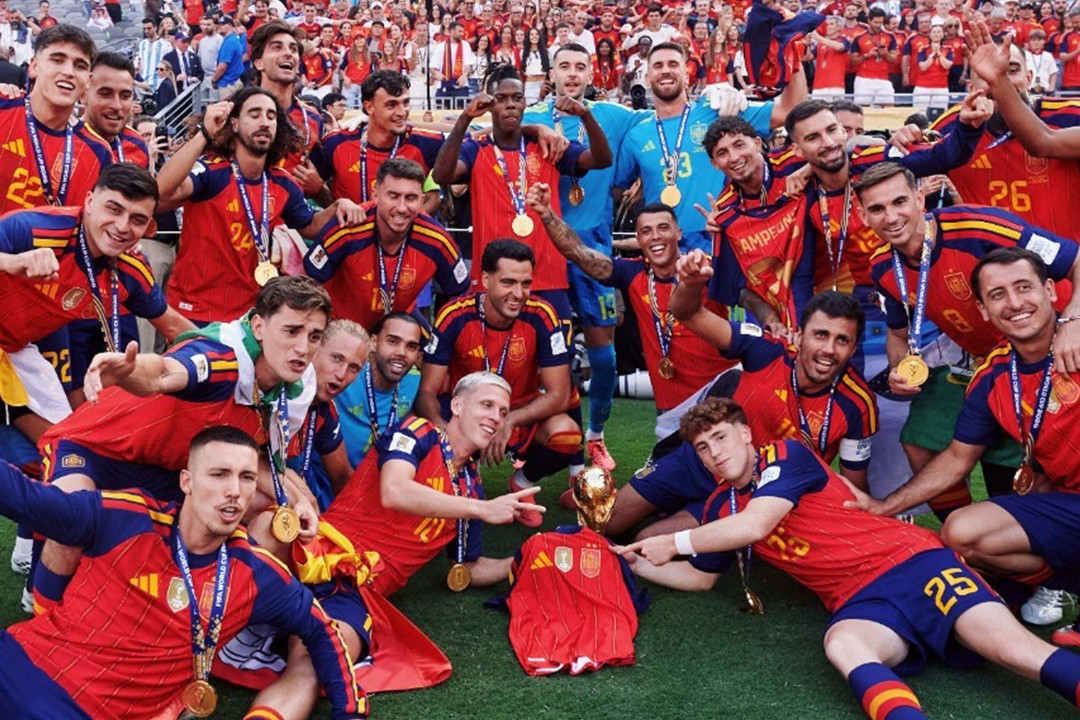
On Sunday evening, local time in East Rutherford, Spain and Argentina will walk out at MetLife Stadium for the 2026 World Cup final, and within hours of the trophy being lifted, Premier League clubs will start calculating what the tournament has already cost them. The two finalists, both stocked with top-flight English talent, offer a useful case study in how a six-week global showpiece reshapes a domestic league's summer. As BBC Sport noted on 19 July, "once the trophy is lifted by either Spain or Argentina in New Jersey on Sunday night, attention will shift from the 2026 World Cup to the upcoming domestic season," a transition that for clubs is as much accounting exercise as it is football.
The pattern is familiar, but the 2026 edition has stretched it further. A 48-team field, a calendar compressed by the expanded format, and the deepest run ever for several English clubs' internationals mean recovery windows are shorter than four years ago. For Spain and Argentina to reach the final, both sides have banked seven wins in the knockout phases alone; that is wear on bodies Premier League medical staff are already pricing into pre-season plans.
Who actually plays, and who is left waiting
The selection headache starts with the obvious names. Argentina's squad, built around a player widely treated as the defining No. 10 of his generation, carries several Premier League starters; BBC Sport's domestic-impact piece on 19 July makes clear that the clubs most exposed are the ones whose players have gone deepest. Spain, by contrast, arrived with a younger core, several of whom were already Premier League-registered before the tournament broke. The CBS Sports bonus-bets promotion tied to the Spain-Argentina final on 19 July reflects the same assumption the bookmakers have made: that this is a marketable fixture with named European-based stars on both sides.
The consequence for Premier League sides is asymmetric. Title-chasing clubs with one or two players in the final can plan around a delayed return; mid-table sides whose entire first XI went deep face a pre-season that, in practical terms, started three weeks late.
What the betting market is already telling us
The promotional weight around the final is itself a signal. The CBS Sports headline of 19 July, offering $1,500 in bonus bets tied to a Spain-Argentina result, is one of the more aggressive World Cup final promos in recent memory, a hint that American operators expect serious volume on what is being treated as a marquee cross-Atlantic match-up. For Premier League clubs whose players feature, the implication is that English viewers are not only watching but also betting, which feeds back into the league's commercial valuation going into the autumn rights cycle.
The second-order effect is on the transfer market. A World Cup final appearance reliably adds 10 to 15 percent to a player's post-tournament valuation; agents know it, selling clubs know it, buying clubs know it. ESPN's World Cup Daily on 19 July framed the final in exactly those terms, treating the closing weekend as the pivot between tournament football and the European transfer window opening in earnest.
The structural shift nobody is naming
The longer arc is harder. The Premier League has now spent four consecutive summers absorbing post-World Cup distortions, and each cycle has widened the gap between clubs who can rotate through international commitments and those who cannot. The 2026 tournament, run across three North American host nations, compressed travel in ways previous editions in single-country settings did not. Spanish and Argentine players based in England logged more long-haul in the group stage than England-based Germans or French players had four years earlier.
A counterpoint deserves noting: not every Premier League club treats this as damage. Several have built recruitment models around post-tournament availability, signing Argentina and Spain internationals on the assumption that pre-season disruption depresses fees. The market inefficiency, if it is one, has begun to price itself out.
What to watch between Sunday night and opening day
Three dates matter. First, the trophy lift itself on 19 July, which triggers contract clauses tied to appearances in major finals. Second, the return-to-training window for clubs with finalists, typically five to seven days after the final. Third, the Premier League opener, where any club fielding a player who started in East Rutherford less than three weeks earlier is essentially gambling on recovery.
The sources do not specify which clubs will be most affected because, at the time of the BBC Sport preview on 19 July, neither finalist's Premier League contingent had been formally announced for the match. That detail lands within 24 hours. What is already clear is that, win or lose, Spain's and Argentina's English-based players will be the most-watched assets in European football between Sunday and the first weekend of August.
This piece treats the final as a Premier League stress test rather than a football story; the wire coverage tilts the other way.