The truce that wasn't: a new US-Iran escalation and the fraying Gulf equilibrium
A week of quiet diplomacy between Washington and Tehran collapsed on 20 July 2026, as a fresh wave of US strikes and a sharp warning from Iran's UN envoy reopened the question of regional war.
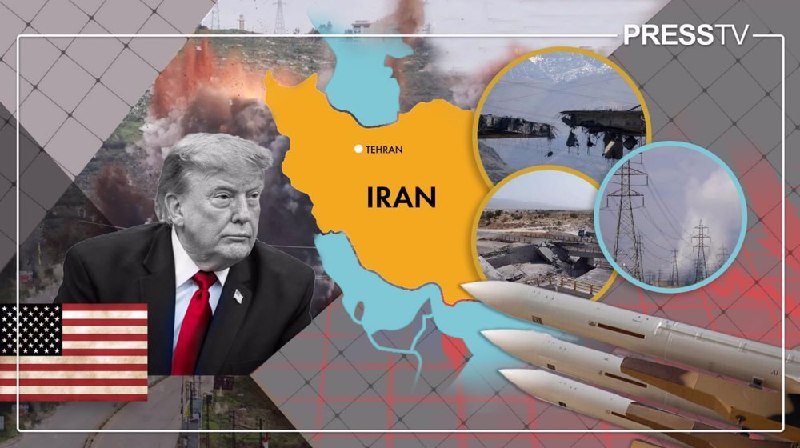
At 05:14 UTC on 20 July 2026, the Telegram channel of Ukraine's TSN news agency flashed a one-line alert: "The US launched a new wave of strikes against Iran." Seventeen minutes later, at 05:31 UTC, Iran's ambassador to the United Nations posted a parallel message in the opposite direction, urging "good neighborliness" with Gulf states and warning of "necessary measures to protect" Iranian sovereignty. Within the same hour, Italian daily Corriere della Sera's morning brief carried the political obituary of the brief Washington-Tehran truce, sandwiched between two unrelated stories: the arrest of the Tate brothers and a domestic-budget headache for German politician Jens Spahn. The shape of the day was set before most European newsrooms had finished their first coffee.
What collapsed overnight was not a peace process. It was a holding pattern. The arrangement that US and Iranian negotiators had been quietly maintaining since the spring, calibrated around de-escalation in the Strait of Hormuz and a partial unwinding of secondary sanctions, has been replaced, for now, by the more familiar posture: aerial strikes on the Iranian side and diplomatic signalling on both. The pattern is well-rehearsed, but the timing is not. It arrives in a Gulf whose monarchies are hosting expanding US basing infrastructure, whose oil markets are already pricing a wider war premium, and whose publics are watching Tehran and Washington speak past each other in two different languages, in two different forums, on the same morning.
A truce measured in hours
The diplomatic architecture that briefly existed depended on a small number of moving parts: Iranian nuclear-programme constraints in exchange for the release of frozen funds, an understanding on Strait of Hormuz tanker traffic, and the absence of kinetic action between US Central Command and Iran's IRGC-linked proxy network. That last leg was always the load-bearing one. When TSN reported a "new wave" of US strikes against Iranian targets at 05:14 UTC on 20 July, the reporting gave no figures, no target list, and no casualty read-out. The wording itself matters. "New wave" implies the continuation of an existing campaign, not a one-off reprisal. The Iranian UN mission's response at 05:31 UTC was framed in deliberately multilateral language: an appeal to Gulf neighbours and the UN system, not to Washington directly. The asymmetry is the story.
Corriere della Sera's morning podcast treated the collapse as a near-formality, bundled into a domestic news round-up rather than given its own segment. That editorial choice is itself a tell. In late July 2026, the major Italian press is not treating the US-Iran rupture as a once-in-a-generation event. It is being processed as a routine cycle of escalation and rhetoric that the regional system absorbs and reroutes, much as it has absorbed every previous cycle since 2019.
Two narratives, two audiences
Iran's diplomatic language is calibrated for a specific audience: the Gulf monarchies, the PRC and Russian Federation delegations on the UN Security Council, and the non-aligned caucus in the UN General Assembly. "Good neighborliness" is the vocabulary of sovereignty, not of capitulation. "Necessary measures" is the vocabulary of deterrence, not of war declaration. The framing positions Tehran as a status-quo regional actor defending itself, and reframes any kinetic escalation as a breach of an implicit regional compact by Washington rather than as Iranian aggression. That is the position Tehran has been refining in UN fora for two decades.
The US position, as filtered through TSN and the broader Western wire ecosystem, has been less articulate. The lack of a corresponding American statement on the morning of 20 July leaves the meaning of the strikes up for interpretation. They could be read as a targeted response to a specific Iranian-enabled attack on US assets in Syria or Iraq. They could be read as part of a sustained campaign against Iran's missile-production capacity. Or they could be read as the re-imposition of maximum pressure by administrative fiat, in the absence of a new diplomatic track. None of those readings has been officially confirmed in the source material available so far.
The structural frame
What is actually being negotiated, beneath the surface exchanges, is not a missile programme or a sanctions waiver. It is the regional order. The Gulf in 2026 is no longer a bipolar space dominated by Washington and Tehran with the GCC monarchies as a buffer. It is a multipolar space in which Beijing is the largest single buyer of Iranian crude, in which Moscow and Tehran coordinate inside OPEC+ on production discipline, in which the UAE and Saudi Arabia maintain their own bilateral channels with Tehran, and in which Iraq sits uneasily between two patrons. A US-Iran rupture no longer freezes the region the way it did a decade ago. It freezes one of several parallel layers, while the others continue to operate. That is why Tehran can speak the language of sovereignty to its neighbours and rely on those neighbours to keep buying its oil, even while its territory is being struck.
The other structural fact is the energy market. Every cycle of escalation since 2019 has tightened the war premium in Brent and given Tehran's remaining customers, chiefly independent Chinese refiners, leverage to discount their purchases further. The strike-and-discount mechanism now functions as a de facto subsidy of Iranian-aligned actors by the global market itself. It is a market structure that did not exist before maximum pressure began.
What the day still has to tell us
The two early-morning dispatches give almost no operational detail. TSN's wire did not specify the location, target set, or scale of the US strikes. Iran's UN ambassador's warning was framed in conditional language: "measures" to "protect" sovereignty, with no commitment of form or timing. The Iranian MFA has not, as of this writing, publicly characterised the strikes. The Pentagon has not, as of this writing, publicly confirmed them. Corriere della Sera's morning brief did not allocate a dedicated segment to the escalation. Each of those silences is information: the strikes may be smaller and more discrete than the wording implies, or they may be large enough that officialdom is still drafting its line. The sources do not specify, and this publication will not speculate.
The day to watch is not today. It is the next seventy-two hours. If Iran's response is mediated through the Gulf monarchies and the UN channel in New York, the rupture stays at the level of a serious crisis that the regional system can route around. If Iran's response is kinetic, through proxies in Iraq, Syria, or Yemen, or through a Strait of Hormuz interdiction, the rupture becomes the opening chapter of a wider war that the same regional system can no longer absorb. The morning of 20 July 2026 has put the world back at that fork. The choice, as so often in this corridor, will be made in rooms that the morning wires cannot yet see into.
This article was framed by the Monexus opinion desk to surface the structural continuity beneath the day's kinetic headlines. Where wire coverage treated the US strikes as a discrete event, Monexus treats them as one cycle in a longer contest over the regional order, and read Iran's UN-mission language as a deliberate diplomatic instrument rather than a reflexive protest.
Wire provenance
This editorial synthesis draws on the following public wire/social posts:
- https://t.me/TSN_ua