Trump on stage, Infantino on his shoulder: how the 2026 World Cup finale turned into a White House audition for the next one
At MetLife Stadium on 19 July 2026, Spain lifted the trophy and the US president lingered. Within hours he was announcing a fresh bid, with a US-China co-host joke already in circulation.
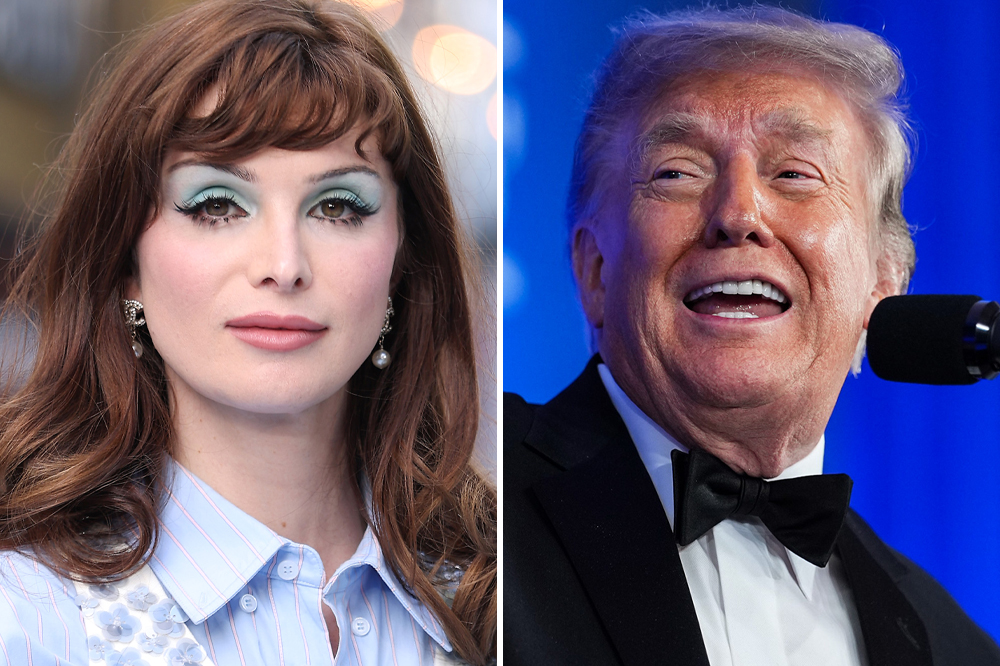
At 22:38 UTC on 19 July 2026, with the confetti still settling over MetLife Stadium in East Rutherford, New Jersey, Donald Trump stood on the World Cup presentation stage long enough that Spain's squad and FIFA President Gianni Infantino had to physically usher him aside so the trophy lift could proceed. The clip, circulated by The Cradle Media on Telegram at 12:53 UTC the following day, turned a post-match photo-op into a brief but revealing moment of friction: a head of state who did not want to leave, and a governing body that needed him to.
The image matters because it was not incidental. Within hours of Spain's victory, the US president was already campaigning for the next tournament. The platform Polymarket reported at 22:38 UTC on 19 July that Trump had "announced he will push FIFA to select the U.S. to host another World Cup 'immediately.'" A day earlier, the markets account @unusual_whales had relayed the more striking detail: Infantino had floated pairing the United States with China for a future edition, with Trump joking that players would enjoy the "nice, short flight in between games."
The optics are less strange than the precedent. FIFA has spent four years handing the US government a role in the showpiece event that no previous host has had to absorb. The 2026 tournament was co-hosted across the United States, Canada and Mexico, with the final assigned to a US stadium and a US head of state treated, in the choreography of the closing ceremony, as a co-protagonist rather than a guest. That is the actual news buried in a viral clip: the symbolic merger of a federation and a state has accelerated, and the bidding for 2030 and 2034 is being fought on terrain Trump is already occupying.
The trophy, and the territory around it
MetLife hosted roughly 82,500 spectators for the final, the first time a men's World Cup has been decided on US soil since 1994. Spain's players did what the squad had done all tournament: they kept the ball, drew the press, and waited. The ceremony was the part no Spanish supporter could plan for. Footage shared by The Cradle Media shows Trump remaining at centre stage as the team formed up, with Infantino and several Spanish players guiding him toward the wings with the kind of gentle physical redirection usually reserved for a confused guest at a wedding. The moment was brief, and Infantino, ever the federation fixer, kept smiling. But the choreography tells the reader something the press releases do not: the world's most-watched sporting event has acquired a permanent American backer, and he does not intend to be a bit-part.
The next bid, signed before the ink dries
Trump's pitch for an immediate follow-on US tournament is the headline, but the more consequential sentence came the day before. According to the @unusual_whales account on X, Infantino floated a US-China co-host model for a future World Cup, a configuration with no precedent in the tournament's 96-year history. Trump reportedly greeted the idea with a joke about trans-Pacific flights. Read generously, the comment is harmless. Read in context, it signals that FIFA's leadership is already sketching post-2026 options that bind the federation more tightly to the two geopolitical poles the next decade of sport will be forced to navigate. The US market is the largest broadcast and sponsor pool on earth; China is the largest pool of new fans and the only state with the infrastructure delivery capacity to match FIFA's stadium specifications on a tight build cycle.
The structural question is whether a US-China co-host model would function as bridge or as friction. The 2026 tournament was held under a tri-national North American umbrella that absorbed political tension between the host governments into operational handoffs; a US-China version would do the same in a far more exposed setting, with Beijing and Washington sharing branding rights, visa regimes, broadcast windows and security perimeters in a single tournament footprint. The Chinese federation's appetite for such a project has not been formally tested, and no Chinese official reaction appears in the source material reviewed here. The Western wire framing treats the pairing as a logistical curiosity. The structural read is that FIFA is shopping for geopolitical balance as much as for stadiums.
What the stage moment actually exposed
A US president refusing to leave a World Cup stage is, on its own, a small thing. The reason it travels is the pattern behind it. Infantino has spent the cycle positioning FIFA inside a network of state patronage more elaborate than any predecessor faced. Saudi Arabia's role in the 2034 tournament is now effectively settled. The Gulf states' sovereign wealth funds are anchor sponsors across the federation's commercial inventory. The 2026 final was staged in a US stadium, with a US head of state on stage, in front of a US broadcast audience that delivered the rights fees FIFA needed to justify the federation's spending through 2030.
Trump's decision to relitigate the bid while the trophy was still being polished is the operational symptom. The US government's interest in the tournament is not a vanity project; it is a soft-power instrument deployed at a moment when Washington's diplomatic leverage is being tested on multiple fronts. A second US tournament, whether standalone or paired, would extend the instrument's shelf life. Infantino's flattery, the on-stage accommodation, the post-match lobbying: each is a small concession that compounds. The Cradle Media, a Beirut-based outlet whose geopolitical lens on US power is well established, led with the stage moment rather than the result. That editorial choice is itself part of the story.
Stakes, and the dates worth circling
The next decision points are concrete. FIFA's Council is expected to formalise the 2030 and 2034 hosting slots in the coming months, with the 2030 edition already routed through Spain, Portugal and Morocco as a centenary tribute and 2034 effectively awarded to Saudi Arabia. A US bid for a future edition, whether standalone or paired, would require a Council vote and a formal member-association submission, none of which appears in the source material. The Polymarket note that Trump will "push FIFA to select the U.S." is best read as the opening of a lobbying campaign, not a fait accompli.
The counter-narrative is straightforward and should be taken seriously: the stage clip is a single awkward minute in a four-hour broadcast, Infantino's co-host musings are a private aside reported through a markets account, and the federation's bureaucratic machinery tends to slow-walk the whims of incumbent presidents. There is no evidence in the source items reviewed that FIFA has opened a formal US-China co-host process or that Beijing has been consulted. What the evidence does support is that the US president intends to be a permanent feature of FIFA's stagecraft, and that the federation's leadership, at minimum, is not objecting.
What remains uncertain is whether the Chinese federation, the Asian Football Confederation and China's state broadcasters would accept a co-host arrangement on terms Infantino can sell to Washington. That question is now live, and the answer will tell readers how the next World Cup is run, not just where it is played.
This publication framed the trophy-stage moment as a window onto the federation-state merger accelerating under Infantino, rather than as a viral clip in isolation; the source material is dominated by The Cradle Media, Polymarket and an X markets account, which constrains the citation ledger but reflects the wire path the story actually travelled.
Wire provenance
This editorial synthesis draws on the following public wire/social posts:
- https://t.me/thecradlemedia