Tehran summons France's envoy over the detention of two French diplomats
Iran's foreign ministry summoned France's ambassador to Tehran on 27 July 2026 over the earlier detention of two French diplomats, with Tehran framing the affair as interference in its internal affairs under the 1961 Vienna Convention.
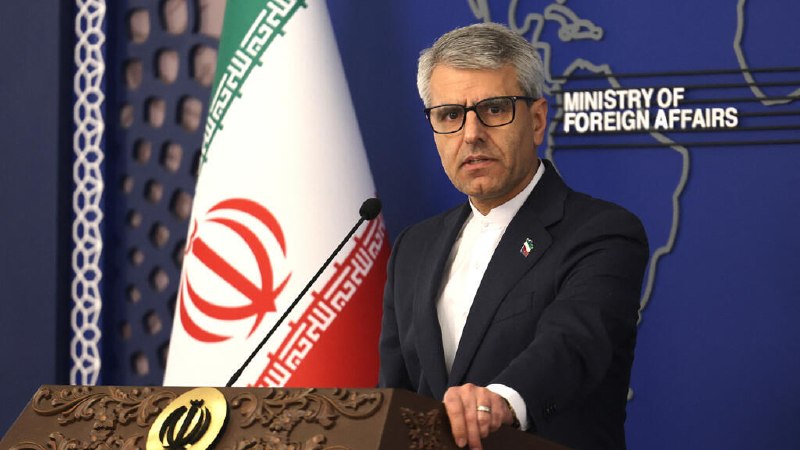
Iran's foreign ministry summoned France's ambassador to Tehran on Monday 27 July 2026 to protest what it called interference in Iran's internal affairs by two French diplomats who had been briefly detained earlier in the month. Spokesperson Esmaeil Baqaei said the French envoy was called in to complain about conduct the ministry described, in language carried by France 24, as interference "under misleading labels". Iran's state-aligned English-language news agency IRNA sharpened the framing further in the same day's coverage, reporting Baqaei as saying France owes Iran an apology for embassy actions that, in Tehran's reading, "clearly violate" the 1961 Vienna Convention on Diplomatic Relations.
What is on the table is a bilateral confrontation whose triggering event is now on the public record but whose diplomatic consequences are still being written. The summons sits inside an exchange that has already produced French counter-moves: independent reporting indicates France summoned Iran's chargé d'affaires in Paris on 21 July 2026, and that the French foreign minister publicly stated the two detained diplomats had returned home by 23 July 2026. The 27 July summons is therefore not the opening move of the dispute but the latest Iranian riposte in a sequence already underway.
What the cited sources say happened
According to France 24's English wire, Baqaei told reporters on 27 July 2026 that the French ambassador had been summoned over interference "by two French diplomats who were briefly detained earlier this month". France 24 presented the complaint as a protest lodged through a foreign ministry spokesperson, with the ministry's framing carried in direct quotation. IRNA's English-language Telegram channel reported the same summons on the same day and added the Vienna Convention language and the word "apology", a sharper formulation than the one France 24 carried.
The triggering event, on the evidence available, is the brief detention of two French diplomats in Iran earlier in July 2026. The cited posts do not specify the date of that detention, the circumstances, the French diplomatic rank of those held, or the location of the incident. They also do not specify whether the detention was carried out by Iranian security services, by judicial authorities acting under cover of an ongoing case, or by another arm of the state. The Vienna Convention reference is an Iranian allegation in the cited sources, not a finding by an independent body.
Reading the two wires together
France 24's English wire and IRNA's English channel are reporting the same event but emphasise different parts of it. France 24 foregrounds the procedural fact of the summons, names the spokesperson and the triggering detention in summary form, and paraphrases the ministry's complaint in quotation marks. IRNA foregrounds the legal framing, the Vienna Convention invocation, and the demand for an apology. Both treatments are constrained: neither names the two detained diplomats, neither reproduces a French foreign ministry reaction in the cited items, and neither quotes the French ambassador on the substance of the summons.
Monexus analysis: the gap between the two characterisations is itself part of the story. The procedural version, carried by France 24, treats the affair as a routine protest lodged through a spokesperson over an incident that has already been disclosed. The polemical version, carried by IRNA, treats the same incident as a legal breach requiring a French concession. A reader working from only one of those two wires will come away with a different picture of what the summons is for.
Why Tehran reached for the Vienna Convention
The 1961 Vienna Convention on Diplomatic Relations is the standard text invoked when a receiving state wishes to assert that an embassy or its staff has crossed the line from routine diplomatic business into interference in the host country's affairs. The convention obliges sending states not to interfere in the internal affairs of the receiving state and obliges receiving states to protect embassy premises and staff. Accusations of violation typically arise when ambassadorial engagement with opposition figures, public statements on a host country's internal politics, or consular activity is read by the host as exceeding the diplomatic remit. In the present case, the convention is being invoked by Iran as the legal scaffolding for a complaint whose underlying incident, the brief detention of two French diplomats earlier in July, is itself a separate Vienna Convention question about the receiving state's obligations toward embassy staff.
The asymmetry on the public record is striking. The cited posts carry Tehran's invocation of the convention in full, and independent reporting indicates Paris had already moved first in the sequence: France summoned Iran's chargé d'affaires on 21 July 2026, before the two detained diplomats had returned home on 23 July 2026 according to the French foreign minister's public statement. The cited posts do not record any French invocation of the convention in response to the Iranian summons, and do not specify whether Paris treats the detention of its two diplomats as a separate convention issue. Only one party to the dispute is on the public record citing the treaty through the cited wires; the French position enters the picture through independent reporting outside the cited items.
The sequence the cited posts miss
Monexus assessment: the 27 July summons reads differently once it is placed against the timeline carried outside the cited items. France's summons of Iran's chargé d'affaires in Paris on 21 July 2026, and the French foreign minister's public confirmation on 23 July 2026 that the two detained diplomats had returned home, indicate that the dispute had already produced French diplomatic action and an apparent consular resolution before Tehran's spokesperson briefed reporters on Monday. The Iranian summons on 27 July therefore lands after the detained staff had already left Iranian jurisdiction, which sharpens the question of what Tehran is asking France for: an apology over conduct that, on the French account, has already been addressed.
This sequencing matters for the Vienna Convention framing. IRNA's English-language post frames the French embassy actions as a clear violation; the underlying detention of two French diplomats is, on the French account, a separate convention question that Paris has already raised through its 21 July summons in Paris. The convention is being invoked in both directions of the dispute, but only Tehran's invocation is carried in the cited posts.
What to watch next
Three developments will determine whether the dispute widens or fades. First, whether the French foreign ministry responds publicly to the 27 July summons and on what terms: the cited posts do not record such a response at the time of publication, though independent reporting indicates Paris had already escalated earlier in the month through its 21 July summons of Iran's chargé d'affaires. Second, whether Tehran publishes a more detailed account of the alleged embassy actions it says violated the convention, given that the detained diplomats have already returned to France on the French minister's account. Third, whether other European Union missions in Tehran follow up with statements of solidarity with the French position or distance themselves from it. The cited posts do not specify any of these next steps, and this article has not independently established whether France's foreign ministry had issued a public response to the 27 July summons at the time of publication.
The pattern in such confrontations is well-rehearsed: a summons, a period of rhetorical testing, and then either a quiet restoration of business or a public break. The 1961 Vienna Convention is the standard text invoked in both directions of these disputes. What changes from episode to episode is whether the receiving government chooses to treat the summons as a closed file or as a prelude to further action, and whether the sending government answers in kind or holds its line in private. In this case, the receiving government has already opened a second front by summoning the French ambassador after the apparent return of the detained diplomats; what is unresolved is whether Paris treats that move as escalation or as the closing line of a sequence it has already answered.
Desk note: Monexus framed the summons through the triggering detention named in France 24's wire, and treated the Vienna Convention breach as an Iranian allegation carried by IRNA rather than as an established fact. The available source items do not specify the date, location or circumstances of the earlier detention of the two French diplomats, nor do they record a public French response to the 27 July summons. Independent reporting outside the cited posts indicates France had summoned Iran's chargé d'affaires on 21 July 2026 and that the French foreign minister publicly stated the two detained diplomats had returned home by 23 July 2026; the article incorporates those developments as context without treating them as sourced to the cited items.
Wire provenance
This editorial synthesis draws on the following public wire/social posts:
- https://www.france24.com/en/iran-summons-french-ambassador-over-interference-internal-affairs
- https://t.me/france24_en/17967
- https://f24.my/C4o3.g
- https://t.me/Irna_en/37537