Trump slaps 50% tariff on Canadian goods, citing dairy, alcohol and auto discrimination
The White House order, signed on 21 July 2026 UTC, raises duties on selected Canadian exports and frames Ottawa's dairy, alcohol and auto rules as discrimination. Ottawa has not yet publicly responded.
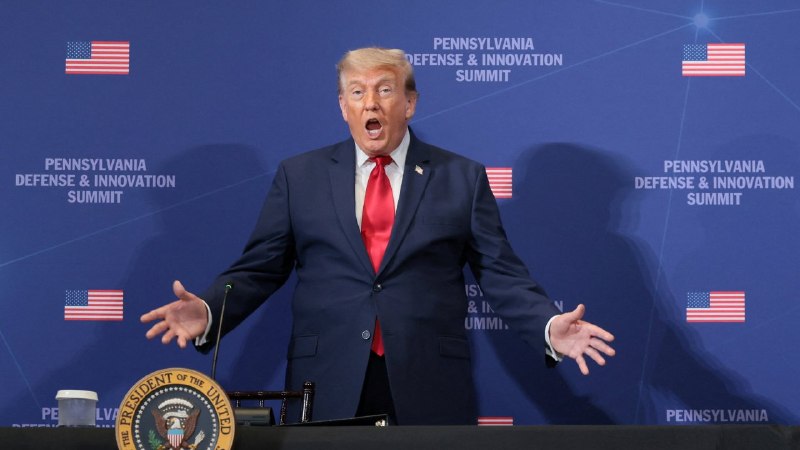
At 21:46 UTC on 20 July 2026, France 24 reported that US President Donald Trump had signed executive orders imposing fresh 50% tariffs on selected Canadian goods, citing what the White House called Canada's "discriminatory treatment" of US automobiles, alcohol and dairy products. The order marks the steepest unilateral tariff action between the two neighbours since the United States-Mexico-Canada Agreement came into force in 2020, and lands without an Ottawa response yet on the record.
The duty rate is not the story's most consequential number. The framing is. By invoking "discrimination" rather than trade remedy language, the administration is treating a routine dispute over market access, the kind of friction USMCA panels handle, as a sovereign affront. That re-categorisation matters because it forecloses the dispute-settlement track the agreement was built around, and it does so at a moment when Canadian provincial liquor boards, dairy supply management, and auto-parts rules are precisely the levers the agreement was negotiated to protect.
What's actually being tariffed
The White House order targets a narrow band of Canadian exports: automobiles shipped into the United States, certain alcoholic beverages, and dairy. France 24 and Deutsche Welle both reported the move on 20 July UTC, with Deutsche Welle describing it as "the latest trade escalation between the US and its northern neighbor under the Trump administration." The reporting does not specify a tariff-line schedule by HS code, nor a date of entry into force beyond the executive order itself. That absence is telling: when a tariff order is filed by line item, importers know what to expect. When it is filed by grievance, importers know to expect more orders.
The political logic is consistent with the administration's posture toward Canada since early in the second term. Auto manufacturing has been the perennial pressure point: Canadian-assembled vehicles cross into Michigan and Ohio in volumes that the United Auto Workers have repeatedly flagged, and Canadian parts content in US-assembled vehicles complicates the origin rules USMCA was meant to clarify. Dairy has been the perennial irritant from the US side because Canada's tariff-rate quota system, supply-managed, administratively allocated, opaque to outsiders, was deliberately preserved in the 2020 renegotiation. Alcohol is the newer complaint, and it tracks a multi-year industry push against provincial liquor boards in Ontario, Quebec and British Columbia that have, at various points, favoured domestic wine and spirits on shelf-space and listing decisions.
The legal question USMCA doesn't resolve
USMCA's dispute-settlement mechanism, Chapter 31, was designed precisely for disagreements over whether one party's measures discriminate against another's goods. The agreement defines "non-discriminatory treatment" and sets out a panel process with a roster of trade-law adjudicators. A US administration that genuinely believed Canadian measures were discriminatory had a ready forum: file a request for consultations, then a panel, then a retaliation authorisation if Ottawa did not comply.
The administration has chosen the executive-order route instead. That is not a legal accident. Executive action under the International Emergency Economic Powers Act, or under Section 232 of the Trade Expansion Act for national-security auto tariffs, bypasses the panel track and imposes the cost immediately. The legal vulnerability is real, courts have repeatedly narrowed the scope of IEEPA-based tariffs and the 232 auto tariffs are already under challenge, but the economic effect is not contingent on the litigation outcome.
The risk runs in both directions. If the courts eventually strike the orders down, importers will be left having paid duties they cannot recover in full, and Canadian exporters will have absorbed a shock that did not need to happen. If the orders stand, the precedent is that any administration unhappy with a partner's domestic regulation can reroute the complaint out of the agreement's dispute machinery and into unilateral tariff authority.
Canada has more cards than it played in 2018
The 2018 tariff fight, when the Trump administration first imposed steel and aluminium duties under Section 232 and Canada retaliated dollar-for-dollar, ended in negotiated rollback. That outcome is often read as evidence the tariff threat works, but the arithmetic was simpler then: Canada had a narrow set of US exports it could credibly target, and the US domestic political cost of hitting Canadian steel was concentrated in a handful of states.
The 2026 picture is different. Canada is the largest single export market for thirty US states. USMCA has integrated supply chains in autos, agriculture and intermediate goods to a degree that makes a clean decoupling impossible without significant cost to US manufacturers. Ottawa has, over the past two years, expanded its own retaliatory toolkit: counter-tariffs calibrated against Republican-leaning congressional districts, a digital-services tax proposal that targets US tech platforms, and a willingness to litigate inside the USMCA framework rather than escalate. The Trudeau government's successors, having absorbed the lessons of 2018, are unlikely to treat the new order as something to wait out.
What Ottawa will not do, on the public evidence so far, is mirror the 50% rate. Canadian retaliation tends to come in carefully priced lists, usually 25% on a defined basket of US goods, sometimes paired with regulatory friction in telecommunications, financial services or procurement. The point is to impose cost where it is felt, not to escalate to parity.
What to watch before the next order
The unanswered questions sit on three clocks. First, the implementation order: the tariff needs an implementing regulation to specify the goods covered and the entry-into-force date. Until that lands, importers are working from press conference language, not legal text. Second, Ottawa's response: Canadian officials typically consult provincial counterparts before retaliating, a process that takes ten to fourteen days. Third, the auto supply chain: a 50% duty on Canadian-assembled vehicles is large enough to force re-pricing, re-routing, or temporary production cuts at US plants that depend on cross-border parts flows. The OEMs will be in Washington within the week.
The deeper question is whether this is the opening shot or the only shot. The administration's pattern with Canada, with Mexico, and with the European Union has been to treat trade complaints as negotiating openings rather than legal disputes. If that is the frame, the 50% rate is a position, not a destination. If it is the destination, USMCA's centre of gravity shifts away from the panel track and toward bilateral horse-trading, which is precisely the outcome the agreement was designed to avoid.
Desk note: Monexus framed this around the legal and economic mechanism, what the order does, what it bypasses, and what retaliation can credibly reach, rather than the White House grievance language. The wire services reported the announcement; the structural question is what the order does to USMCA's dispute architecture.
Wire provenance
This editorial synthesis draws on the following public wire/social posts:
- https://t.me/france24_en
- https://t.me/osintlive
- https://t.me/disclosetv