State Department's "Cuba: Capital of 21st Century Communism" report reframes a fifty-year standoff
A freshly released State Department document and a personal statement from Secretary Rubio revive maximum-pressure rhetoric against Havana. The island's defenders read it as a siege doctrine dressed up in fresh language.
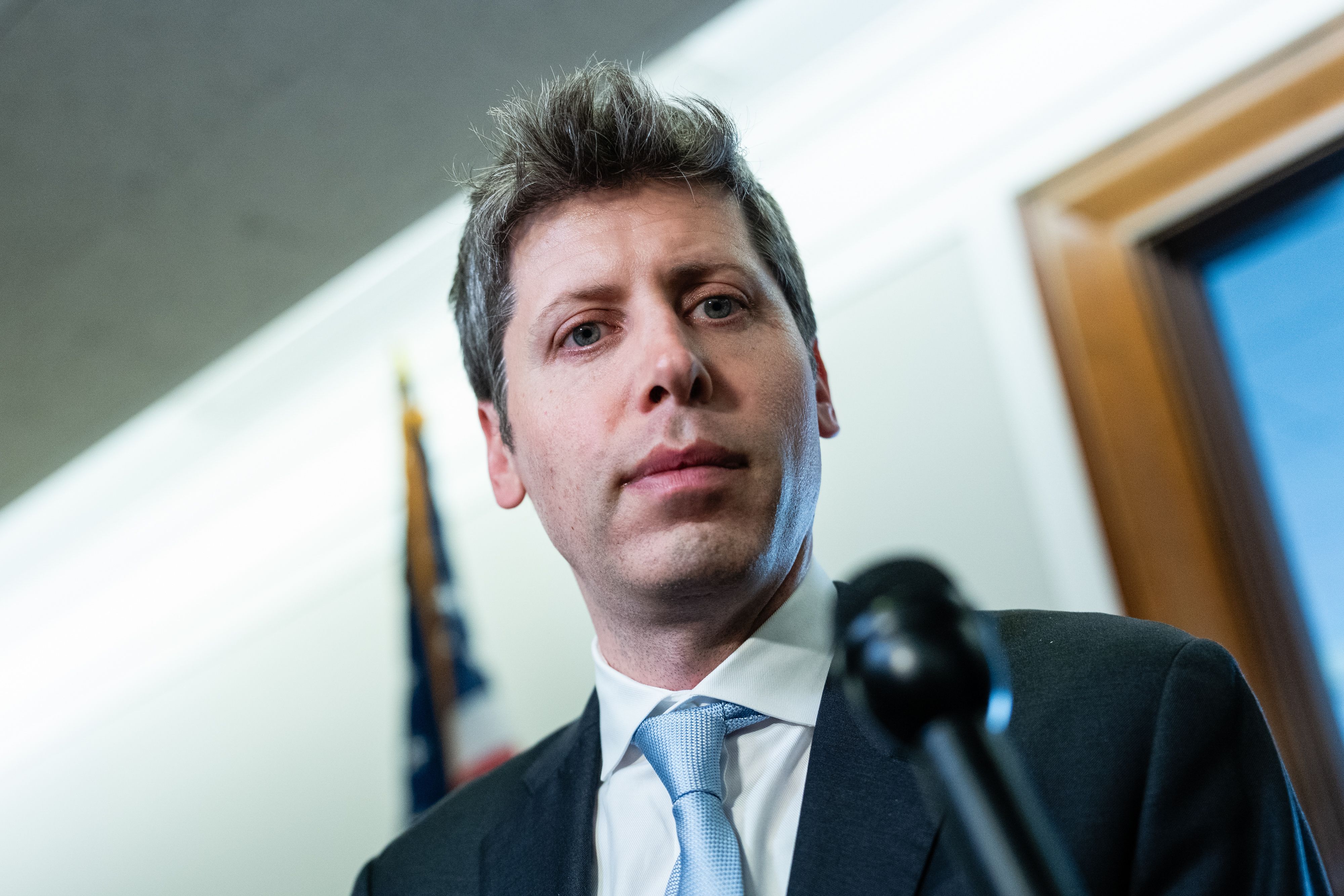
The U.S. State Department on 20 July 2026 published a report titled "Cuba: The Capital of 21st Century Communism," packaged with a statement from Secretary of State Marco Rubio. The document arrives as Washington's hemispheric posture toward Havana re-tightens, and as Cuban officials point to the squeeze as the principal cause of every shortcoming in their economy.
The word "communism" in the title is not ornamental. It places the island at the rhetorical centre of an ideological challenge the administration now wants to define globally, and it commits the State Department to a specific reading of Havana's place in a contest the United States frames as existential.
What the document does, and who is meant to read it
The report, surfaced by open-source monitor OSINTdefender on 20 July 2026, ties Cuba's domestic model to the administration's broader narrative about left-of-centre governments in the hemisphere. By naming the island a "capital," the title elevates Havana from one trade-partner or migration headache among many into a regional reference point. The framing is the document's main policy product; the dossier beneath it is the proof text.
That sequencing reflects how Washington now shapes counter-narrative in Latin America. The title is for chanceries in Brasília, Bogotá and Mexico City; the substantive chapters are for the Congressional committees that fund sanctions, the diaspora networks that lobby for them, and the press that transmits both into the wider public. Rubio, a long-time Cuba-policy hardliner whose family left the island in 1956 and who has held his current post since the start of the administration, brings personal weight to the unsoftened word "communism," a word previous administrations tended to softener as "authoritarianism" or "one-party state."
The counter-narrative from Havana
Cuba's official line, transmitted through state media outlets, has long held that the U.S. embargo, not the Cuban state, is the cause of the island's economic underperformance. That argument is structurally convenient for Havana and not without empirical backing: the embargo's cost to the Cuban economy has been repeatedly estimated into the tens of billions of dollars by Havana-aligned analysts and into single-digit billions by U.S. government modelling, depending on counterfactual assumptions about trade diversion. Either way, the embargo has been in continuous force for more than six decades, across six U.S. administrations.
The Cuban government also points to the special period after the dissolution of the Soviet Union, when subsidised oil and sugar markets collapsed, and to the resilience of social indicators that, by most UN measures, have remained atypically strong for a country at Cuba's income level. The argument is not that the system works; it is that the system would work better if its principal antagonist stopped battering it. The State Department report names the system as the primary problem; Havana names the embargo. Both are reading the same fifty-year record and pulling out different causal arrows.
The Trump-era tightening that began in 2024 in fact narrows what little room remained for remittances, travel and third-country trade with state-linked enterprises. The result, Cuban officials say in multilateral fora, is that ordinary Cubans bear the cost of a quarrel between governments. That is also more or less what UN human-rights rapporteurs have concluded in successive reports on the embargo's collateral damage.
What the rhetoric buys, structurally
Stripped of its polemics, the report is part of a familiar sequence: a hostile Washington posture toward a specific left-leaning government is documented in a flagship publication, cited in Capitol Hill testimony, and exported to allied foreign ministries as a reference text. The Cuban diaspora vote in Florida and adjacent states, which exerts disproportionate influence on Republican primary politics, is the structural backstop. A report called "Cuba: The Capital of 21st Century Communism" does not need to convince Havana of anything; it needs to make the next sanctions renewal a routine vote rather than a contested one.
There is also a regional layer. The administration's hemispheric strategy treats Cuba less as a bilateral irritant and more as a node through which Caracas, Managua and parts of Port-au-Prince sustain each other. The "capital" framing recasts Havana as a logistical and ideological headquarters for what the administration sees as a competitive project in its own near abroad. That is a sharper formulation than the language the Obama administration used in the 2014-2016 thaw, and it sets a higher bar for any future re-opening.
The report lands, too, as Canada, the European Union and several Latin American governments argue for a more transactional line with Latin American governments of the left. Whether the State Department's framing lengthens that coalition's life or shortens it is the open question. Rhetorically, Cuba-as-capital is unifying for an in-group of like-minded capitals. Diplomatically, it makes already strained relationships harder to thaw later.
Stakes, and what remains uncertain
The Cuban government's incentive is to read the report as confirmation of a blockade doctrine it has long described, and to push that reading to ALBA partners, the African Union, and the Non-Aligned Movement. The U.S. incentive is to send an unmistakable signal to voters in Miami-Dade and to allied capitals that the administration reads Havana as more than a relic. The two incentives are aligned in producing a lonelier Cuba and a more ideologically homogeneous U.S. position.
What neither side has answered, at least on the public record, is the question the next sanctions renewal cycle will hinge on: whether the policy, after six decades, produces behaviour change in Havana or simply produces more emigration from Camagüey to Tapachula and onward. The administration's argument is that pressure compounds; Havana's argument is that pressure has already compounded for sixty years, with diminishing returns and rising human cost. The State Department report does not try to settle that question, and the Cuban counter-narrative will not concede the framing. What it does, more efficiently than most State Department documents, is move the Overton window inside the United States further away from accommodation.
A reasonable midpoint, neither endorsed by the report nor by official Havana, is that future openings, if they come, will come through discreet migration and intelligence channels rather than the public diplomacy the report tries to reset. The cable traffic this report is meant to generate in foreign ministries already knows that. The Cuban-American voters, who are half the audience, will read it more loudly.
This piece differs from typical wire coverage by foregrounding the structural mechanism of a regionally-coded sanctions doctrine, rather than treating the report as a free-standing diplomatic event. Source material was a single Telegram open-source monitor post; independent corroboration of the report's full contents was not available at time of publication.
Wire provenance
This editorial synthesis draws on the following public wire/social posts:
- https://t.me/s/osintlive