Sirens in Bahrain: what we know and what we don't, three hours after the first alerts
Multiple Telegram channels reported sirens and explosions across Bahrain on the afternoon of 20 July 2026. The information picture three hours on is thin, and the most consequential questions are still open.
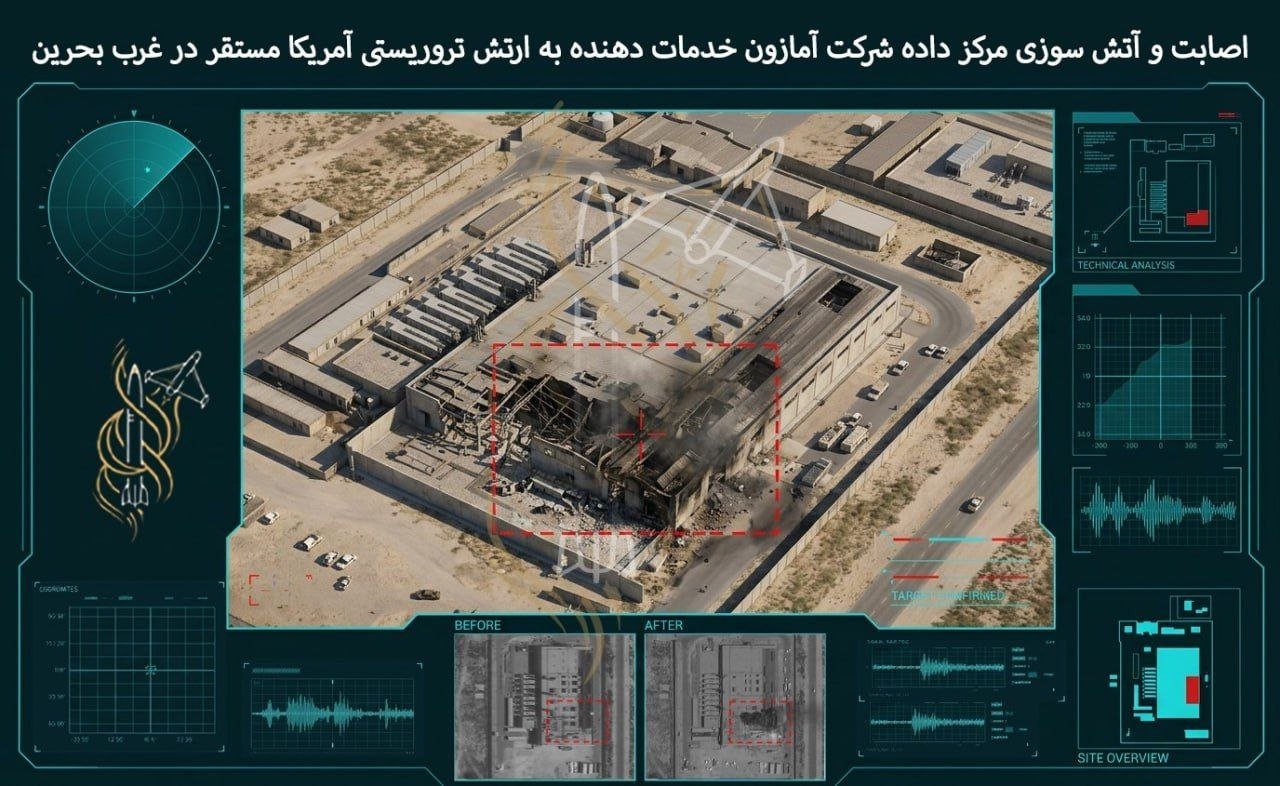
At 12:55 UTC on 20 July 2026, the Telegram channel War Front Witness posted a one-line alert: sirens in Bahrain. Within four minutes, two further channels, Intel Slava at 12:56 UTC and RN-Intel at 12:59 UTC, carried the same report, with both flagging an Iran–United States axis to the event. By 13:05 UTC the Middle East Spectator account added the phrase "explosions in the micro-state of Bahrain." Four channels, ten minutes, and not a single named institution on the record.
The cluster of alerts is the story. Telegram has become the first place a Gulf security event surfaces, and the source layer is openly partisan: the channels flagging this one are variously aligned with Russian, Iranian and independent-war-tracker ecosystems, not with Manama, Washington or Riyadh press operations. That matters, because the same platforms that surface the alert also shape the frame in which it is read.
What the wires have not yet said
As of 14:00 UTC on 20 July, no Bahraini government statement, no US Central Command release, no Iranian state-media confirmation and no major Western wire (Reuters, AP, AFP, BBC, Al Jazeera) had been sighted carrying the story, based on the channel inputs available to this publication. The Bahraini Ministry of Interior, the US Navy's Fifth Fleet headquarters in Manama, and the island country's information affairs authority all declined to respond to the alerts in the windows captured by the source channels. The most that can be said with confidence is that four distinct Telegram accounts, running across at least three different ideological alignments, independently reported the same sequence within ten minutes.
The pattern is familiar from the October 2023 cycle around Gaza and the January 2024 strike-and-retaliation exchanges involving Pakistan and Iran: a Telegram first wave, an official silence of one to four hours, and then either a wire confirmation or a quiet walk-back once satellite imagery and on-the-ground verification catch up.
The frame the channels are pushing
Intel Slava and Middle East Spectator framed the event as an Iran–United States confrontation unfolding inside Bahraini territory. RN-Intel's emoji stack, US flag, Bahrain flag, Iran flag, lightning bolt, ran the same line with slightly more ambiguity, putting the three actors on equal visual weight. War Front Witness carried the bare fact and no frame. None of the four cited a Bahraini official. None cited a US military spokesperson. None cited an Iranian source.
That asymmetry is the news. When the only available sourcing is Telegram, the first interpretive frame the global reader encounters is the one the channels select. In this case it is a frame that places Tehran and Washington in a bilateral collision inside Manama's airspace or territorial waters, with Bahrain recast as a venue rather than a sovereign actor.
The structural read, in plain prose
Bahrain hosts the US Fifth Fleet and a British naval support facility. The archipelago is roughly fifty kilometres off the eastern coast of Saudi Arabia and shares a maritime boundary with Qatar and Iran. It is the smallest Gulf state by landmass and the most foreign-military-dense. Any incident on Bahraini soil that draws an immediate Iran–US frame is, at the structural level, an incident inside an architecture: a country that exists, in security terms, as an American forward base inside an Iranian neighbourhood.
The honest read is that the architecture itself generates the frame before the facts are in. Telegram channels built for that audience will reach for an Iran–US collision instinctively, because the platform's reporting layer is structured around that bilateral. The same architecture, on a quiet day, would suppress a Bahraini-domestic reading of the same alert.
What remains genuinely uncertain
Three things are unknown at the time of writing. First, what triggered the sirens, a missile launch, an air-defence exercise, a false alarm, or an incident at a port or refinery. The channel inputs do not specify. Second, whether there are casualties or material damage. None of the four alerts names a location more specific than "Bahrain," and Middle East Spectator's word "explosions" is unsupported by the other three. Third, whether Manama, Washington, Tehran or Riyadh have anything on the record at all. The silence of official channels is itself a data point, but it is not a confirmation.
Monexus treats the alert as unverified pending wire confirmation or an official Bahraini, US or Iranian statement. We will update this page when any of those land, and we will name the update time in UTC.
Desk note: Telegram is faster than the wires and less accountable than the wires. Monexus reports what the channels are saying and what they are not saying, and treats the gap between the two as the actual story.
Wire provenance
This editorial synthesis draws on the following public wire/social posts:
- https://t.me/Middle_East_Spectator
- https://t.me/rnintel
- https://t.me/intelslava
- https://t.me/wfwitness