Reza Pahlavi courts Iran's security state from the outside
In a Reuters-circulated interview, the exiled crown prince says he is hearing from serving Basij and IRGC personnel, and is selling himself as a neutral arbiter for a post-regime Iran.
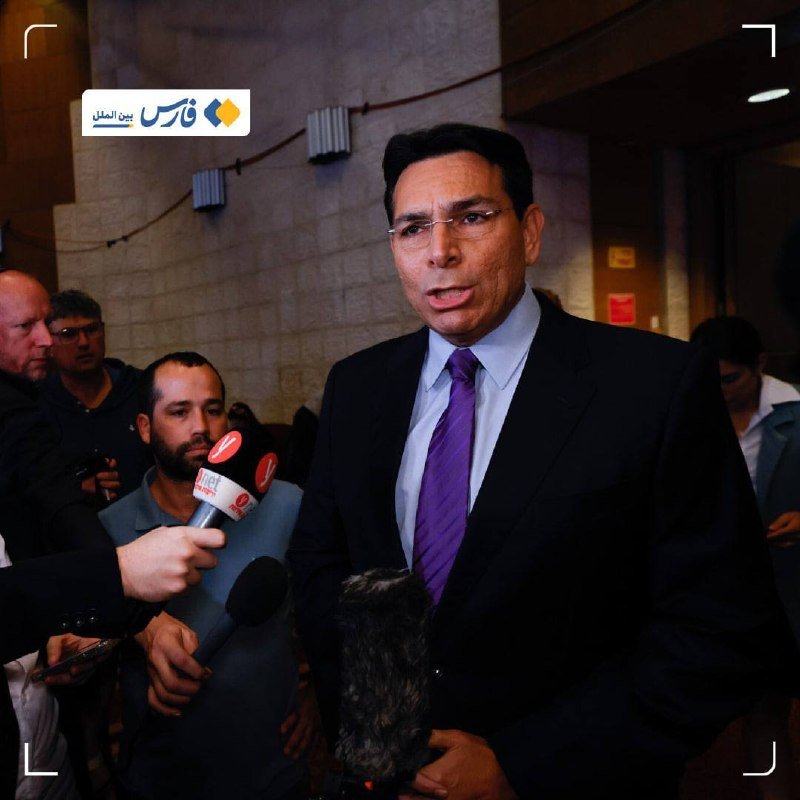
On 20 July 2026, in remarks circulated by ClashReport and sourced to a Reuters interview, Reza Pahlavi, the exiled son of the late Shah, made a pitch that would have been unthinkable a decade ago: he is taking direct messages from serving members of Iran's Basij paramilitary and the Islamic Revolutionary Guard Corps, and wants the world to know it. The framing is deliberate. The crown prince, who once positioned himself as a categorical opponent of the Islamic Republic, is now selling himself to Western audiences as the man who could absorb a Basij defector without firing a shot.
The pitch is not nostalgia dressed up as policy. It is a transitional claim, and it is being auditioned at a moment when Iran's security services look more brittle from the outside than at any point since 1979. Pahlavi's offer to foreign governments is that he can be a neutral arbiter, not a returning monarch. Whether that offer survives contact with either Tehran's hardliners or Washington's Iran hawks is the open question.
The Basij inbox
Pahlavi told Reuters he has begun receiving direct messages from people identifying themselves as Basij members in Mashhad and as IRGC personnel deployed abroad. "We hate this regime," he quoted them as writing. The claim is unverified and self-sourced; Reuters has not published the underlying DMs, and Mashhad, a Basij stronghold and a holy city for the Shia clerical establishment, would be an unusual place for open regime dissent to surface in DMs to an exiled prince. That does not make the story empty. It does mean it should be read as a recruitment signal aimed at Iranian audiences, not as intelligence about actual Basij fracture lines.
The bigger tell is what Pahlavi is doing with the messages: publicising them in English-language media. He is broadcasting to a constituency that does not need to be convinced that the regime is rotten. He is broadcasting to two constituencies that do: the IRGC rank and file, and Western policymakers who are deciding whether to fund a transition.
From avenger to bridge
The most striking line in the interview is also the most carefully constructed. "My position as a transitional leader is: I'm not the destination. I'm a bridge to the destination," Pahlavi said. "In order to be a neutral arbiter, I'm completely above the fray." This is a deliberate repudiation of the maximalist monarchism he flirted with during the 2022-23 protests, when his messaging leaned closer to "regime change now." The pivot is calculated. Foreign ministries that dismissed him in 2023 as a return-to-the-past candidate have a harder case to make against a self-described bridge figure who claims not to want the throne.
He has also, he said, "reached out to people who were at the time my father's worst enemies. Today they are fully on board working with me," naming "former Marxists" among them. The coalition he is sketching is genuinely heterodox: exiled leftists, monarchists, and now, allegedly, Basij foot soldiers, united only by opposition to the clerical order. The ideological incoherence is the point. Pahlavi is offering himself as the lowest-common-denominator around which a post-Islamic Republic settlement could be negotiated, with himself as the broker rather than the beneficiary.
The intervention question
The third beat in the Reuters exchange is the one that will draw the most heat. Pahlavi said foreign intervention in Iran is "necessary," arguing it "can actually help save more lives that would otherwise be lost." He did not specify the form of intervention he had in mind, and Reuters did not press him to, at least in the excerpts circulated. That omission matters. "Intervention" in this vocabulary has historically meant everything from sanctions enforcement to airstrikes on IRGC command-and-control, and the gap between those two readings is the entire policy debate.
For the Biden-administration successor dealing with Iran in 2026, the line is also a marker. Pahlavi is not asking foreign governments to leave Iran alone. He is asking them to act, and to act in coordination with him. That is a more transactional posture than the human-rights rhetoric that has dominated Western commentary on Iran's opposition for two decades. It also puts him in the awkward company of every other opposition figure in the region who has traded rhetorical maximalism for an explicit ask of Western force.
Why now
The timing is not accidental. Iran's economy is contracting under sustained sanctions enforcement, the rial has spent most of 2026 in freefall, and the IRGC has been visibly stretched by its regional posture, from Hezbollah's diminished position in Lebanon to the cost of sustaining its Iraqi Shia-militia auxiliaries. Pahlavi is reading the same indicators the Western Iran-watching community is reading. He is just reaching a different conclusion: that this is the window in which to consolidate a unified opposition front, recruit from inside the security services, and make the foreign-intervention ask before the window closes.
Whether that window is real or imagined is what remains genuinely contested. Iranian diaspora opposition circles are split between those who think the regime is closer to collapse than at any point since the revolution and those who think the clerical order, for all its pathologies, has demonstrated a brutal capacity to absorb shocks that Western observers consistently underestimate. Pahlavi's interview is, in effect, a bet on the first reading. The Reuters platform is the vehicle. The Basij DMs are the marketing.
The alternative reading is straightforward: that an exiled prince publicising unsolicited messages from serving security personnel is, at best, a useful fool for Iranian intelligence services that have a long history of seeding opposition channels with their own people. At worst, it is a credibility operation against the very opposition Pahlavi claims to lead. Neither reading can be ruled out from the materials in circulation. Both deserve to be on the table when Western policymakers decide whether to take his "bridge" pitch seriously.
Stakes
If Pahlavi's transitional pitch holds, the architecture of any post-Islamic Republic settlement shifts away from the clerical remnants he has spent decades opposing and toward a negotiated handoff with security-service defectors, monarchist returnees, and the foreign ministries that bankrolled the transition. If it does not hold, the most likely outcome is a hardening of the regime's external-security posture and a further squeeze on the diaspora opposition's access to Western capitals. The interesting question is not which of those outcomes is more probable. It is whether Pahlavi's own read of his inbox will be the variable that decides.
Monexus notes: this piece leans on the Reuters interview as circulated by ClashReport on 20 July 2026 and presents Pahlavi's claims in his own framing. Where the wire has not independently verified the underlying Basij and IRGC messages, this publication says so.
Wire provenance
This editorial synthesis draws on the following public wire/social posts:
- https://t.me/ClashReport