Netanyahu's legal exposure collides with New York City's diplomatic theatre
A New York mayor's suggestion that the city would arrest Benjamin Netanyahu if he set foot there has triggered an unusually pointed rebuttal from the Israeli prime minister's office, reopening a transatlantic argument about warrants, sovereignty, and political theatre.
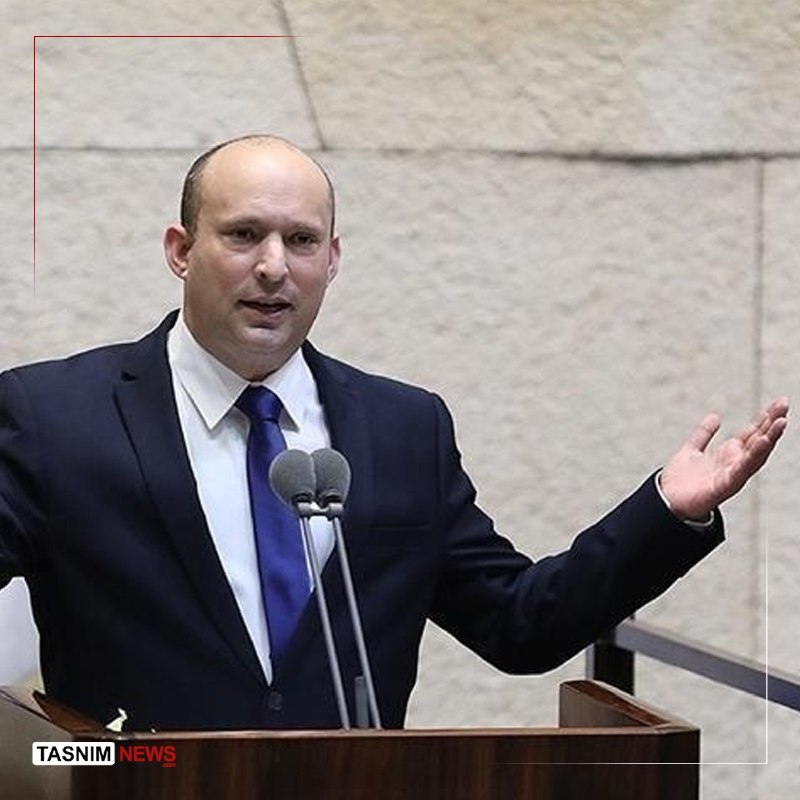
At 01:00 UTC on 20 July 2026, the office of Israeli Prime Minister Benjamin Netanyahu publicly rebuked New York City Mayor Eric Adams over remarks in which Adams indicated he would be willing to arrest the Israeli leader should he enter the city. The prime minister's office framed the comments as a political gesture detached from legal reality; the mayor's office, in turn, cast the exchange as a defense of judicial independence. The result is a small, sharp confrontation that lays bare a fault line running from The Hague to Manhattan and from cable-news studios to the precincts of city politics.
The exchange matters less for what it changes today than for what it reveals about a slow-motion contest over who gets to enforce international warrants on the territory of close allies, and about how visibly that contest is being staged.
A warrant, a mayor, and a microphone
The dispute rests on a warrant that the International Criminal Court issued against Netanyahu in late 2024, alleging war crimes and crimes against humanity in connection with Israel's campaign in Gaza. The ICC does not command its own police force; member states are obliged to detain suspects who travel onto their territory and hand them over to the court in The Hague. That obligation sits awkwardly inside the United States, which has not ratified the Rome Statute and where the federal government has historically treated ICC warrants against senior Israeli officials as a non-starter.
Adams's intervention, as reported by the South China Morning Post's world desk on 20 July, effectively proposed that a municipal authority could pick up a federal foreign-policy slack. The prime minister's office read the remark as a stunt. It pointed out, in language covered by SCMP, that Israel is a sovereign democracy with its own independent judiciary, and that an arrest of a sitting prime minister on a US visit would amount to a politically motivated act with no basis in American law. The mayor's framing was the inverse: that warrants issued by international courts are not optional, and that a mayor of a city that hosts the United Nations has a particular obligation not to look the other way.
What both sides agreed on, almost as an aside, was that the row was being played out in public and in advance. The warrant has existed for roughly twenty months. The arrest in question is hypothetical. Yet the argument is being staged now, in the middle of a US summer in which the mayor of America's largest city is fighting his own federal corruption case and in which the Israeli government is publicly mapping out the diplomatic protection it expects for its leadership.
The Polymarket read
Betting markets have, as they tend to, priced the underlying probability rather than the rhetoric. A market on the prediction platform Polymarket listed the implied chance that Netanyahu will be pardoned at 18% as of 18 July 2026, two days before the latest escalation with Adams. The number is not high, but it is not negligible, and it is moving on news flows of this kind. A pardon, in this context, would have to come either from an Israeli president under domestic political pressure or from a US counterpart willing to extend the diplomatic shield the prime minister's office is now openly demanding.
Pardon markets are blunt instruments. They compress a thicket of legal possibilities, domestic re-trial politics, ICC member-state enforcement, US presidential discretion over entry, into a single yes-or-no contract. But they do reflect something the commentariat tends to understate: that the legal exposure of a sitting prime minister is now an asset class in its own right, with a price, a beta to cable-news cycles, and a small but real constituency of traders who care more about the next move than the underlying jurisprudence.
The structural frame
The argument between Jerusalem and Adams is a small illustration of a larger pattern: the enforcement of international-criminal law now depends, in practice, on which level of government you stand in front of. Federal authorities in Washington have made clear they will not lift a finger against Netanyahu on an ICC warrant. State and municipal authorities in jurisdictions with their own foreign-policy instincts, South Africa, parts of Europe, and now, theatrically, New York, have begun signalling that they might. The result is a kind of patchwork sovereignty in which a head of government can be untouchable on one runway and technically arrestable on another.
That patchwork has been the operating reality of the ICC since it was established, but it has not previously been tested against a leader of a country as closely aligned with the United States as Israel. The warrant issued in 2024 was the first against a sitting head of government of a Western-aligned democracy; the political theatre around it is now visibly expanding to include sub-national US politicians who treat the warrant as a useful prop. Adams has his own reasons for the prop. Netanyahu's office has its own reasons for the rebuttal. The warrant itself sits, unchanged, between them.
What to watch
The short-term question is whether the mayor follows through. There is no public indication that Netanyahu is planning a New York visit in the near term, and the ICC's member-state enforcement mechanism does not, in practice, depend on a single municipality. The longer-term question is whether the diplomatic shield begins to fray in more consequential capitals, whether European foreign ministries begin signalling that an arrival on their soil would, in fact, trigger a handover to The Hague, and whether that signal changes the prime minister's travel calculus.
The pardon market, for its part, will move on the next piece of evidence in either direction: a clearer US statement about entry, a domestic Israeli political manoeuvre around the judicial process, or a new ICC member-state arrest somewhere in the Union. Until then, the dispute is likely to remain what it is today: a row over a hypothetical, priced in single-digit probabilities, and useful to every actor involved precisely because it is not yet real.
This article relies on two wire items: a 20 July 2026 SCMP dispatch on the Israeli prime minister's office rebuke of Mayor Adams, and an 18 July 2026 Polymarket contract pricing the implied probability of a Netanyahu pardon at 18%. Monexus has not verified the underlying ICC warrant status or any specific travel plans beyond what those two sources state.