Milei turns a World Cup loss into a national holiday
Argentina lost to Spain in the 2026 FIFA World Cup. President Javier Milei declared a public holiday anyway, and told the country the championship was already theirs.
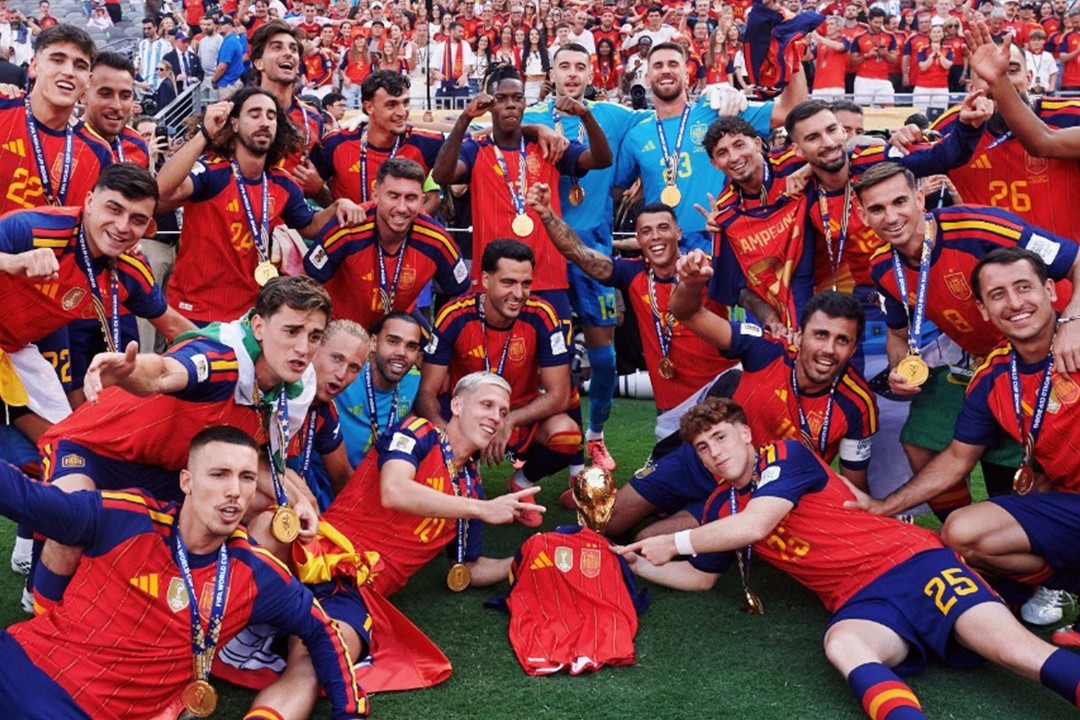
Argentina did not win the 2026 FIFA World Cup. Spain did. On 19 July 2026, in a final played on North American soil, La Roja lifted the trophy and La Albiceleste went home without it. Twenty-four hours later, in a Cadena Nacional broadcast from Casa Rosada, Javier Milei told Argentines the country was celebrating a championship anyway.
The phrase "WORLD CHAMPIONSHIP CELEBRATION" filled the bottom of the official bulletin that accompanied the holiday decree, according to Telegram channel Bellum Acta News, which carried the statement on 20 July 2026 at 02:45 UTC. Milei's framing was unmistakable: defeat on the pitch was not, in his telling, defeat. Argentina would mark the date as a national holiday regardless of the scoreline.
The move is the clearest expression yet of a political style Milei has been refining since taking office: convert whatever the country is feeling, victory or grief, into a stage-managed national mood.
A holiday without a trophy
The decree cites "the public's interest" in the match as the stated rationale. That phrase does a lot of work. It presumes that a final the national team lost is still, somehow, a shared national occasion worth pausing the country for, with schools, courts, and public offices shuttered and the working day folded into a long weekend.
The official text does not pretend Argentina won. It claims the celebration on the merits of interest alone. For a president who built his brand on brutal honesty about fiscal and monetary realities, the rhetorical gymnastics are notable. Milei's signature move has been to tell Argentines uncomfortable truths about the peso, the deficit, and the inheritance he received. Declaring a public holiday to commemorate a tournament Argentina exited as runner-up inverts that posture. Discomfort is displaced; the unpleasant fact is laundered through ceremony.
There is also a procedural wrinkle. Argentine national holidays are typically either fixed dates tied to historical events, or moveable bridge holidays designed to combine with weekends. A sporting final, regardless of outcome, does not fit cleanly into either category. The Milei government has now created a precedent in which executive discretion alone can manufacture a national day off, on the rationale of public attention.
The politics of the gesture
The holiday lands at a delicate political moment. Milei's libertarian coalition La Libertad Avanza has spent 2026 wrestling with mid-term economic fatigue: inflation has cooled from its 2024 peaks but remains the lived reality of every grocery run, and the structural reforms of his first eighteen months are still working their way through provincial economies. A World Cup run, even one that ended short, gave the government a ready-made emotional reserve to draw on.
Argentine football and Argentine politics have been entangled for the better part of a century. Peronist governments understood that the national team was a usable symbol. Radical and centrist governments understood the same. Milei's wager is that the affective bond between jersey and flag is strong enough to absorb a defeat, and that the act of declaring a holiday signals solidarity with fans rather than competence on the pitch.
The opposition read the move differently. Within hours of the Cadena Nacional, deputies from Unión por la Patria and the more centrist blocs were asking, off the record, whether the government had the institutional right to burn a working day on a tournament Argentina did not win. The constitutional question is narrow but real: executive decrees of this kind require justification that survives judicial review. "The public's interest" is, at best, a stretch.
There is a counter-narrative worth taking seriously. Plenty of Argentines, including many who did not vote for Milei, watched the final, and the country did spend a month unified around the team in a way that Argentine politics rarely permits. A national holiday can be read as recognition of that social fact rather than as denial of the scoreline. The framing the government has chosen, however, makes the charitable reading harder. "World Championship Celebration" is not "Commemoration of the national team's participation." It is a claim about a title.
Symbolism and the peso problem
The deeper story sits underneath the football. Milei's government has spent two years arguing that Argentina's recurring crises are the product of institutional habits, of magical thinking about money, of politicians who promised cake without baking it. The cadena this weekend was, in its own way, an exercise in exactly the kind of symbolism the administration usually attacks.
That is not necessarily a contradiction. Politics requires symbols; Milei himself is the country's most successful living symbol. The question is whether the state should manufacture public time off to align the national mood with a presidential narrative. Past Argentine governments, of every stripe, have done so. Milei's version is louder and more stylised, and it arrives after a loss rather than a win.
For markets and foreign observers the practical signal is small. One working day, in an economy of roughly forty-five million, is a rounding error. The political signal is larger. Milei is signalling, to a base that has begun to drift, that he is still the man who understands what Argentines feel, even when the scoreboard says otherwise. That is the kind of wager that works until it does not.
What to watch next
Three dates will tell us whether the holiday was a one-off flourish or the opening of a longer pattern. The next Cadena Nacional will be the first test of whether the government now treats major football fixtures as state occasions regardless of result. The mid-year inflation print, due from INDEC in early August, will tell us whether voters separate the symbolic gestures from the price of bread. And the Supreme Court's eventual disposition of any decree challenge will determine whether "public interest" is a phrase broad enough to authorise a national holiday for a tournament Argentina did not win.
The trophy is in Madrid. The holiday is in Buenos Aires. Milei is betting the country can live with both.
Desk note: Monexus framed this as a question of executive discretion and political symbolism rather than as a sports story; the wire coverage focused on the result on the pitch, the political coverage focused on the decree. Both are necessary, and neither is sufficient on its own.
Wire provenance
This editorial synthesis draws on the following public wire/social posts:
- https://t.me/BellumActaNews