Khan Yunis again: what a single strike near the British Hospital tells us about Gaza's reporting war
Three people were killed in a strike near the British Hospital in Al-Mawasi on 20 July 2026. The event is unremarkable; the way it is being narrated is not.
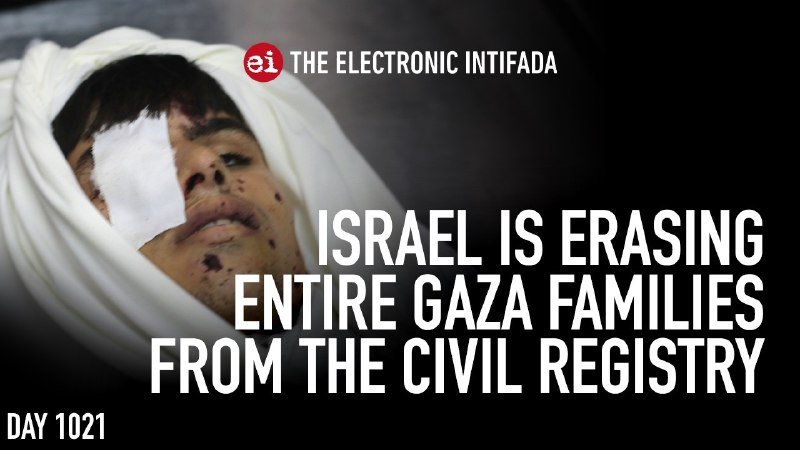
Three people were killed at roughly 13:30 UTC on 20 July 2026 when an Israeli strike hit a vehicle adjacent to the British Hospital in Al-Mawasi, west of Khan Younis in southern Gaza. Gaza English Updates identified the target as the Rimal Al-Sahra insurance company, a private firm whose offices sit inside the crowded humanitarian zone that has absorbed most of Gaza's displaced since late 2023. The Cradle Media, a Beirut-based outlet with a documented anti-Israel editorial line, framed the strike on a vehicle. Gaza Alanpa, a local stringer channel, characterised it as a drone strike. The accounts converge on the casualties. They diverge on almost everything else.
This is the part of Gaza coverage that rarely makes it into the lede. Each of these incidents now arrives pre-narrated. Local channels push the first timestamp. Western wires wait, usually for Israeli confirmation or for an on-the-ground stringer they trust. Iran-aligned and Hezbollah-adjacent outlets amplify the local version at speed, often within minutes. By the time a Reuters or BBC line lands, the framing contest is already half over. Three people died in a strike near a functioning hospital. The shape of how that sentence gets told is the story.
The first draft
Within eight minutes of impact, Gaza English Updates had placed the strike on a named commercial property, the Rimal Al-Sahra insurance company, and located it precisely, a stone's throw from the British Hospital compound. The Cradle, citing its own correspondent, posted at 13:28 UTC and described a strike on a vehicle. Gaza Alanpa, minutes earlier, called it a drone strike. None of the three claimed to have an Israeli readout. None cited a death toll beyond three. All three placed the geography in the same neighbourhood of Al-Mawasi.
What that tells a careful reader is unromantic: the basic facts of this strike were knowable inside the first quarter-hour, and they were knowable from local reporting that does not require an IDF spokesperson's permission to file. The information asymmetry that once defined Gaza coverage has, on raw facts, narrowed considerably.
The frame fight
It narrows on facts and widens on meaning. The Cradle's framing, "Three killed in an Israeli strike", sits inside a long-running editorial project that treats every incident in Gaza as part of an unbroken account of Israeli violence against civilians. Gaza English Updates, which runs harder breaking-news tickers, foregrounded the building hit and its commercial function, implicitly inviting the reader to weigh whether an insurance office in a humanitarian zone was a legitimate military target. Gaza Alanpa's drone-strike descriptor adds the precision-guided-weapon register, a tonal choice that nudges readers toward a particular reading of intent.
Israeli military briefings, when they arrive for strikes of this class, typically argue either that the target was a militant operative transiting the area or that the structure housed Hamas-linked financial infrastructure. The British Hospital and the surrounding Al-Mawasi zone have been designated by the IDF, in previous communiqués, as a humanitarian area, which raises the evidentiary bar for any strike inside it. None of the channels that moved first on 20 July had that Israeli counter-read at the moment of filing; the contested space is therefore about which version the global reader encounters first, not about whether a counter-version will eventually appear.
What the structural picture looks like
Strip away the politics and the underlying machinery is straightforward and worth saying plainly. Telegram-channel reporting from Gaza has compressed the news cycle on Palestinian-civilian-casualty events from hours to minutes. Iran-aligned media ecosystems amplify those channels selectively, choosing incidents that fit a pre-set narrative of indiscriminate Israeli force. Western wires, bound by verification standards and the institutional caution that follows October 2023, lag the initial publication by anything from twenty minutes to several hours. By the time the wire lands, the algorithmic distribution has already done its work on the timeline; the wire's framing arrives into a feed that is, in many cases, already populated.
The reader experience of Gaza in 2026 is therefore an experience of layered, asynchronous reporting, in which the speed of one layer compensates for the verification deficit of another, and the slowness of a third layer is read, by audiences that have lost patience with it, as editorial complicity. None of those three dynamics is new. Their combination, at this density, is.
The stakes of getting it right
The human stakes are obvious and do not need rhetorical amplification: three people are dead in Al-Mawasi, and the British Hospital, like every functioning medical facility left in Gaza, is operating under conditions that should not be the baseline for any hospital anywhere. The journalistic stakes are quieter and last longer. When every strike becomes a frame fight before it becomes an event, the space for a settled factual record, what was struck, by what munition, against what target, with what civilian proximity, with what prior warning, shrinks. Without that record, accountability arguments of any political flavour lose their grip. They become fights about who you trust rather than about what happened.
A serious press response to this strike will not be the fastest one. It will be the one that, twenty-four hours in, can tell readers what the Rimal Al-Sahra insurance company's building actually contained, who was in the vehicle, what munition was used, what the IDF's specific justification was, and what the hospital's administration recorded about damage and casualties. Those facts are obtainable. They will arrive slowly and unevenly. The reporting that waits for them, rather than racing past them, is the reporting that will still be readable in six months.
The strike near the British Hospital on 20 July is one of dozens this week. The incident is the news. The speed of its first telling, and the gap between that first telling and the verified version that follows, is the larger pattern worth watching.
Desk note: Monexus treated the local-channel reporting as a primary lead source for the strike's basic facts and explicitly flagged the Iran-aligned outlet's editorial line, rather than letting its wire-style language pass as neutral. The structural argument above draws on the same sources; the verification work, as ever, will outlast the frame fight.
Wire provenance
This editorial synthesis draws on the following public wire/social posts:
- https://t.me/gazaenglishupdates
- https://t.me/thecradlemedia
- https://t.me/gazaalanpa