Karim Khan's suspension and the court the world was waiting for
A former UN investigations chief has called the ICC's decision to suspend Karim Khan a 'stitch-up.' Palestinian rights groups say the proceedings are politicised. The court built to deliver justice for the world's worst crimes is now fighting over its own standing.
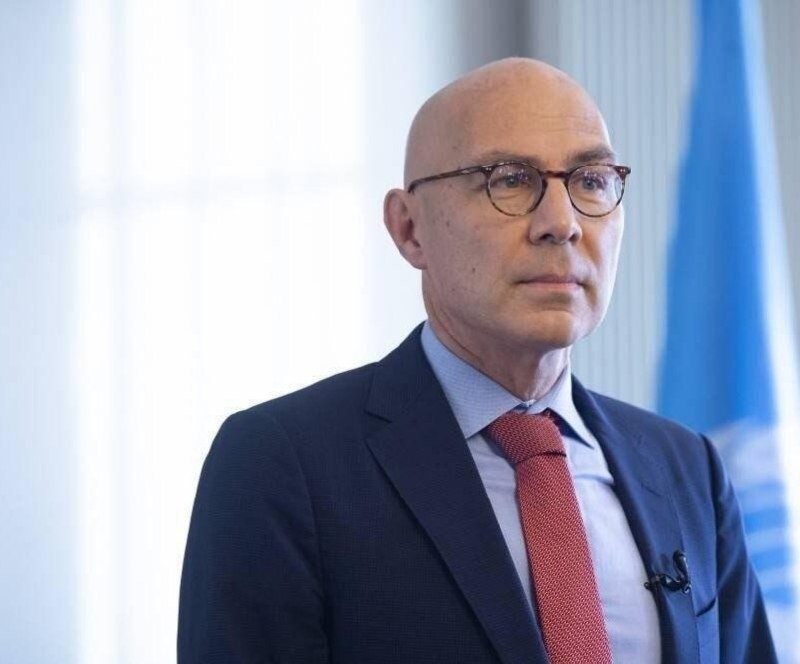
The International Criminal Court's executive body moved on 20 July 2026 to suspend Prosecutor Karim Khan from his post over misconduct allegations, and within hours the political fallout had overtaken the underlying case. A former UN investigations chief told Middle East Eye the move amounted to a "stitch-up," while Palestinian rights groups, writing through channels carried by The Cradle, denounced what they called a "politicised push" to remove the man who had sought arrest warrants for Israeli leaders alongside Hamas officials.
The court that spent three years building the most consequential docket of its history is now fighting over its own institutional standing, and the timing is the message. Khan's office pushed the warrant phase for senior Israeli officials through in 2024 and 2025 over the objections of Washington's strongest allies. The misconduct inquiry that produced Monday's suspension began, on the public record, before that phase concluded. The two timelines now sit on top of each other, and both sides are reading meaning into the overlap.
What is actually being alleged
The Assembly of States Parties to the Rome Statute convened the disciplinary process that yielded Monday's suspension. Middle East Eye reported on 20 July 2026 that the former UN investigations chief, speaking on the record, characterised the proceedings as a "stitch-up" rather than a routine employment matter. The specific misconduct allegations referenced in the thread context are not itemised in the available reporting; what is clear is the institutional form of the action, a prosecutor removed, or suspended, by the court's political oversight body rather than by an independent judicial tribunal.
That distinction matters. The ICC's prosecutor is answerable in principle to the Assembly of States Parties, which is composed of the court's member states. In practice, the Assembly has never before removed or suspended a sitting prosecutor mid-term. The mechanism being used now sets a precedent regardless of how Khan's individual case resolves, because the next prosecutor will inherit a template.
The Palestinian rights-group line
According to The Cradle, Palestinian rights organisations cautioned on 20 July 2026 that "the proceedings against Karim Khan do not follow proper due process." The same framing recurs across Palestinian civil-society commentary: that the disciplinary process is a workaround for the political failure to undo the arrest warrants Khan's office secured.
This is not a marginal read. The warrants Khan's office pursued included applications against Israeli Prime Minister Benjamin Netanyahu and other senior Israeli figures, alongside applications against Hamas leaders. For states that opposed or supported those warrants on different grounds, the disciplinary file now offers a route to the outcome the courtroom did not deliver. For Palestinians who waited years for that courtroom, the loss of the prosecutor who filed those warrants is the loss of the only institutional momentum the case had.
The structural point is plain: when a court's enforcement arm is removed by its political oversight body during an active docket, the docket does not get easier. It gets slower, and the states with the most to lose from delay have the most standing to wait it out.
What the defenders of the suspension will say
The counter-narrative, not surfaced directly in the source items but inferable from the institutional mechanics, runs as follows. A prosecutor accused of misconduct is entitled to a fair process, and a fair process begins with separation from the office whose conduct is being examined. The Assembly of States Parties has a duty to act on credible allegations regardless of the cases currently sitting on the docket. Treating misconduct allegations as untouchable because the officeholder is mid-warrant would itself be a politicisation, the worst kind, because it places the prosecutor above the institution.
Israel's Western allies, who were unhappy with the warrant phase, have no obvious interest in this framing. But institutional defenders in The Hague, in European foreign ministries, and inside the court's own staff union do. They will argue that protecting the court from the appearance of impunity for its own officers is what allows the court to function as a court at all.
The two readings are not equally weighted, however, because the timeline does the talking. The misconduct file predates, overlaps with, and now disrupts the most politically charged docket the court has ever opened. Members of the Assembly who were cool to the warrants now hold the disciplinary lever. That alignment is either coincidence or architecture, and reasonable people disagree about which.
The court the world was waiting for
The ICC was designed for precisely this kind of pressure. Its drafters built an institution that would be slow, treaty-bound, and politically constrained, on the theory that slowness was the price of legitimacy. The bet was that a court which survived the slings and arrows of geopolitics without being captured would, over decades, accumulate enough standing to matter.
What is being tested now is whether the institution can survive its own success. Khan's office did what its critics said it would not do: it filed for warrants against sitting leaders of a close US ally, and it did so on a public record. The backlash was foreseeable. What was less foreseeable, and what Monday's suspension makes newly visible, is that the backlash would land not through a judicial challenge to the warrants but through an administrative proceeding against the prosecutor who sought them.
The stakes for the wider international-legal order are concrete. If the Assembly can remove a prosecutor mid-docket on misconduct grounds, future prosecutors will price that risk into their decisions. They will weigh the political cost of an aggressive file against the personal cost of an aggressive file. Even if Khan is reinstated, the institutional signal has been transmitted: the line between zealous prosecution and personal exposure is thinner than it looked in November 2024, when the first warrants were issued.
What remains uncertain
The source items do not specify the substantive misconduct allegations, the composition of the disciplinary panel, the duration of the suspension, or whether Khan retains any access to his prosecutorial files during the review. They do not name the member states of the Assembly that moved the process, nor do they identify the complainants whose allegations triggered it. The phrase "stitch-up" is attributed by Middle East Eye to a former UN investigations chief whose name and tenure are not provided in the thread context. Until those gaps are filled, the most that can be said with confidence is that the procedure has begun, the political reaction has been sharp, and the docket that produced the political reaction is now the variable being fought over.
The court will write its own history in the months ahead. For now, the file on Khan is the file on whether the ICC can hold its own.
, Desk note: Monexus is treating the disciplinary proceedings against Karim Khan as an institutional story distinct from, and consequential to, the underlying Palestine-related docket. The reporting here draws only on the two source channels cited at the foot of this article; the structural reading is editorial.