Iran fires on vessels in Strait of Hormuz as rhetoric hardens over arms shipments
Iran's army warns that no military-bound equipment will transit Hormuz, then launches cruise missiles at vessels near the strait, raising the cost of any future arms pipeline to the Gulf.
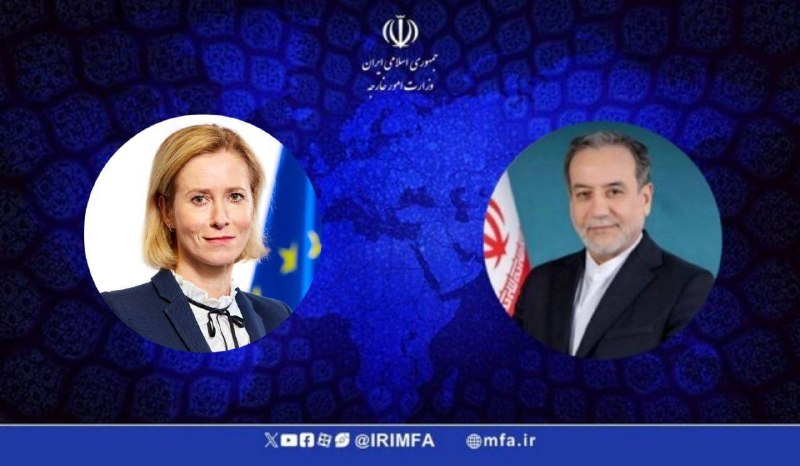
At 19:53 UTC on 20 July 2026, Iran fired what two open-source intelligence channels identified as cruise missiles toward the Strait of Hormuz, with initial reports flagging strikes on vessels the Iranian side described as violating Tehran's transit rules. The salvo followed, by roughly three and a half hours, a public statement attributed to an Iranian Army spokesperson declaring that equipment intended for use against the Iranian people would not be permitted to pass through the waterway. Together, the two messages sketch a single operational line: a threat delivered in daylight, followed by force after dusk.
The pattern is the story. Iran's leadership has spent months warning that it would close, narrow, or weaponise the strait if it judged a military build-up on its borders to be accelerating. On 20 July that warning acquired a kinetic edge. The immediate question is what was hit, and on whose orders. The wider question is whether a corridor that handles a large share of seaborne oil trade is now, in practice, a contested zone where transit rules are written by Iran's Revolutionary Guard rather than by international convention.
What the channels are reporting
Two Telegram accounts known for tracking military activity in the Gulf posted the first wave of accounts within minutes of each other. The channel RN Intel, citing initial field reports, said Iranian projectiles, likely cruise missiles, were fired toward the Strait of Hormuz at 19:53 UTC, with Omani-flagged traffic in the area a particular focus of concern (RN Intel, 20 July 2026, 19:53 UTC). Six minutes later, the channel Intelslava, amplifying the Iranian-aligned outlet Simurgh Res, framed the same salvo as an enforcement action: attacks on vessels described as violating Iranian regulations in the strait (Intelslava, 20 July 2026, 19:59 UTC). The accounts differ in tone, not in underlying geography; both place the firing into the narrow waterway between Iran and the Musandam Peninsula.
The framing matters. RN Intel's report reads as a flash bulletin, neutral on motive. Intelslava's, sourcing Simurgh Res, embeds the strikes inside an Iranian legal-rationale narrative: that the Islamic Republic has the authority, and now the willingness, to police the strait on its own terms. Western and Gulf outlets have not, as of the time of writing, published independent confirmation of damage, vessel identities, or casualties; the picture remains one of competing first-day accounts rather than verified aftermath.
The political wrapper
Iran's army spokesperson set the table three and a half hours before the launches. Posted to X at 16:17 UTC, the statement was categorical: equipment that cannot pass through the Strait of Hormuz if it is intended to be used against the Iranian people (Iranian Army Spokesperson, via Unusual Whales on X, 20 July 2026, 16:17 UTC). The phrasing is the kind of public precondition that lawyers in Western capitals will spend days dissecting. Read narrowly, it is a warning shot to arms shippers and their insurers. Read as doctrine, it is a declaration that Iran intends to treat any cargo with a plausible military end-use as a lawful target in transit.
This is the part Western security analysts have been warning about for the better part of two years: the conversion of Hormuz from a shared commercial artery into a discretionary Iranian checkpoint. Gulf states, dependent on the same waterway for their own exports, have no public position on the record as of 20 July 2026. The silence is itself a signal. Oman, which controls the southern shore of the strait and whose flag appeared in the initial strike reports, has an obvious interest in any multilateral response; so far it has not been heard from in the open-source record.
What the open-source record does not yet show
No casualty count has been published by any Western wire, Iranian state outlet, or international body. No vessel has been named by its owner or flag state in a verifiable release. The Iranian-side claim that the targets were violating Iranian regulations is a contested interpretation; under the United Nations Convention on the Law of the Sea, transit passage through straits used for international navigation is supposed to remain free and continuous, a right Iran has previously affirmed in writing. Whether the vessels struck on 20 July were engaged in innocent passage, were flagged to a state at war with Iran, or were carrying cargo covered by Iran's new transit prohibition is not yet established in the public record.
There is also no independent confirmation of cruise-missile use. RN Intel's language, likely cruise missiles, carries explicit hedging. The munition type matters: a missile strike implies a deliberate escalation, while a smaller-boat or drone engagement would imply something closer to a boarding action with standoff fire support. Until satellite imagery, AIS data, or port-state inspection reports surface, the exact character of the attack remains in the realm of attribution and inference.
The structural frame
The pattern here is the slow-motion conversion of a piece of geography into a piece of policy. The strait is one of a handful of maritime chokepoints where the world's energy supply, regional military balance, and great-power signalling all converge. Iran has spent two decades building the legal, rhetorical, and now apparently kinetic infrastructure to act as its gatekeeper. The instruments used so far have been incremental: harassment of commercial shipping, the seizure of tankers, and the occasional drone strike on tankers linked, in Tehran's telling, to adversaries. Cruise-missile fire on 20 July is the largest single-step escalation in that sequence since Iran's retaliatory operation against Israel in 2024, and the first time the Iranian army, rather than the IRGC or its proxies, has been publicly identified as the source of the threat framing.
For shipping and insurance markets the practical implications are severe. War-risk premiums through Hormuz have been creeping upward since the start of the year; kinetic action of the kind reported on 20 July tends to push them into a different regime entirely. For Gulf monarchies, the calculus is sharper: the waterway that carries their exports is also the same one Iran's new doctrine seeks to police. The United States, whose Fifth Fleet is headquartered in Bahrain a short sail north, faces the question of whether a posture of presence and deconfliction is any longer compatible with an Iran that has declared itself willing to fire first.
Stakes, and what to watch
Three dates and decisions will shape what happens next. First, the response, if any, from the Gulf Cooperation Council; a joint statement condemning the strikes would mark a sharp diplomatic break with Tehran and push the crisis toward a regional security frame. Second, the response from the United States and the United Kingdom, whose naval forces have run joint patrols in the strait for decades; a flag-level escort operation would be the conventional answer, and one Tehran has already prepared counter-doctrine for. Third, and most consequential, the response of global insurance markets. If Lloyd's and the P&I clubs withdraw cover for Hormuz transits within the next seventy-two hours, the strike will have achieved, economically, what a closure of the waterway would have achieved by force.
What remains uncertain, as of the time of publication, is whether 20 July was a one-off enforcement action aimed at a specific shipment or the opening move of a sustained campaign. The Iranian army's earlier statement suggested a policy, not a single decision. The evening's salvo, by contrast, looked like the application of that policy to a single target set. The difference between those two reads is the difference between a crisis and a war.
Desk note: Monexus framed the strike against the wider pattern of Iran's evolving Hormuz doctrine, rather than as an isolated flashpoint. Where Iranian-aligned channels framed the action as legitimate enforcement, Monexus surfaced that framing alongside the legal counter-position under UNCLOS; where Western wires were absent, the open-source record was treated as preliminary rather than authoritative.
Wire provenance
This editorial synthesis draws on the following public wire/social posts:
- https://t.me/intelslava/
- https://t.me/rnintel/
- https://x.com/unusual_whales/status/
- https://en.wikipedia.org/wiki/Strait_of_Hormuz
- https://en.wikipedia.org/wiki/United_Nations_Convention_on_the_Law_of_the_Sea